Murph Cutting Boards sunrise logo Murph Cutting BoardsSouth Dennis · Cape Cod
Handcrafted on Cape Cod

Heirloom-quality woodwork, built to be used daily — and handed down.

Every board, bench, and cribbage board is made by hand in a South Dennis workshop from local & exotic hardwoods — no two pieces alike, and every one made to work hard in a real kitchen.
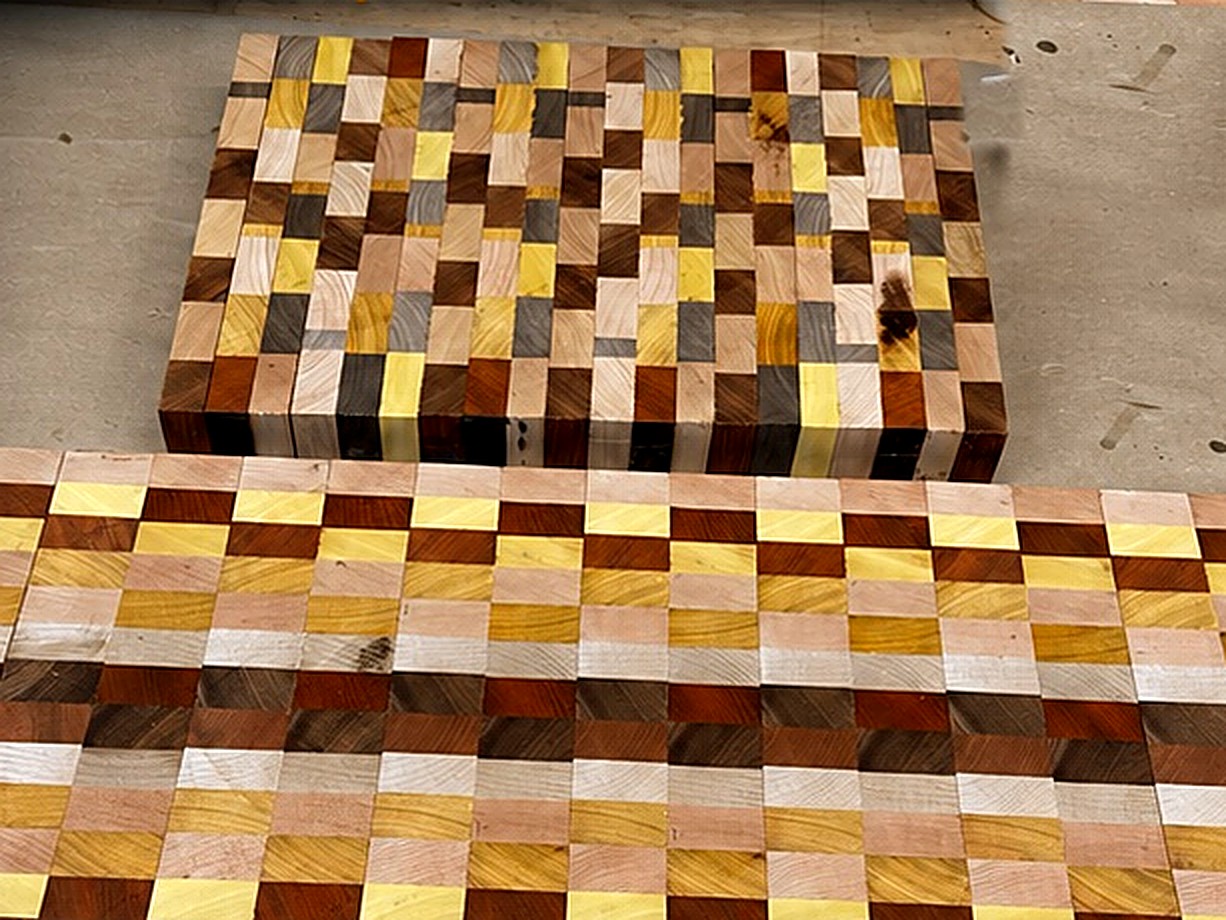
22 hardwoods on the rack Est. 2023 South Dennis, Cape Cod, Massachusetts
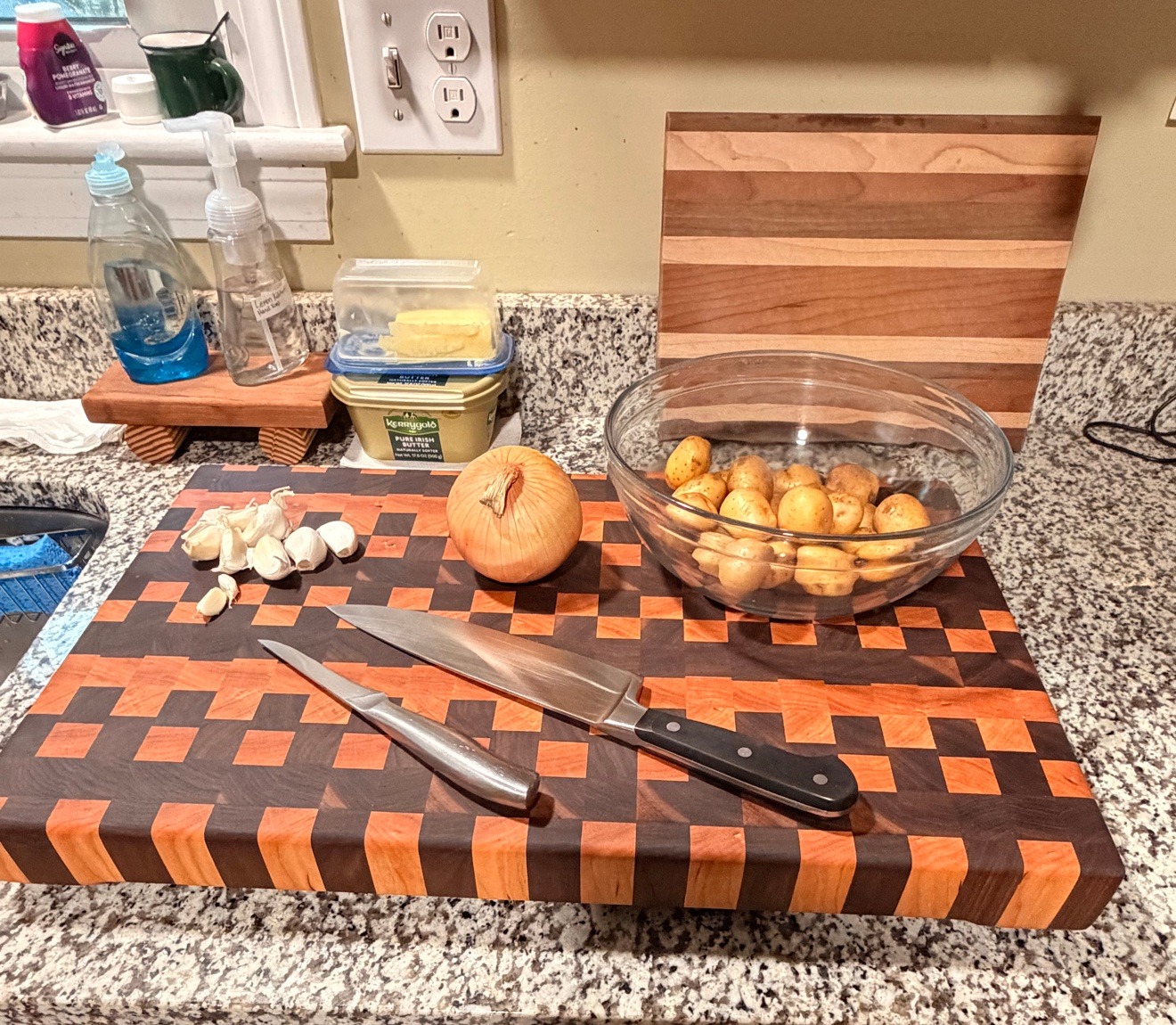
Brendan's orange and dark checkered end grain cutting board in use on a granite kitchen counter, with knives, an onion, garlic and a bowl of potatoes on it
End grain, done right

Ordering for the holidays? Custom orders for Christmas need to be in by Tuesday, December 1 — boards, benches, and cribbage boards all make the gift list.
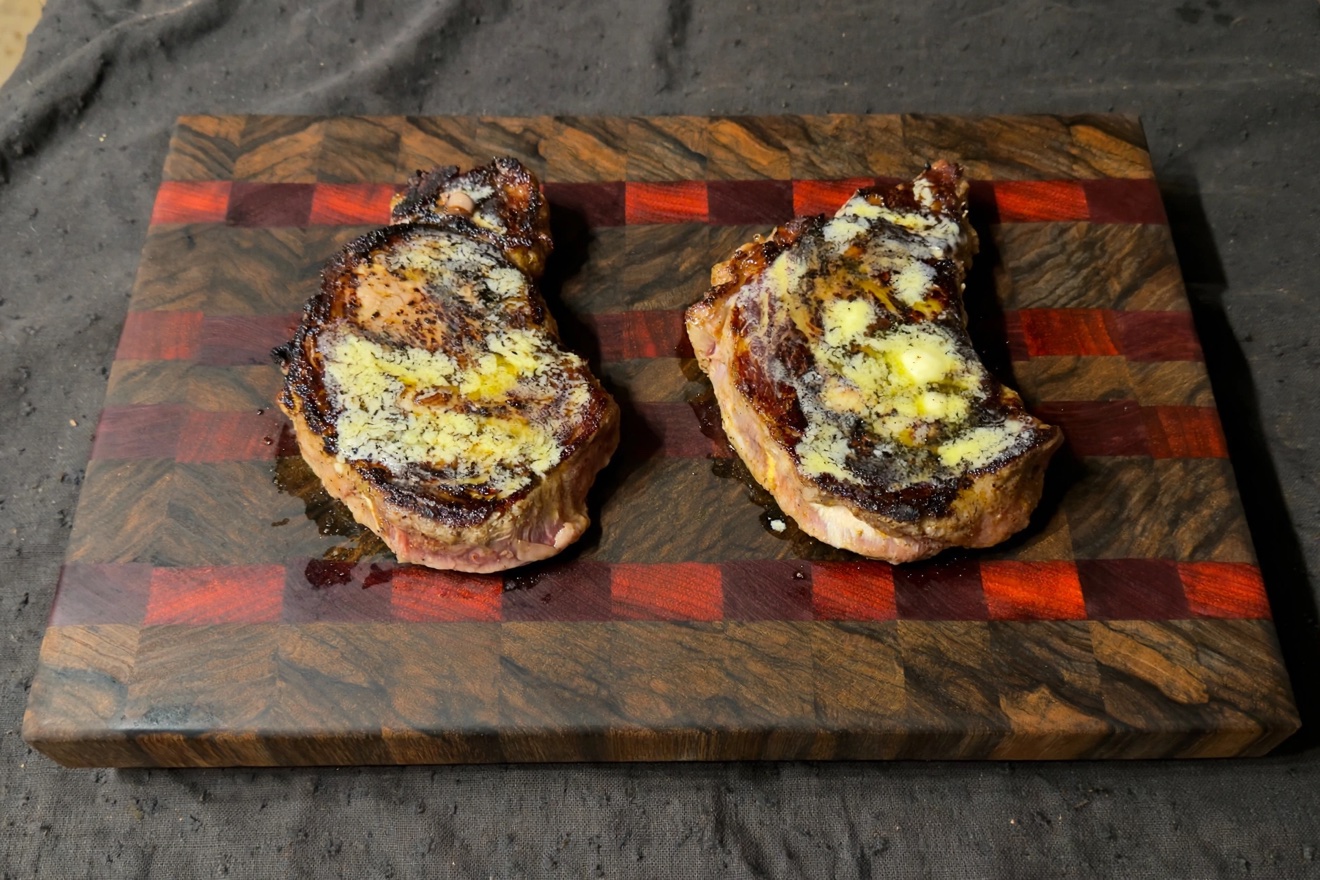
Two steaks with melting butter on an end grain board
Built to be used daily.
The lineup

What I make

The full range — from the board you'll cut on every day to the bench by the front door. Everything is a custom order: pick your piece, pick your wood, and it's built for you.

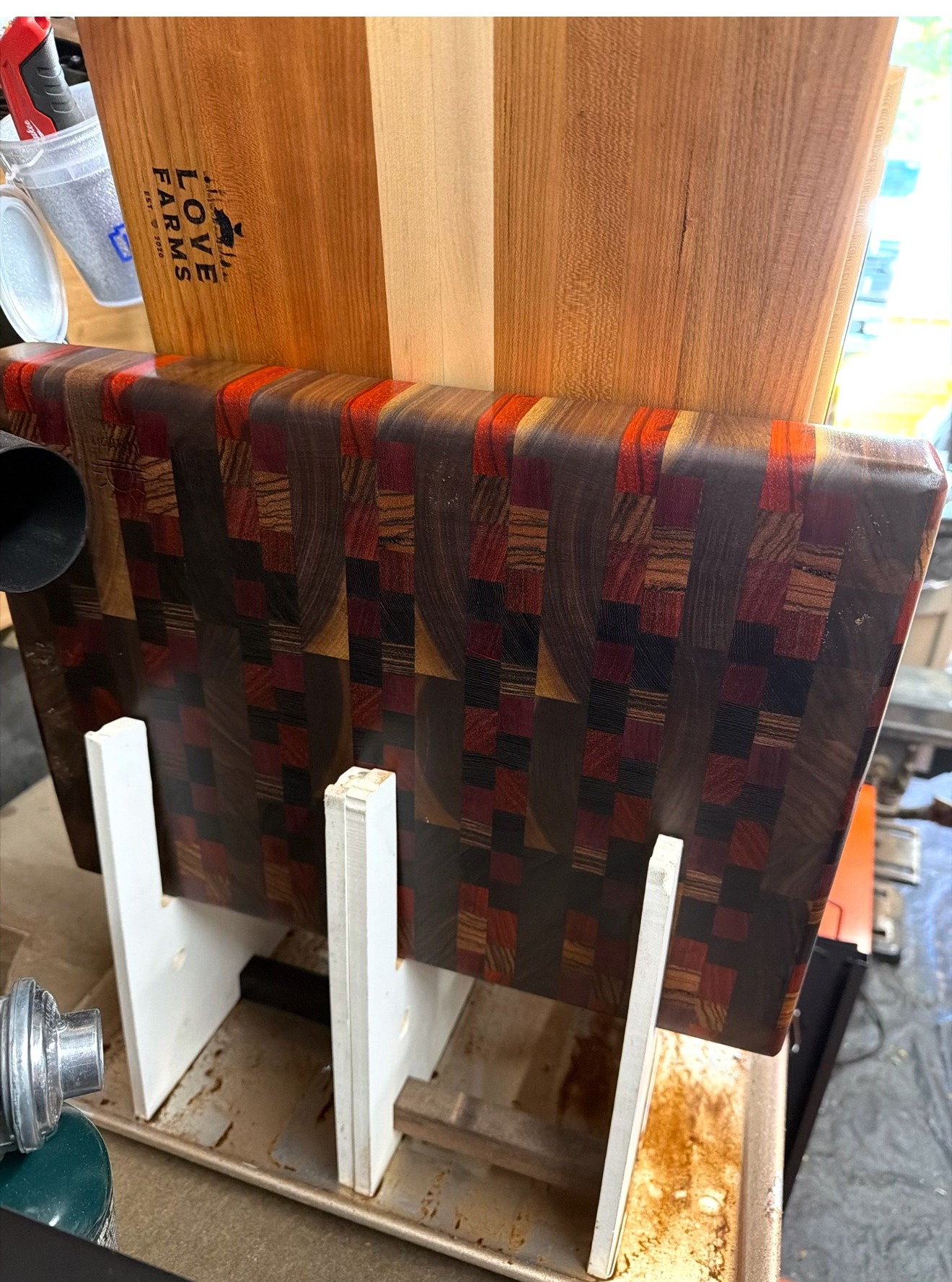
Two of Brendan's checkered end grain cutting boards in mixed hardwoods on the workshop bench, cropped from his Woodworking 101 card

End Grain Cutting Boards

The flagship. Knife-friendly, self-healing end grain in walnut, maple, cherry and exotics — thick, heavy, and made to be the last board you buy.
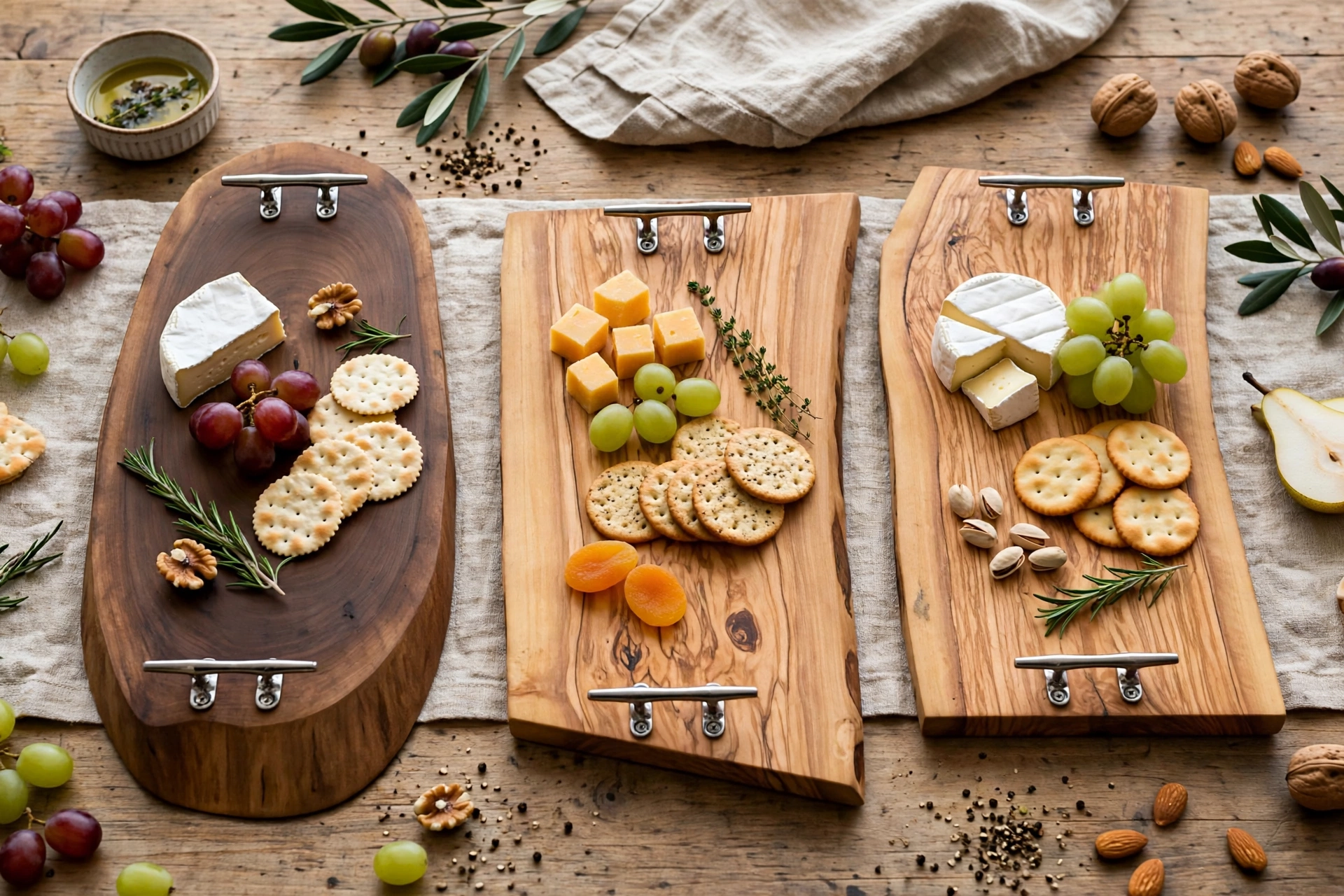
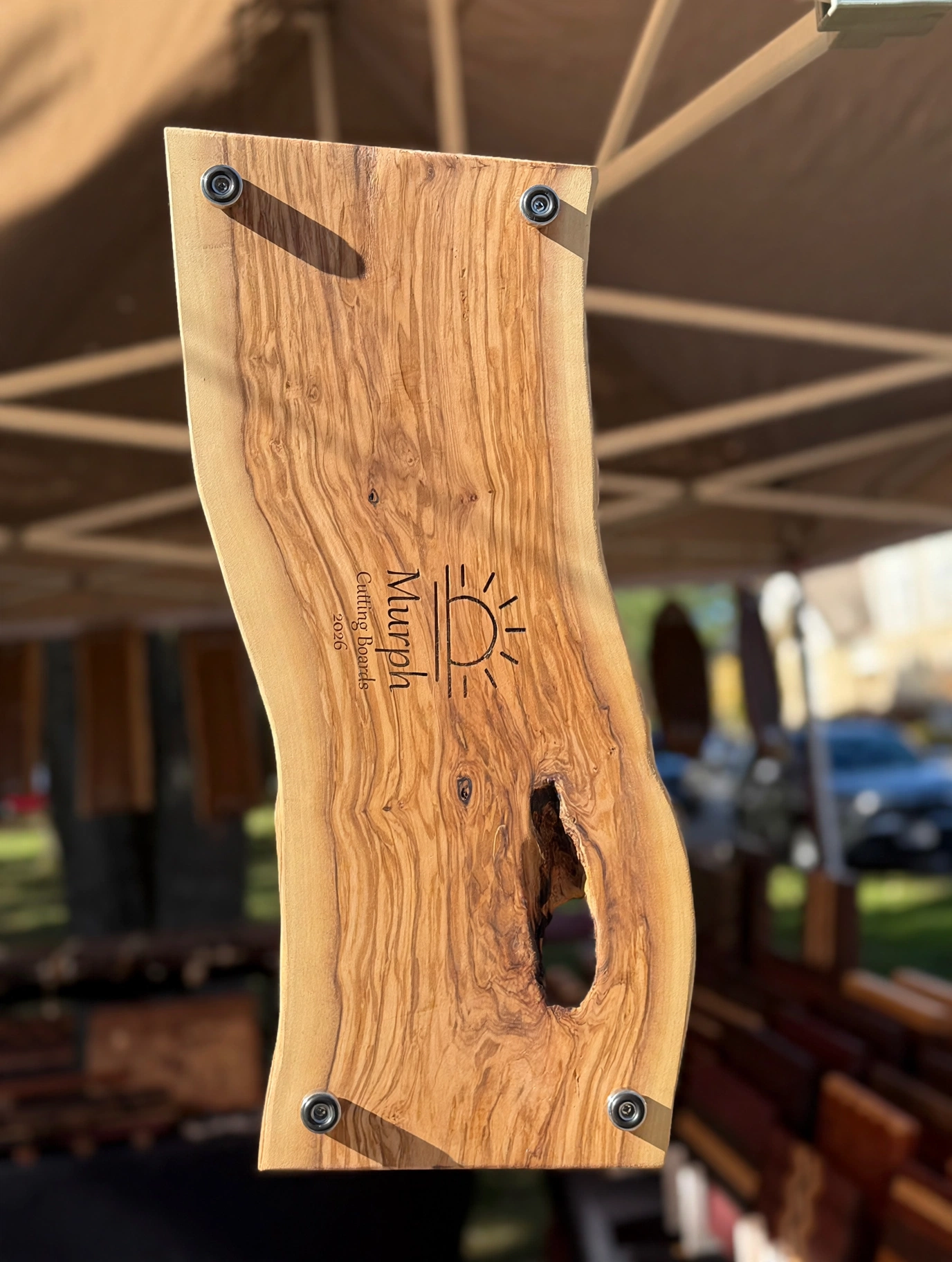
Three charcuterie boards lying flat on a table with light food on them — a dark oval board and two olivewood boards with metal cleat handles, with cheese, grapes and crackers that leave the wood clearly visible

Charcuterie & Bar Boards

Edge grain cutting boards, serving and charcuterie boards, and handy little bar boards — the everyday sizes for cheese nights and cocktail hour.
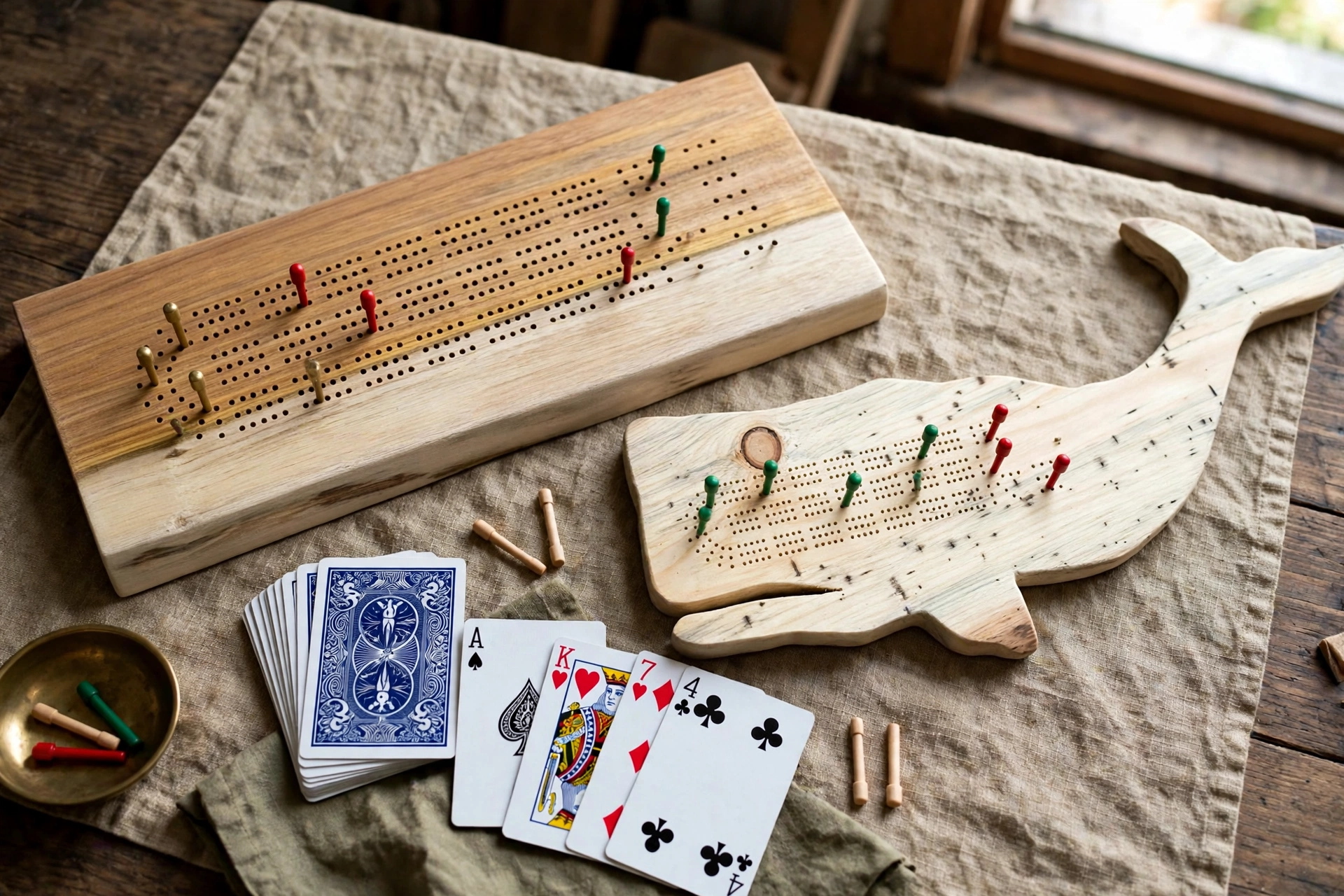
Live-edge cribbage boards — a rectangular board and a whale-shaped board with pegs in both boards like a game is being played, beside a deck of cards face down and cards face up

Live-Edge Cribbage Boards

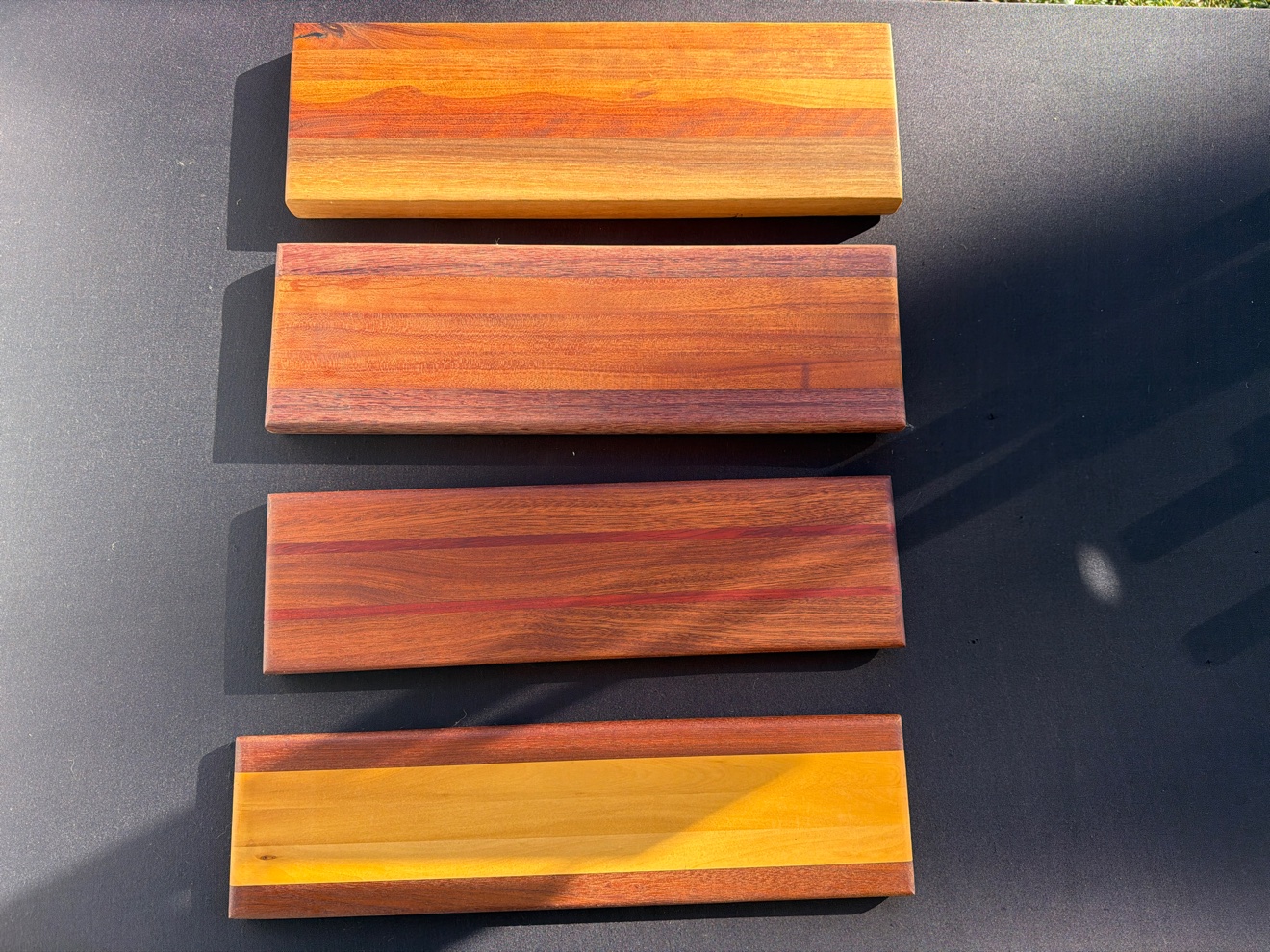
Live edge in oak, red cedar, walnut, and canary wood — each one shaped by the tree it came from. Game night, upgraded.
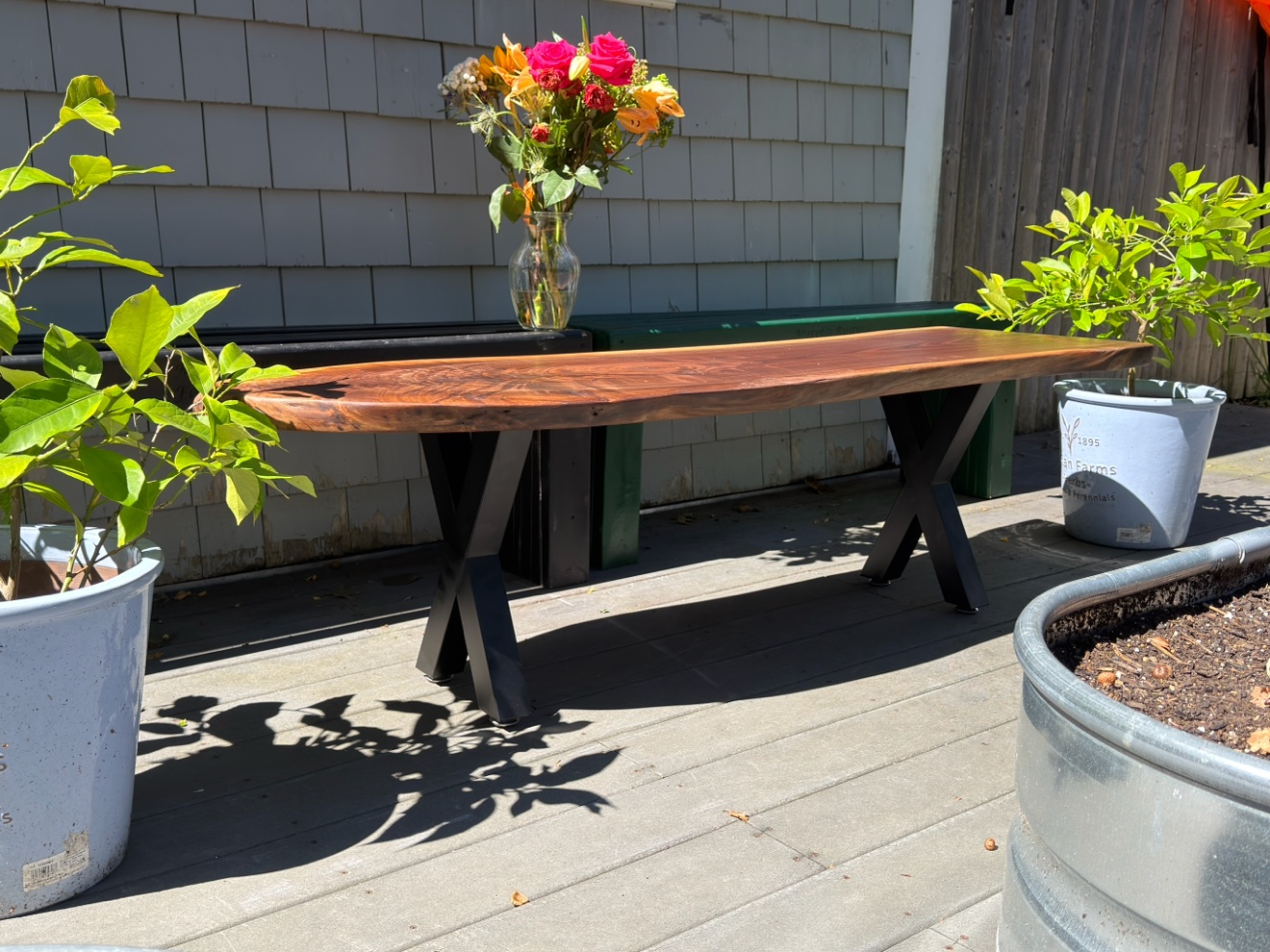
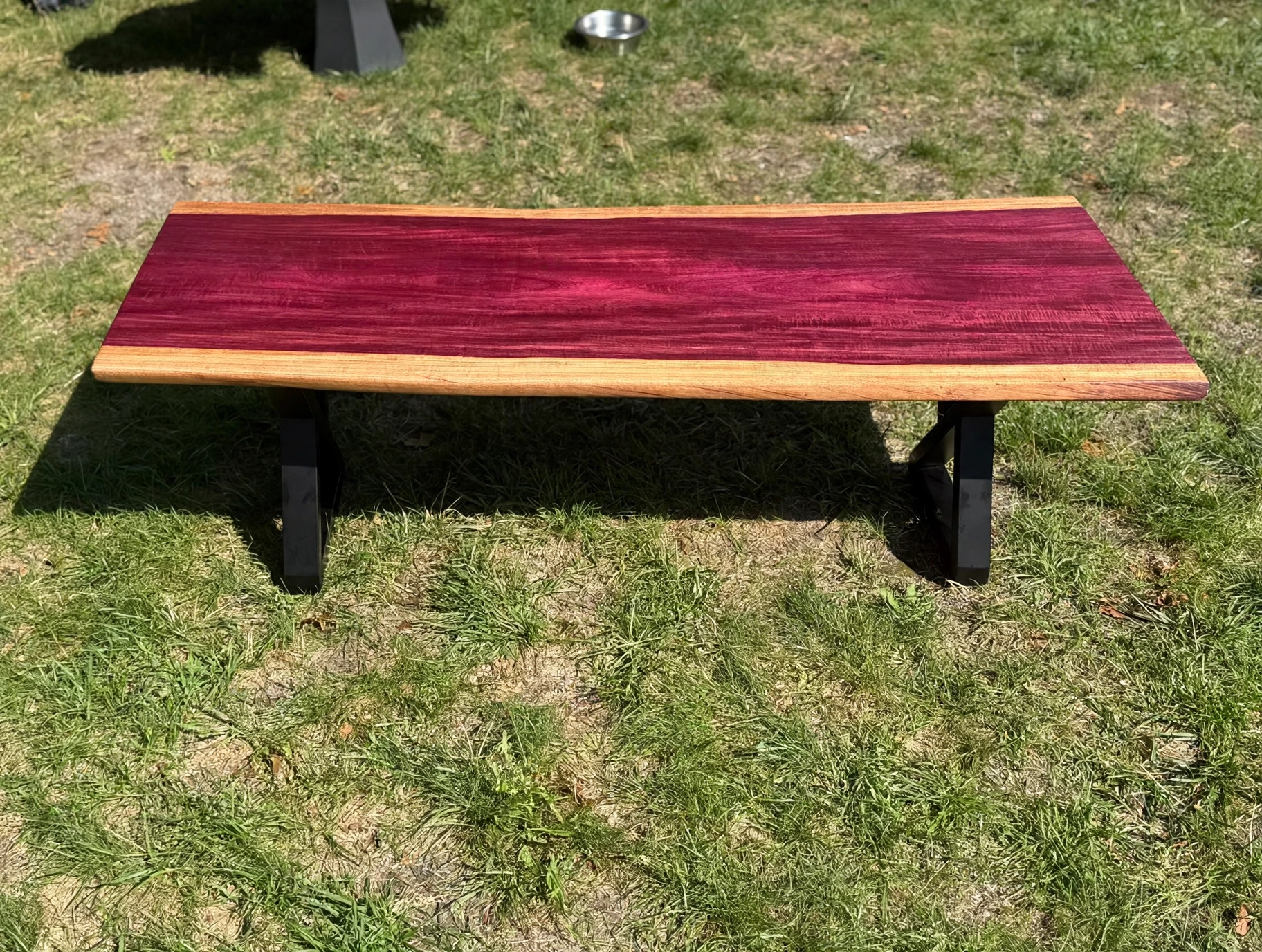
Live-edge hardwood table with black X legs on an outdoor deck, topped with a vase of colorful flowers and flanked by potted plants

Tables

Tables.

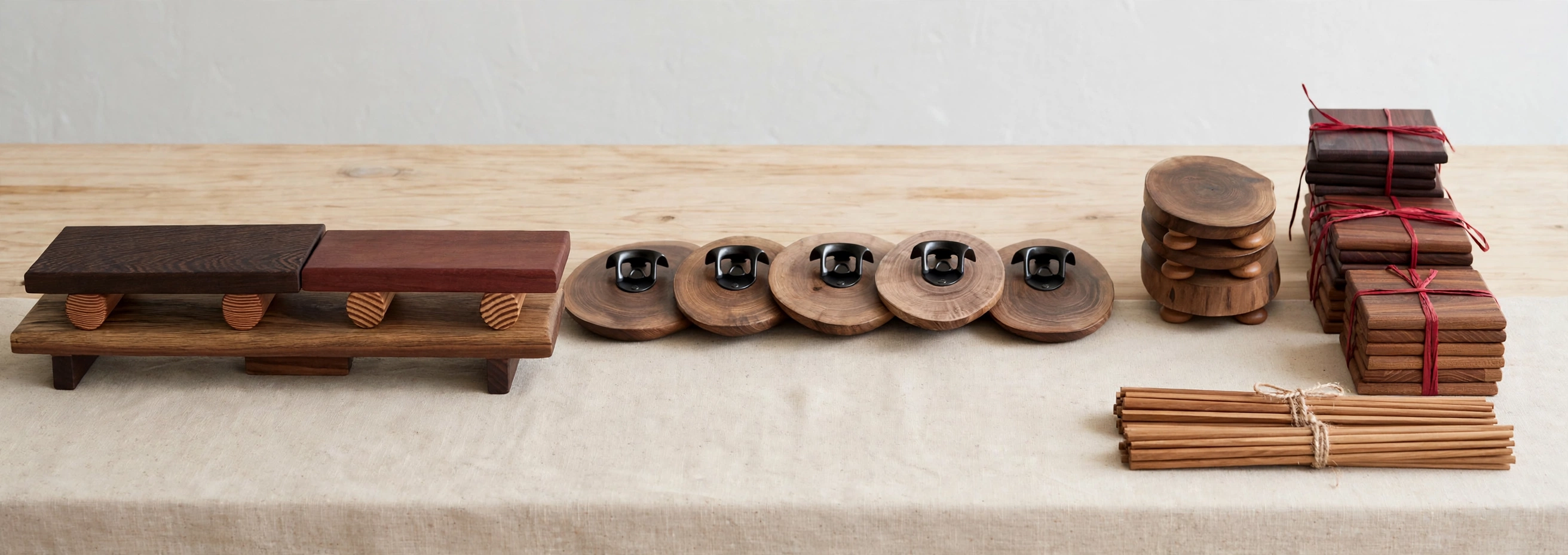
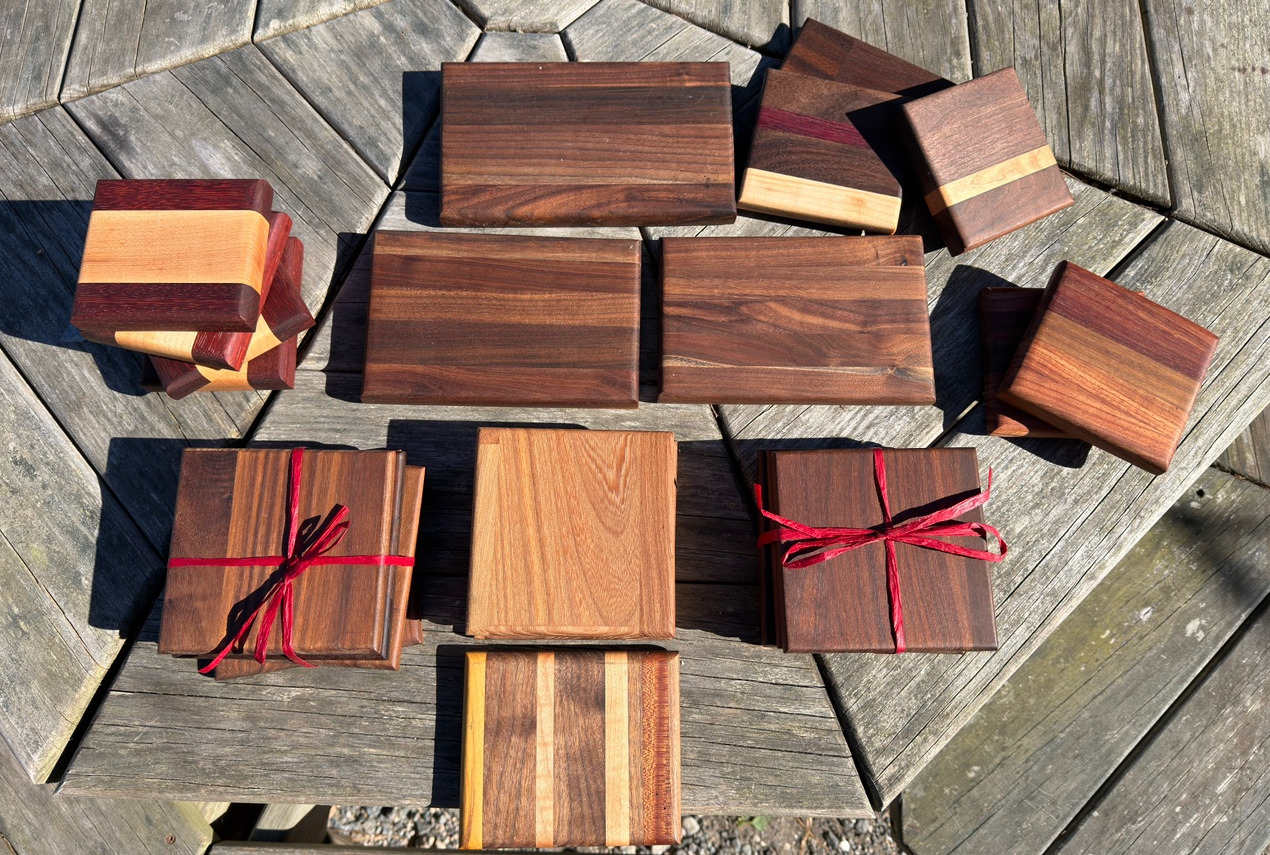
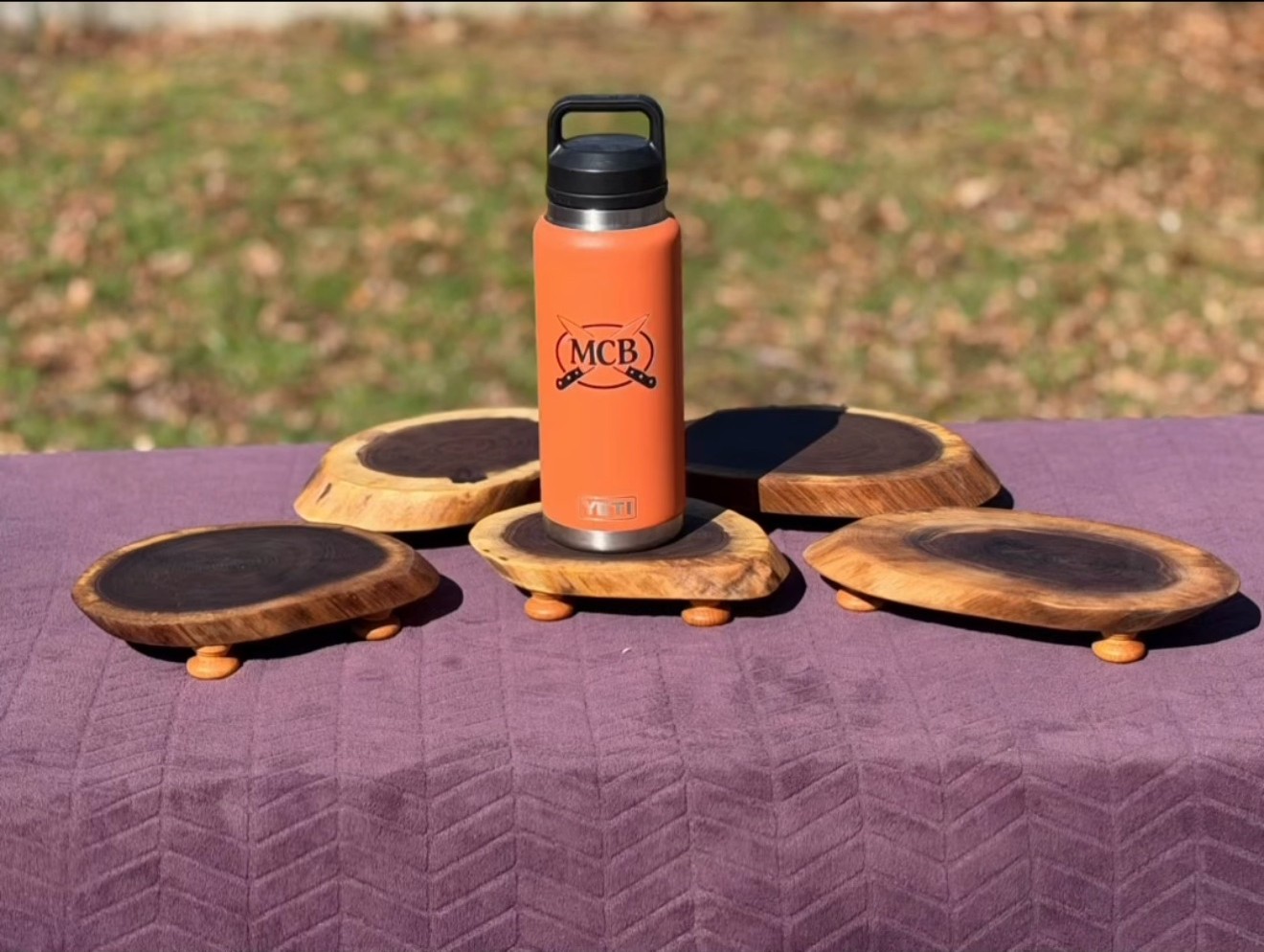
Small goods cleanly arranged on a table — wooden pedestals, round bottle-opener coasters, stacked coasters tied with red ribbon, and a bundle of chopsticks

Pedestals, Coasters & Small Goods

Pedestals, coaster sets, and chopsticks — small pieces, same hardwood, same finish. The easy gift that never misses.
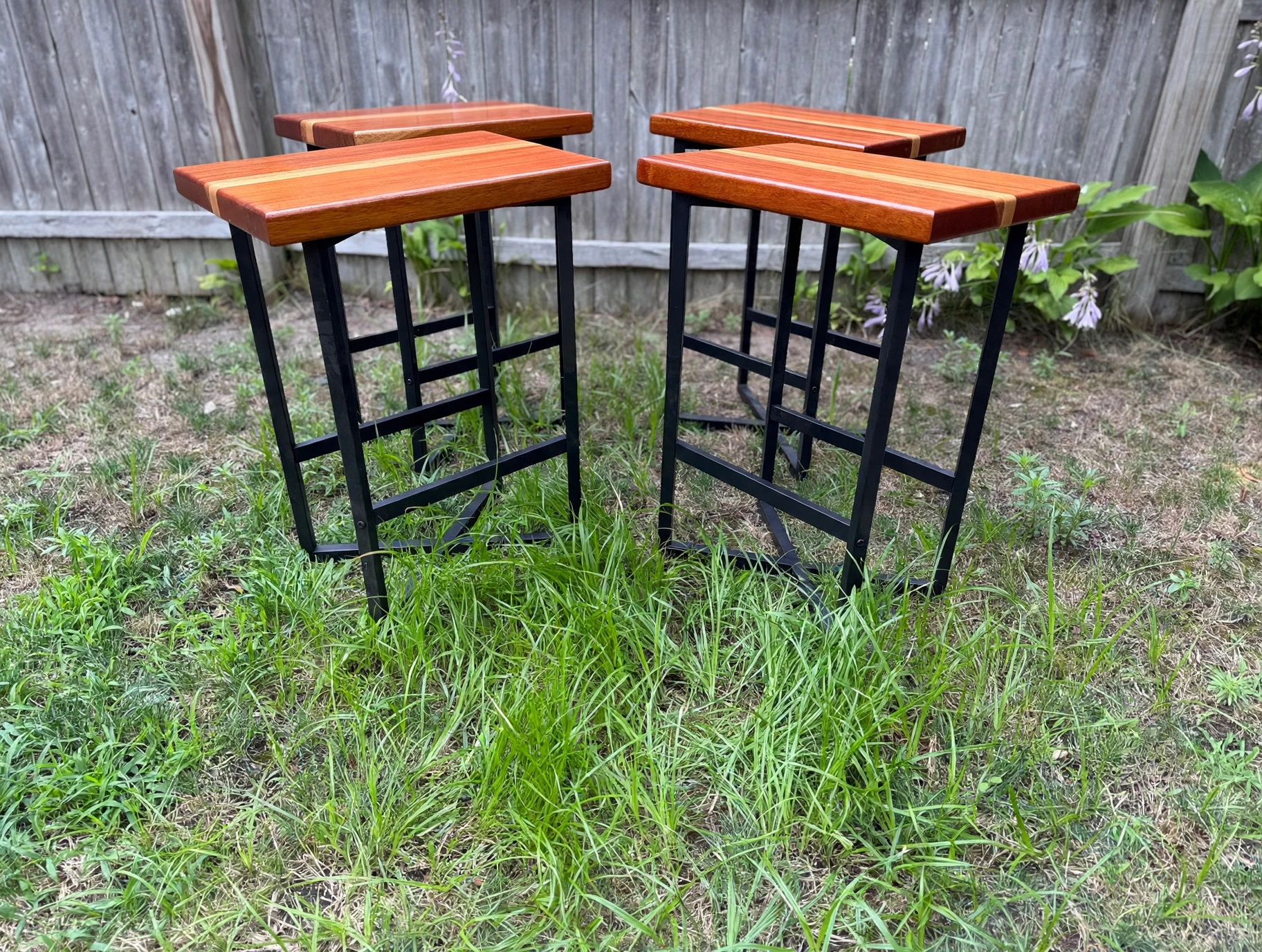
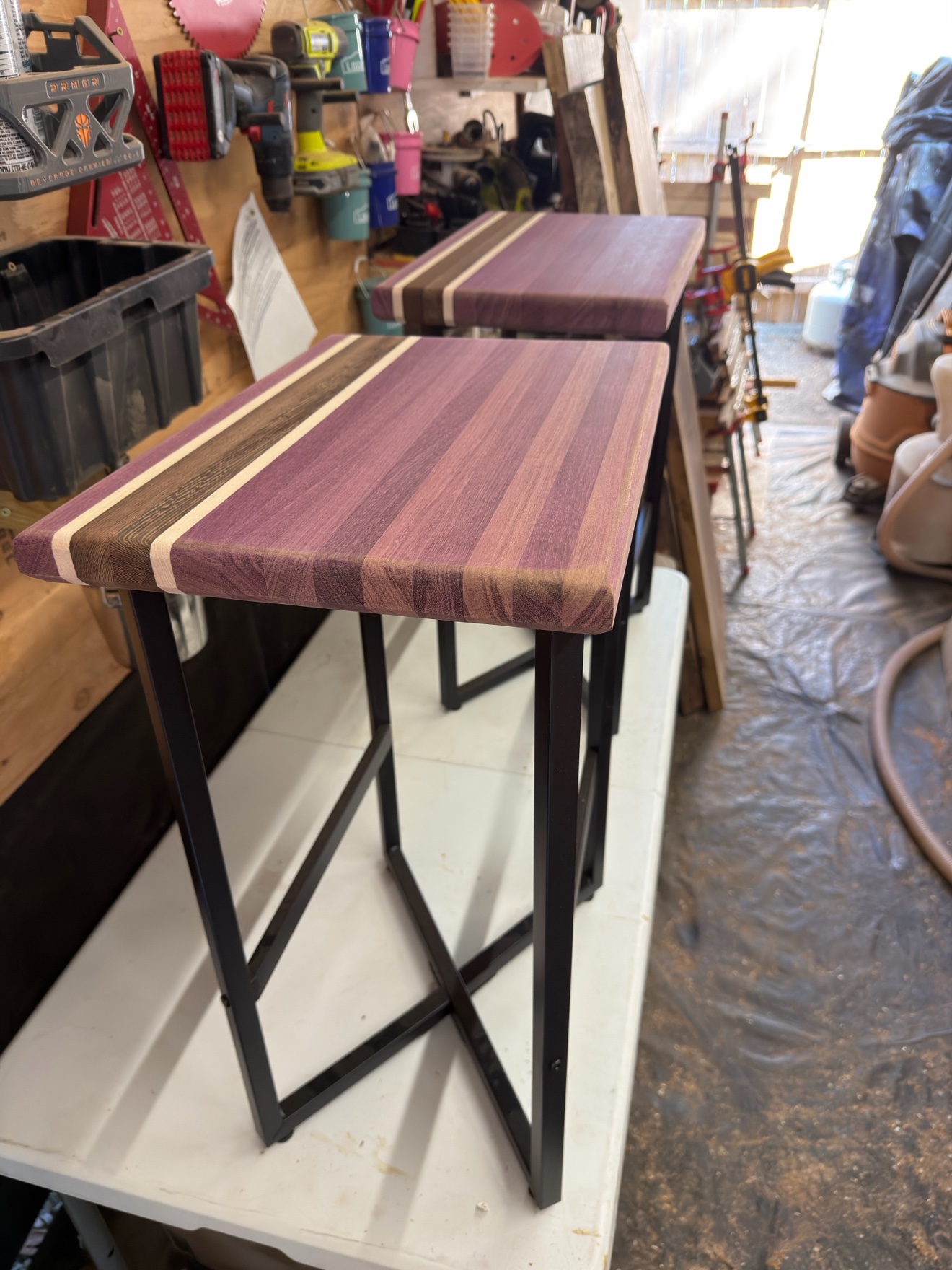
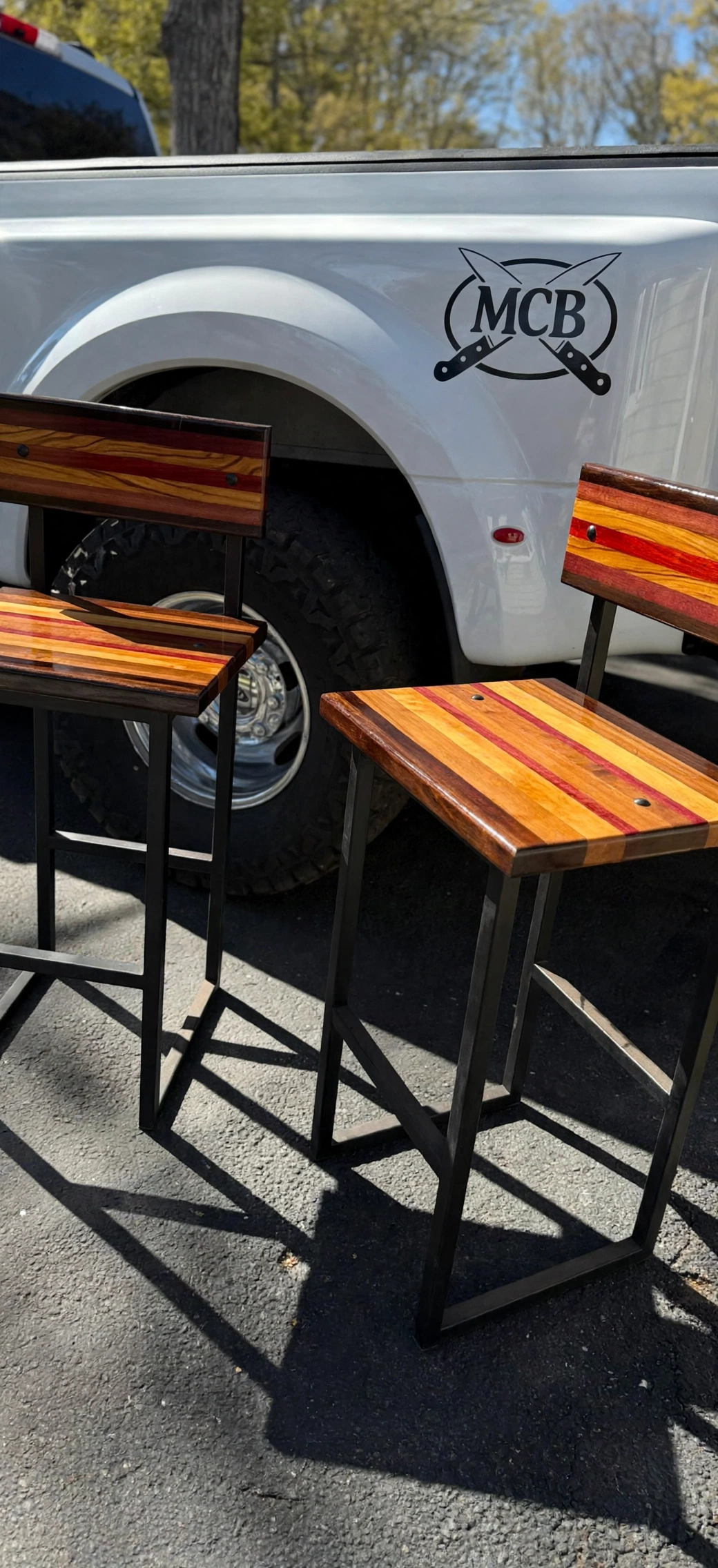
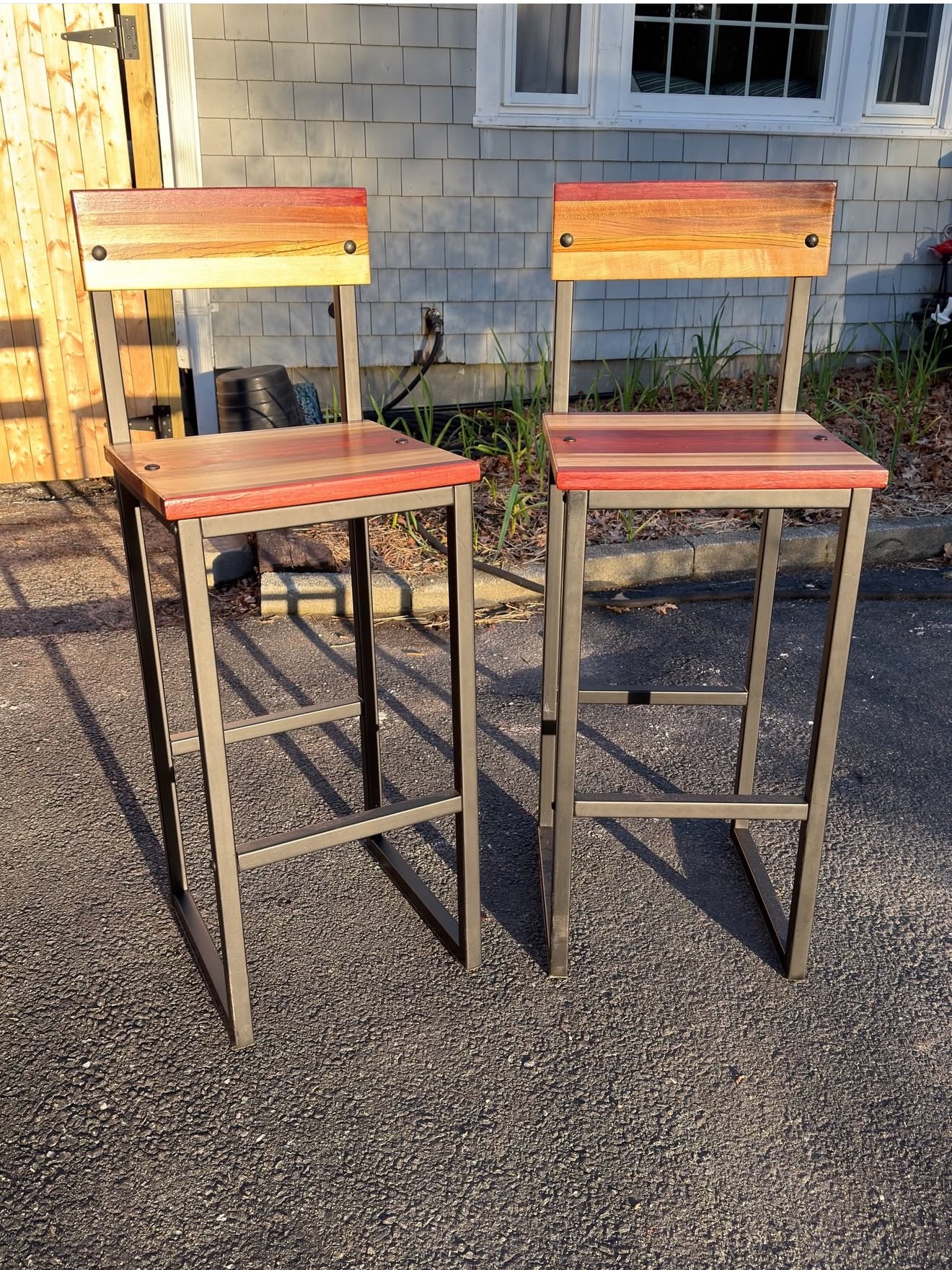
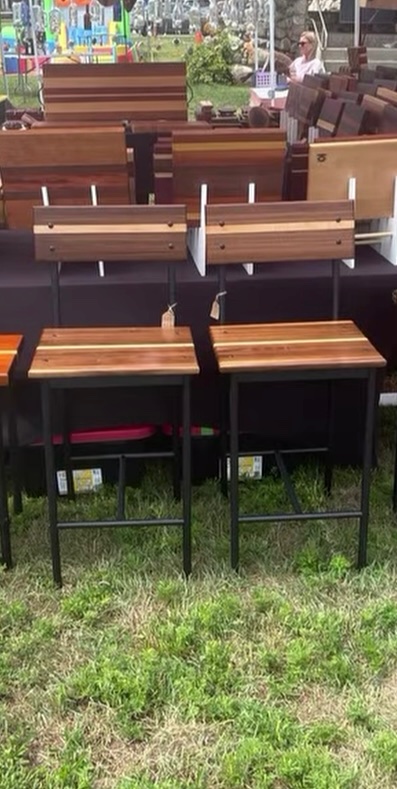
Four island stools with South American mahogany and maple tops on black metal legs, on a lawn

Stools

Stools.

Fresh off the bench

Featured pieces

Orange and dark checkered end grain cutting board in use on a granite counter
End grain boardCheckered end grain, in daily use
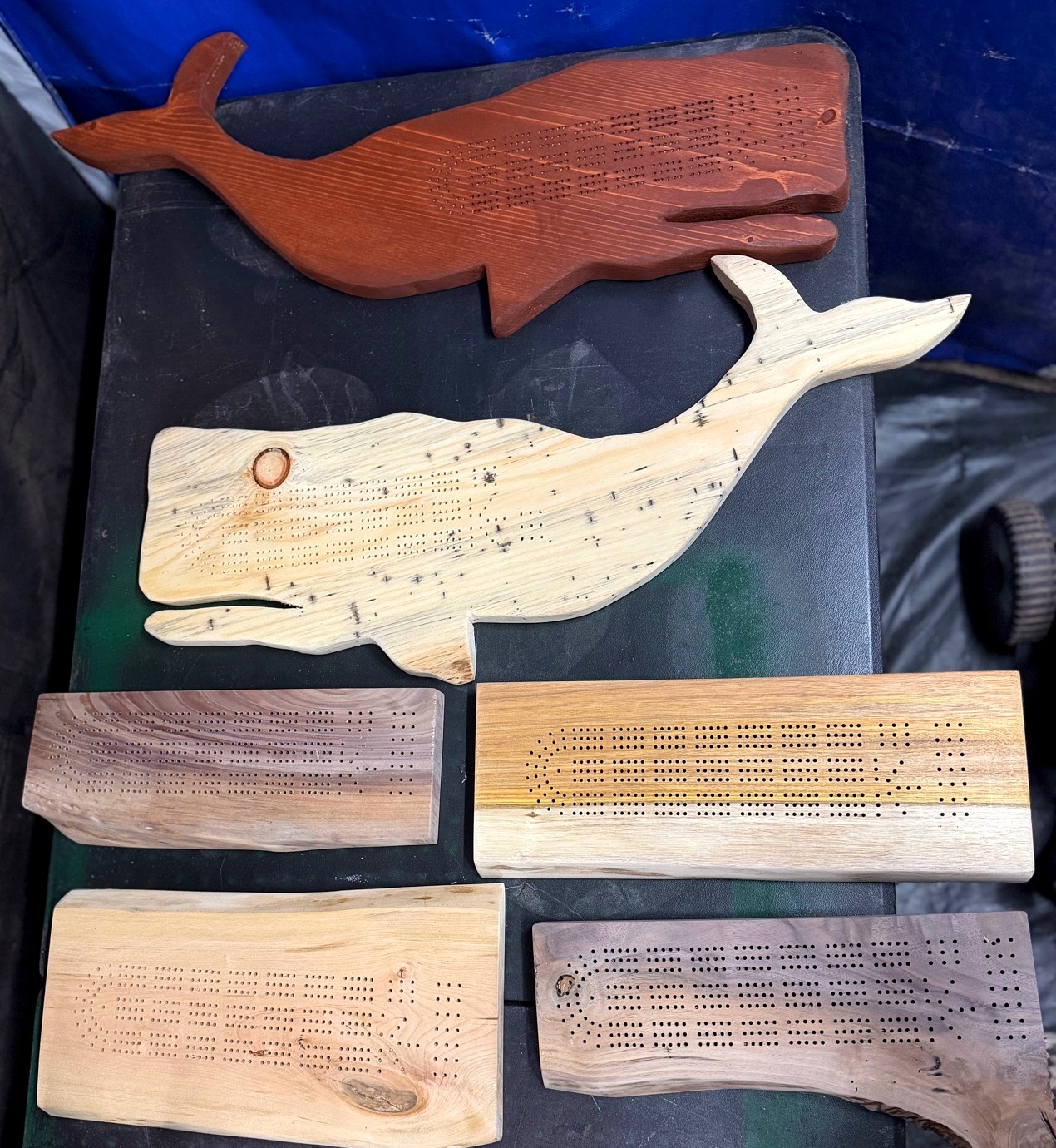
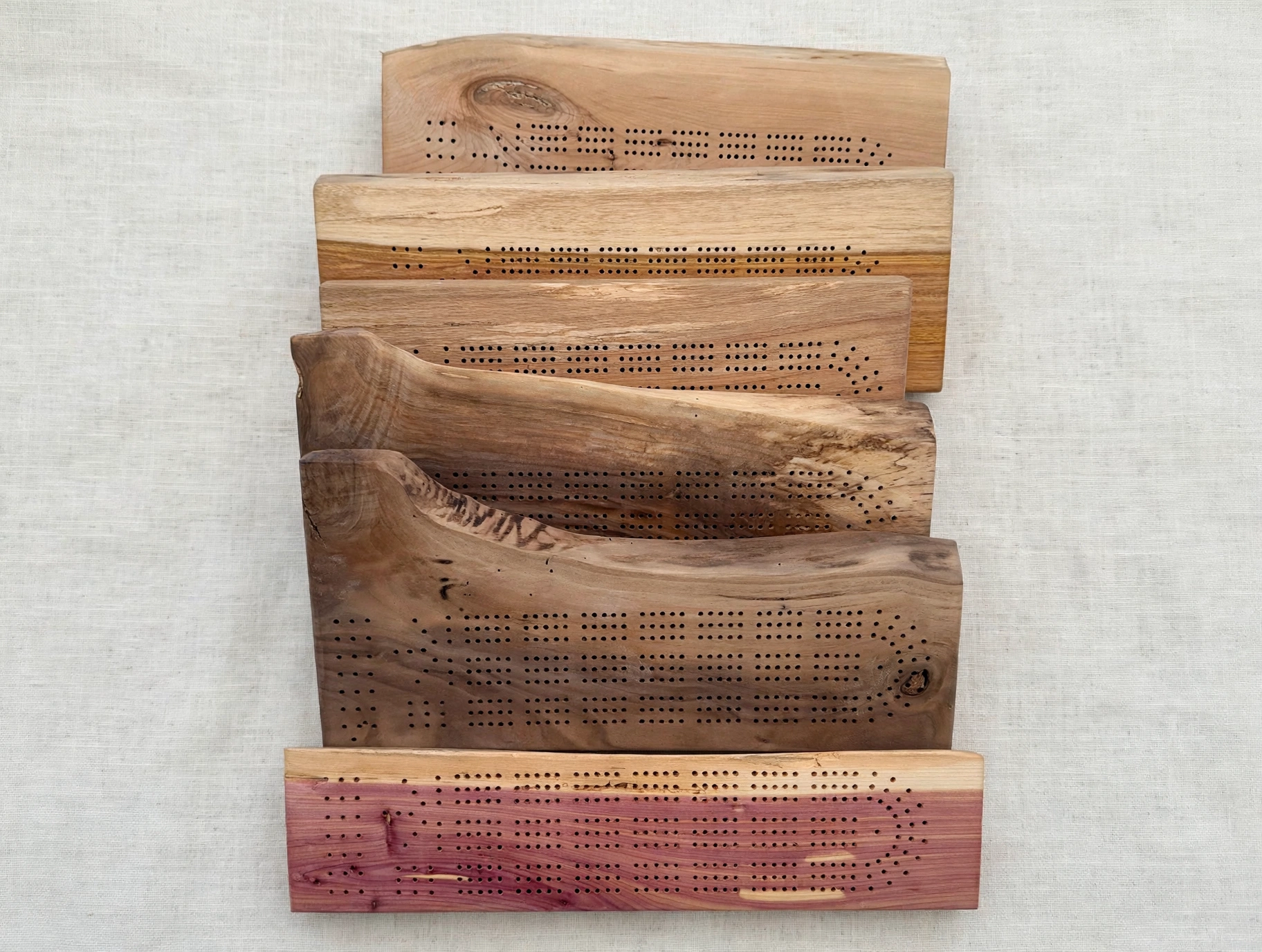
Six cribbage boards on a work table — two whale-shaped boards, one reddish-brown and one pale spalted wood, above four live-edge boards in walnut and light hardwoods
Live-edge cribbage boards, including whale boards.
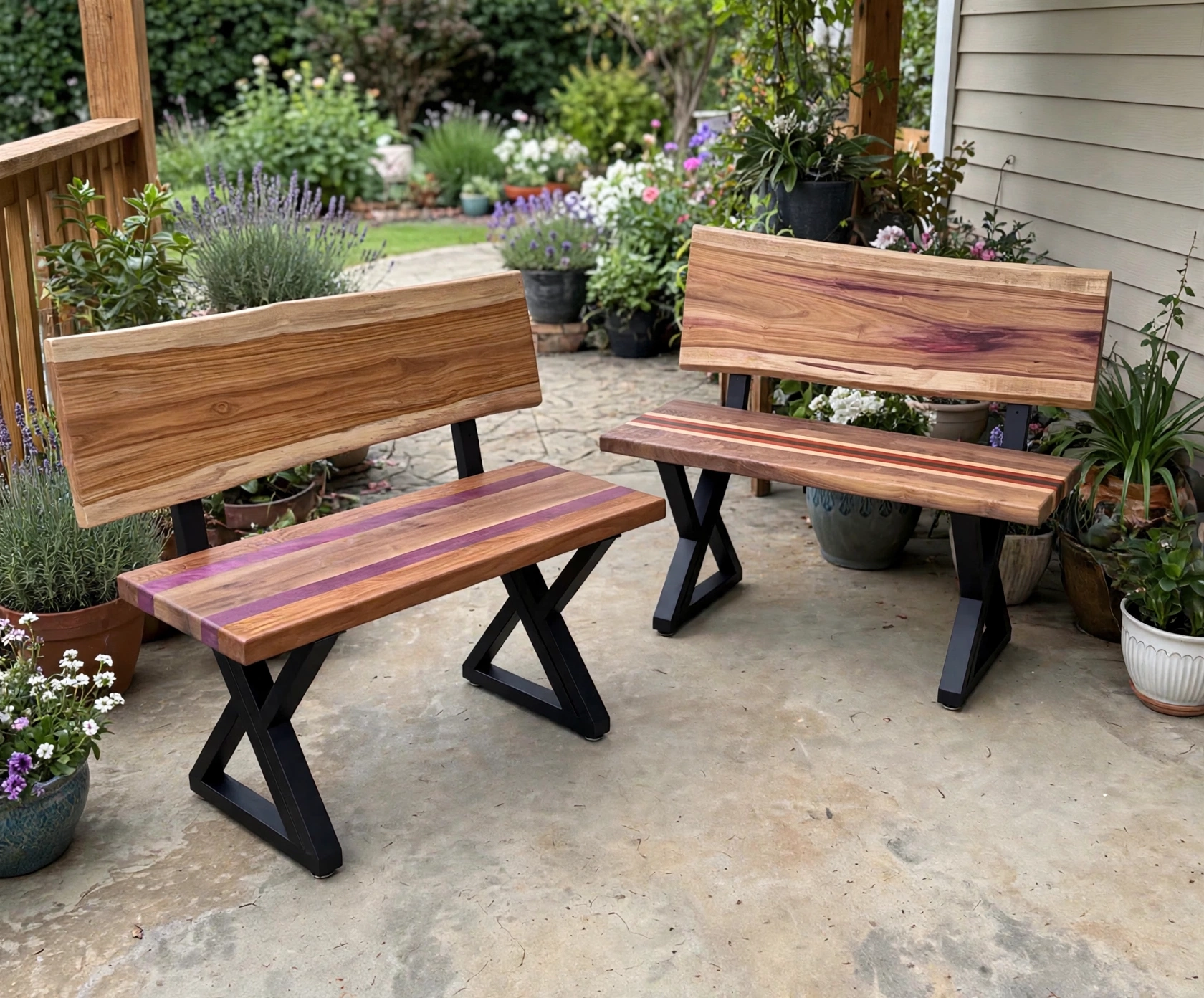
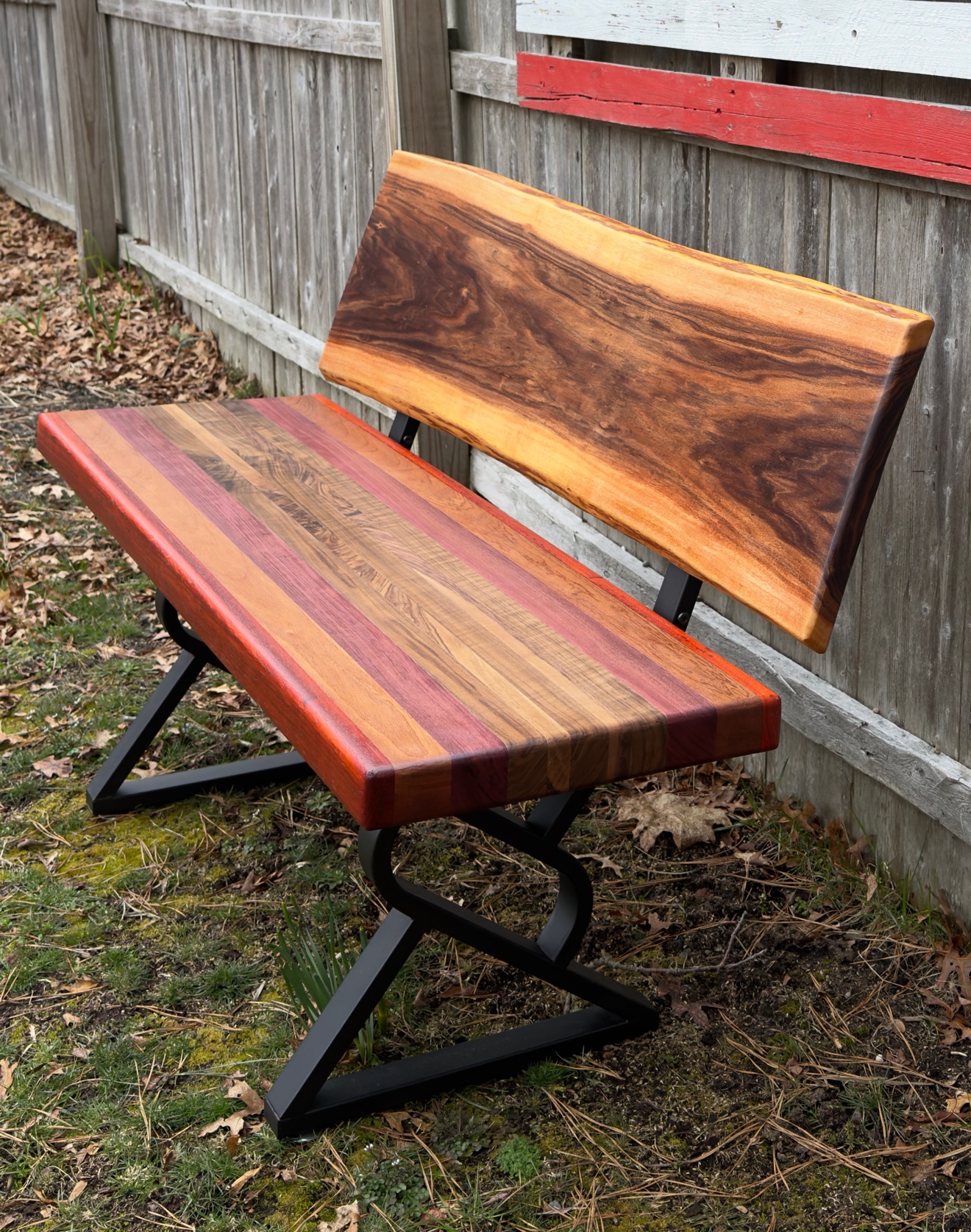
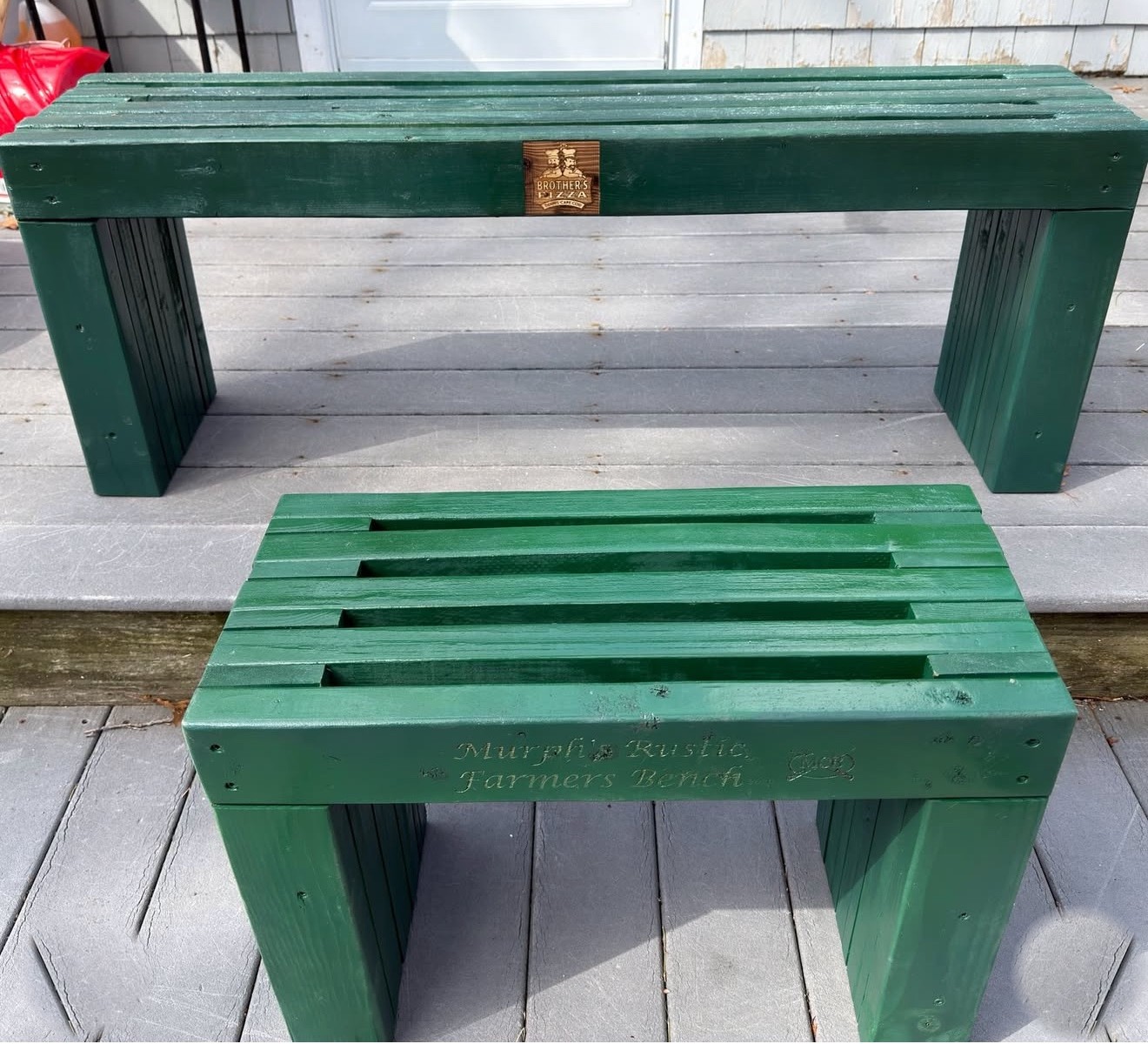
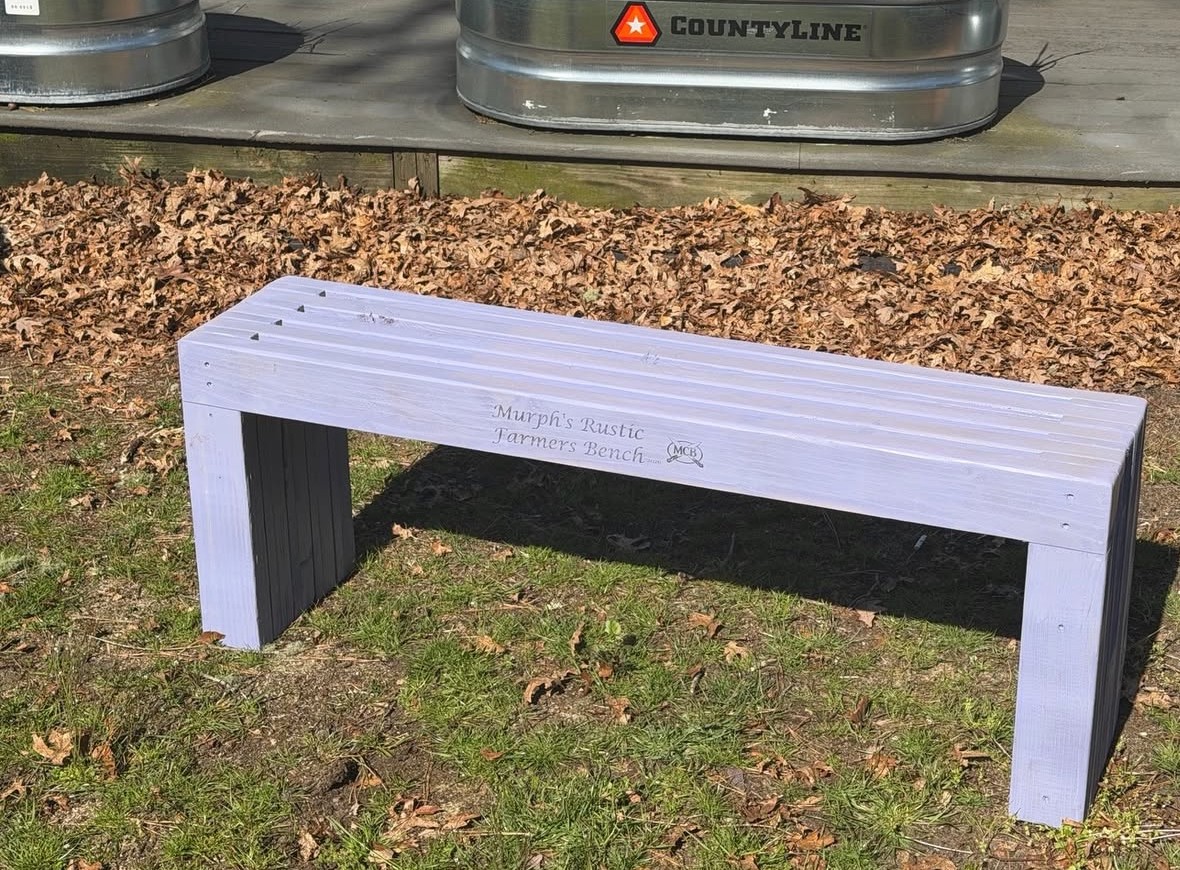
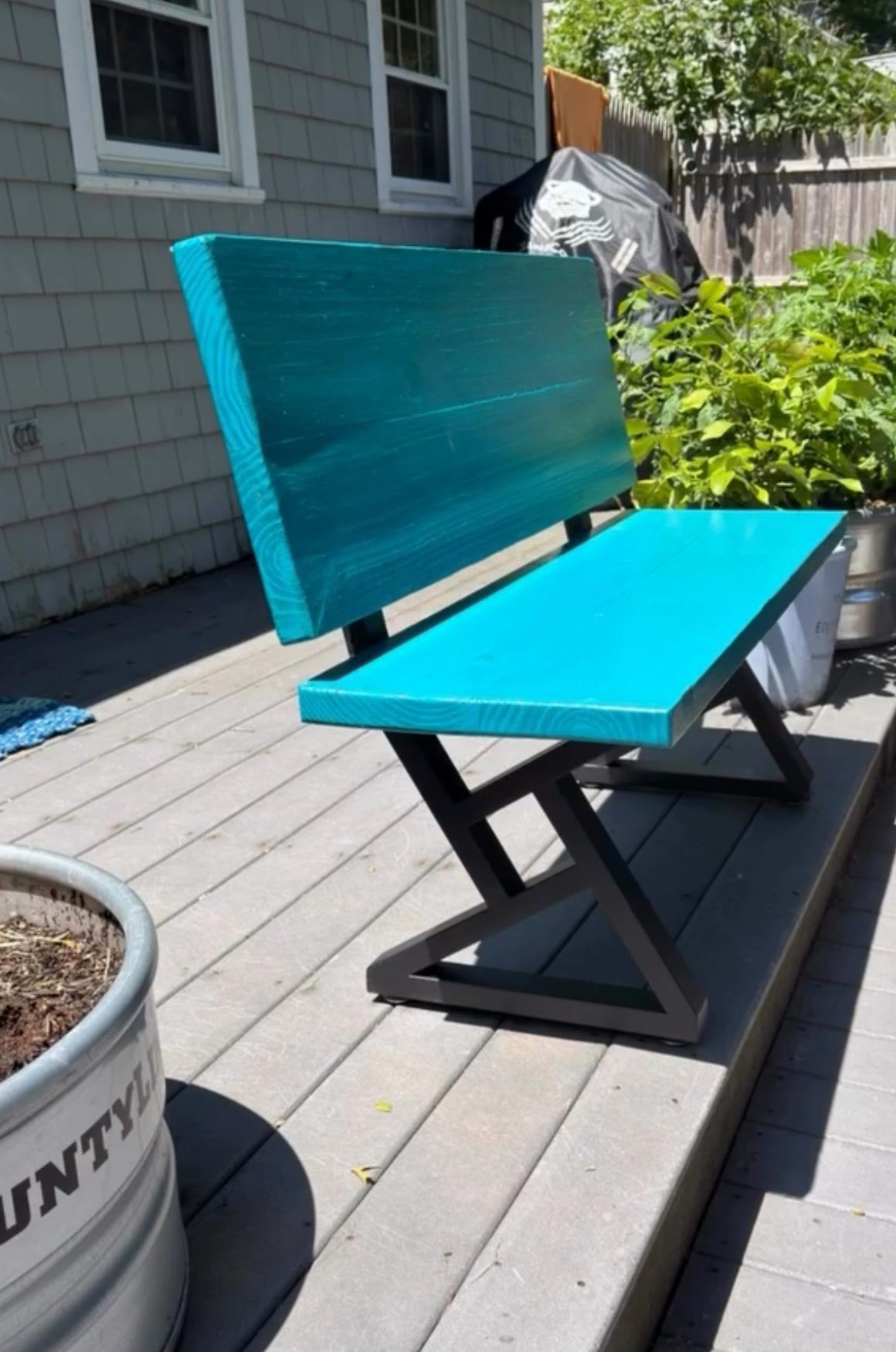
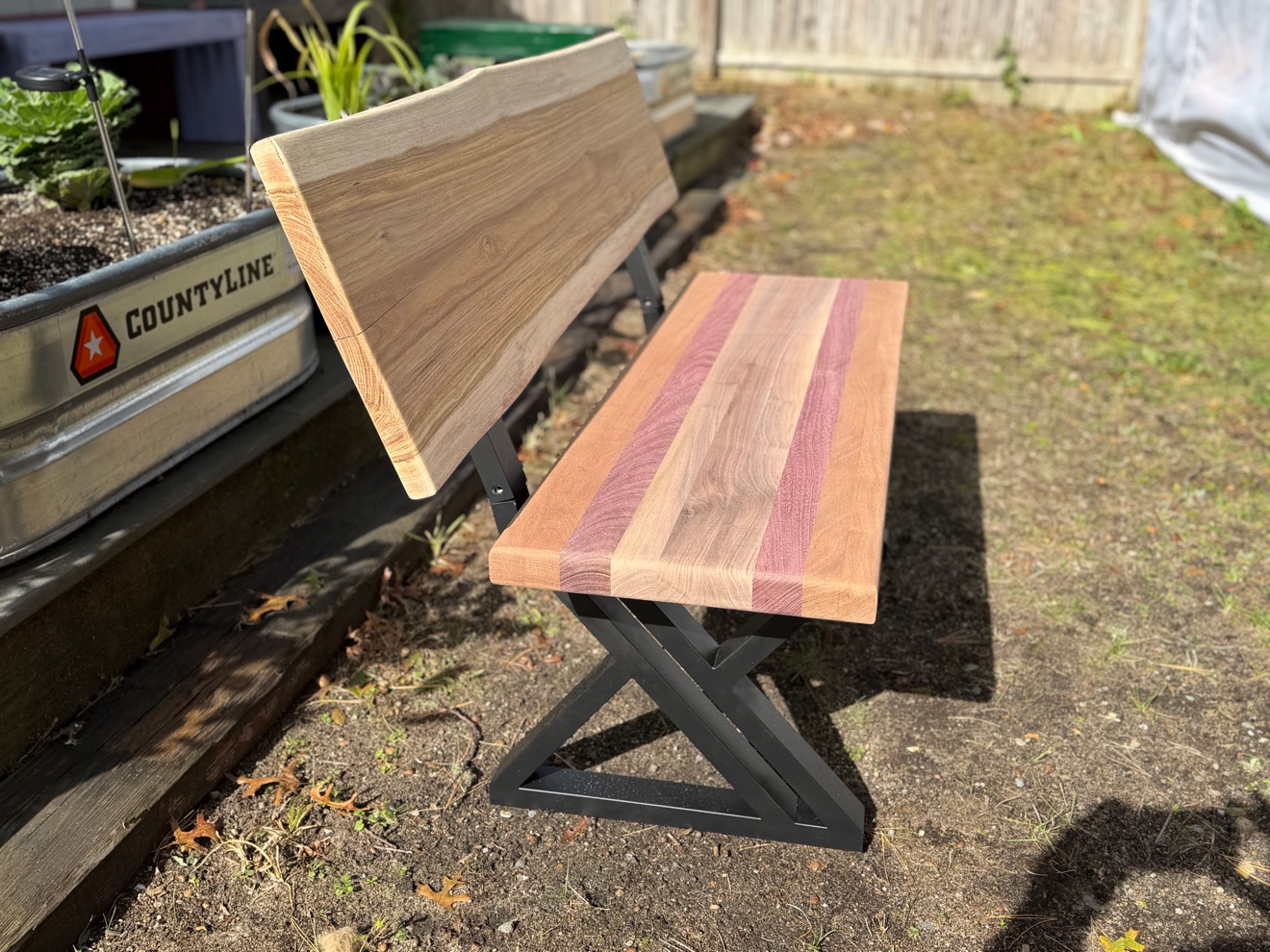
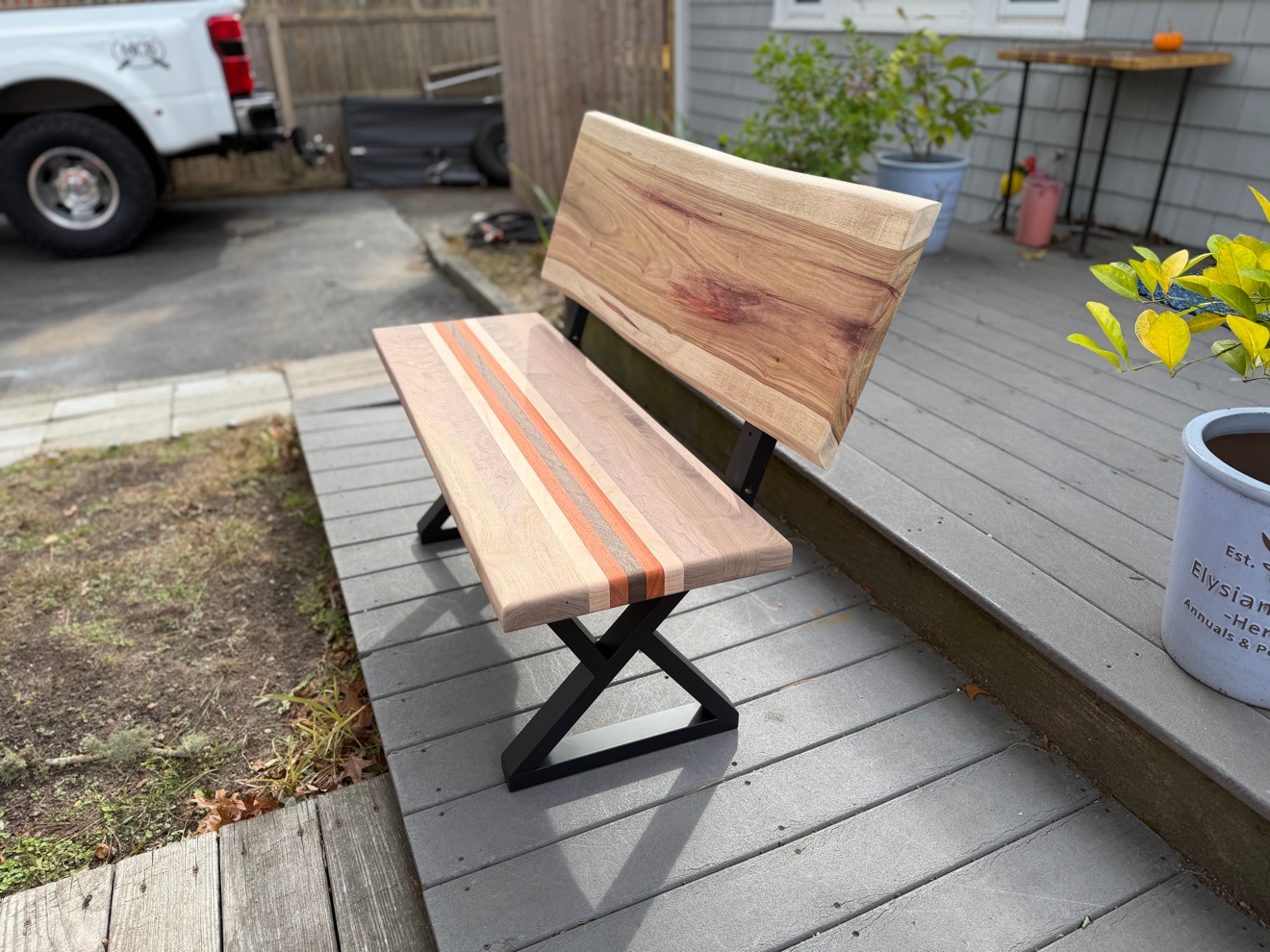
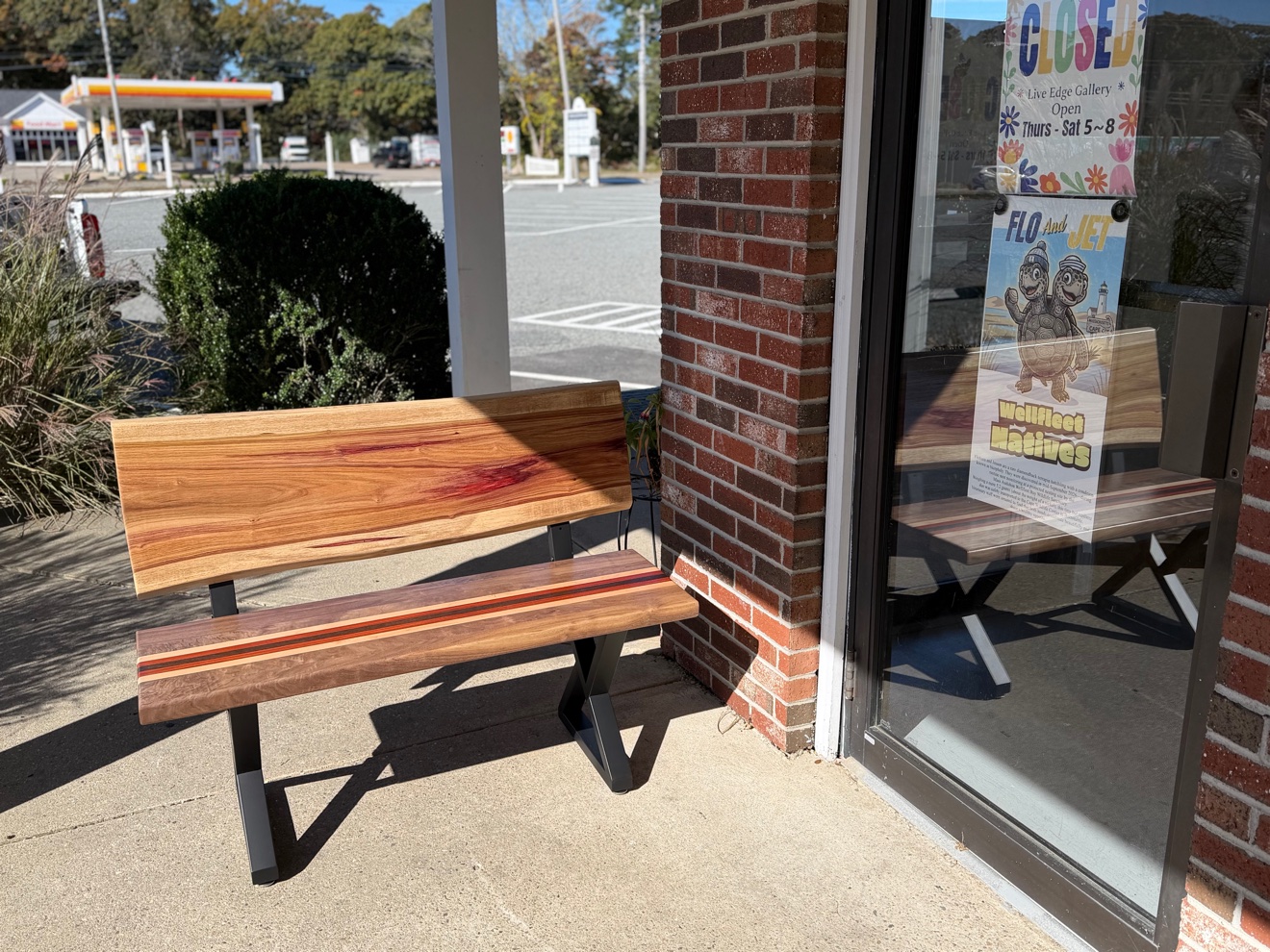
Two handmade benches turned and staggered on a porch patio in a flower garden with clear space between them — the front bench with a purple-striped seat and light live-edge back, the back bench with a walnut seat with red and light stripes and a warm live-edge back with red grain, both on black metal X legs, surrounded by potted flowers and lavender
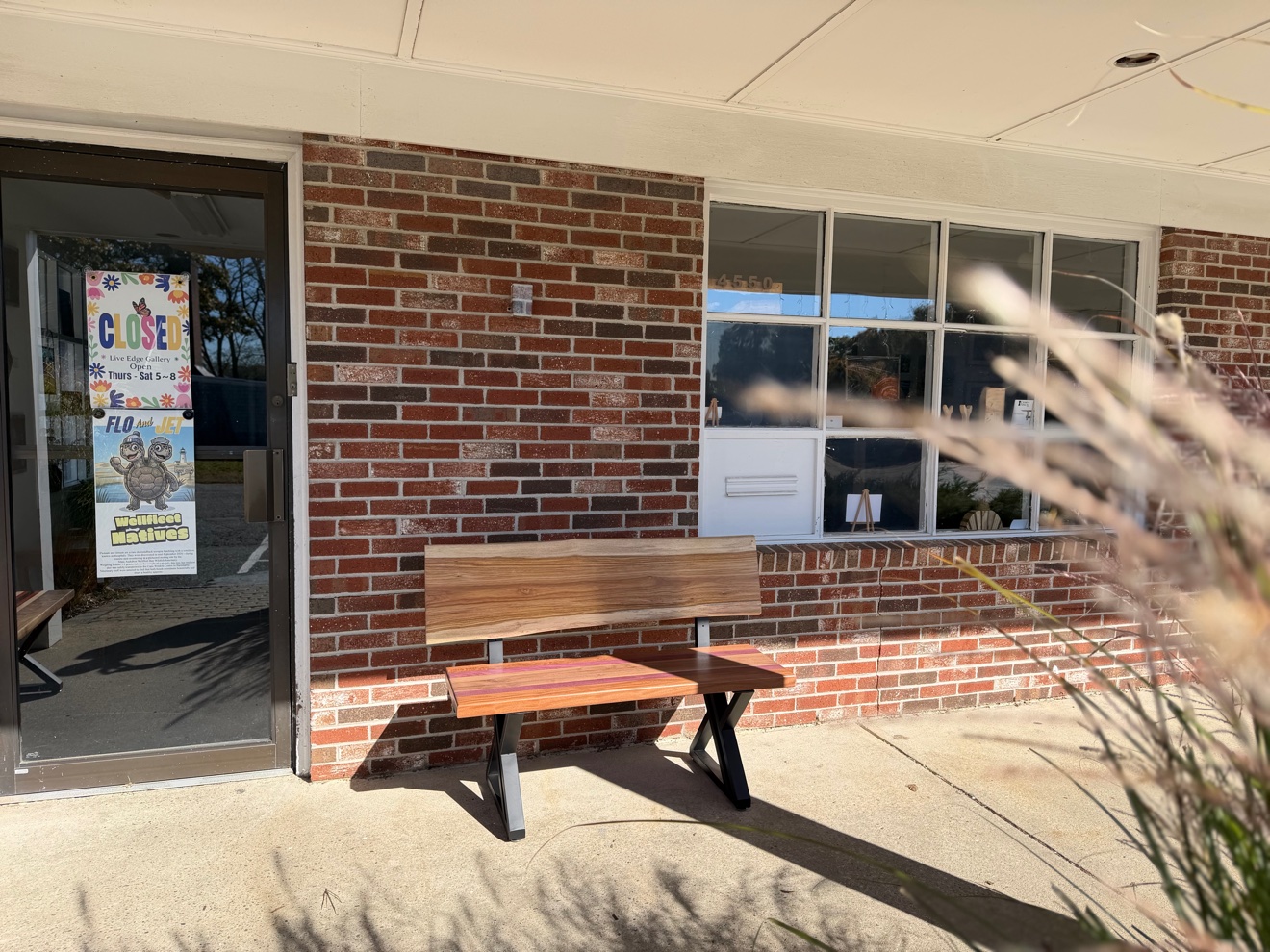
Benches.
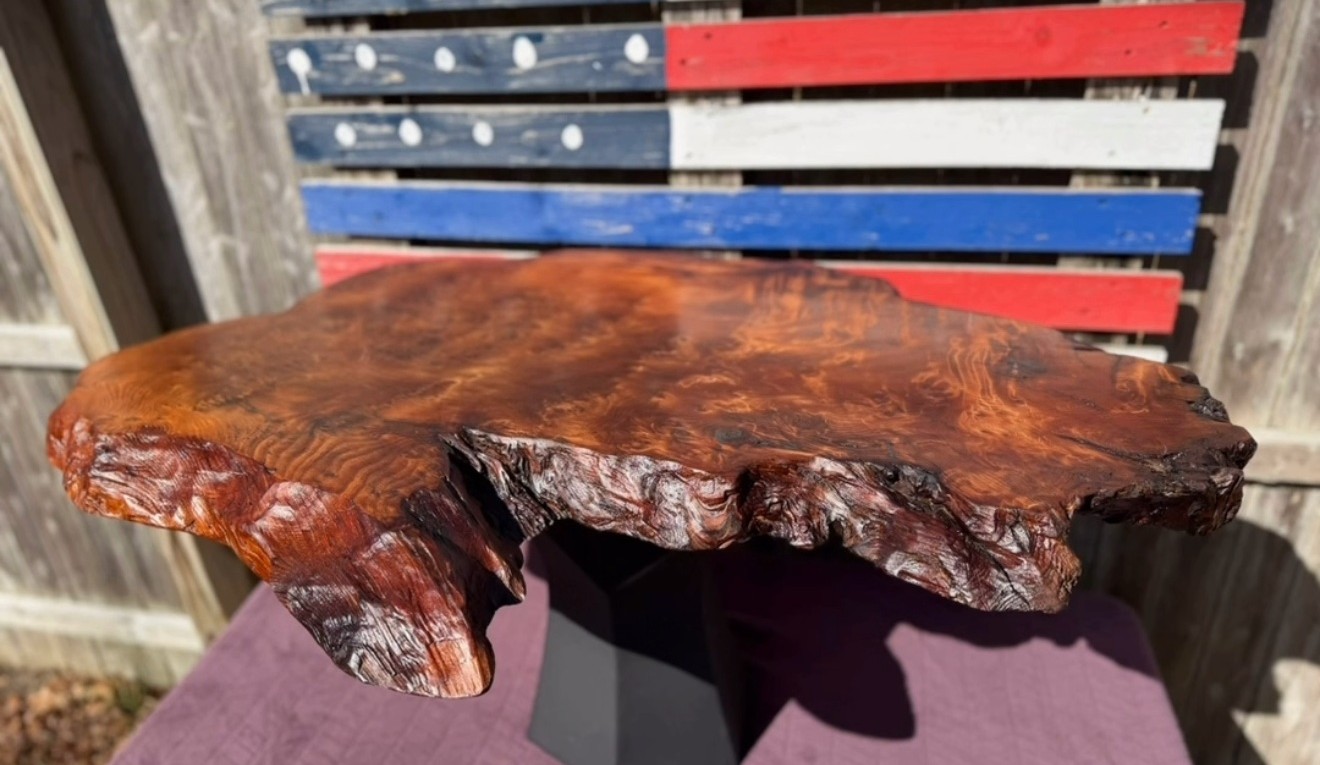
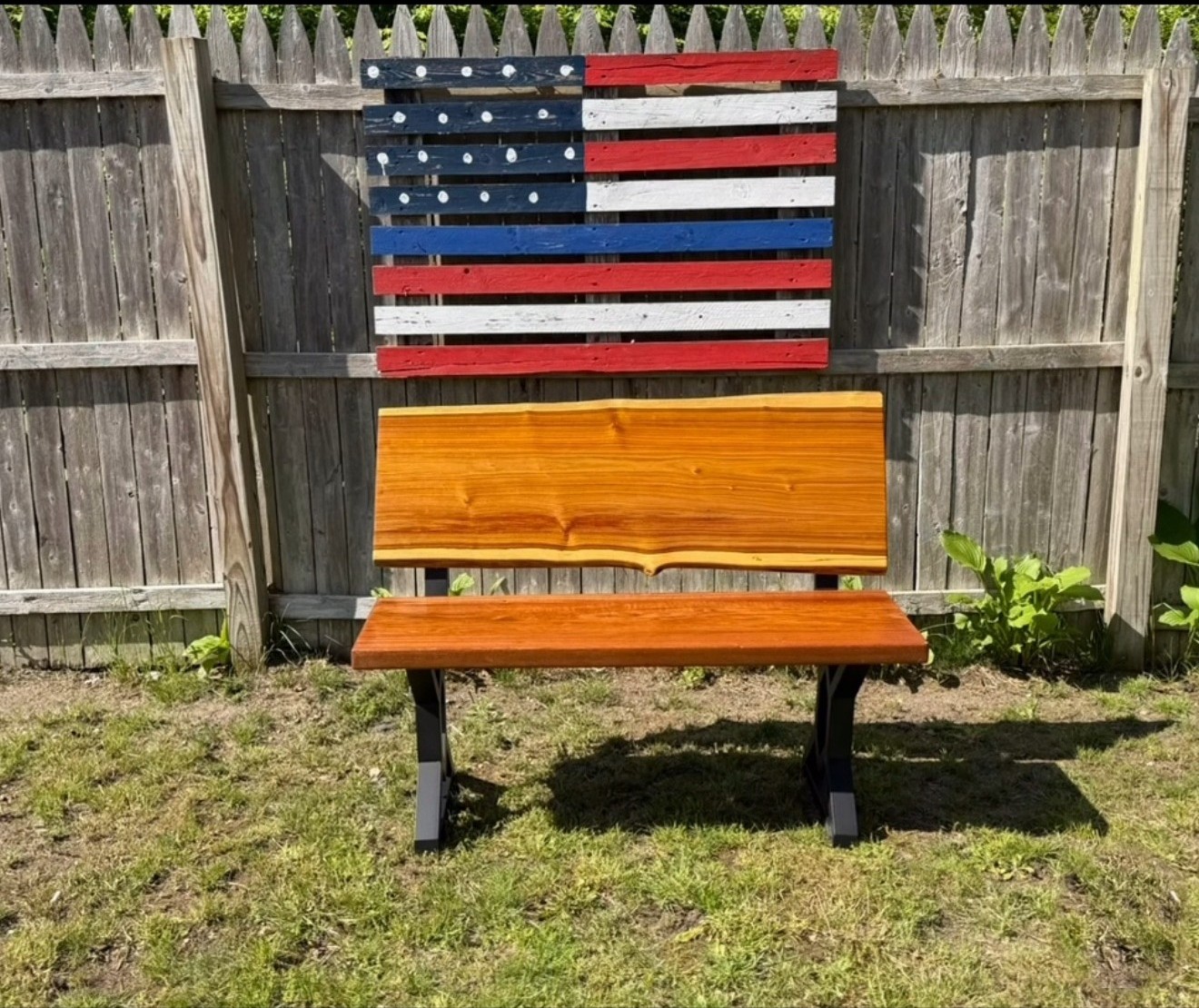
Redwood burl table — a live-edge redwood burl slab with dramatic swirling grain on a black base, in front of a fence with American flag pallet art
Redwood Burl TableOne-of-a-kind grain.
Mottled dark skull fire starter with its wick, sitting on the stone edge beside a blazing fire pit
Skull Fire Starter.
About Us

In the Shop: About Us

The shop, the story behind it, and the stuff that makes it Murph — from Christmas presents to a disco ball over the bench.
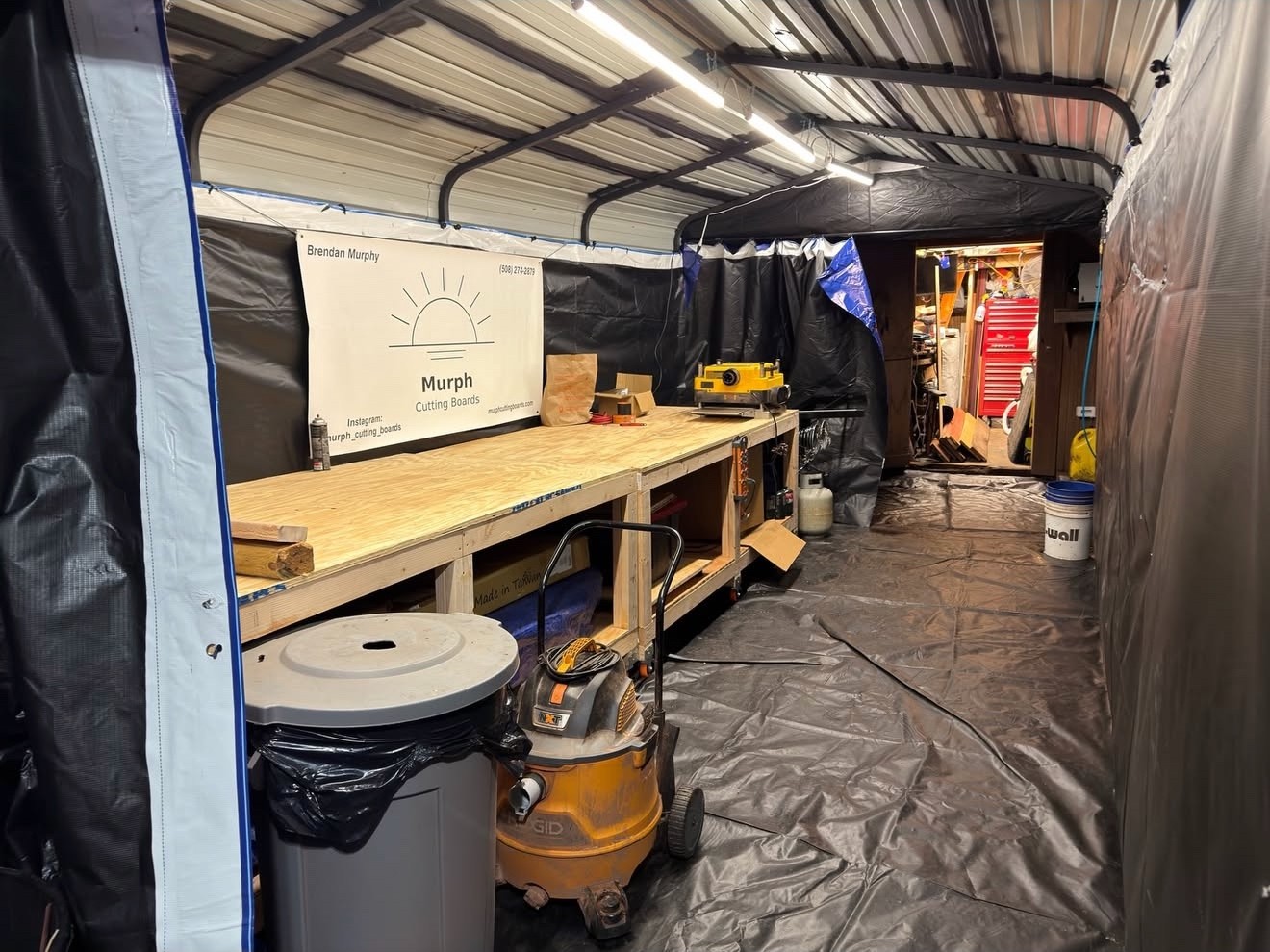
The Murph Cutting Boards workshop — a 10 by 20 foot carport shop with a long workbench, the Murph sunrise banner on the wall, and a shop vac in front
The workshop.
From the shop

It started with Christmas presents.

Brendan Murphy started woodworking at Christmas 2023, making arts-and-crafts Christmas presents for family and friends. He'd been making presents for several years before that — candles one year, pressed flowers in shadow boxes another, soaps and sugar scrubs once, glass tumbling, artistic mosaics in box frames, photography of landscapes and exotic locations, paracord bracelets, and dog collars and dog leashes (which he still does if asked).

The presents turned into a hobby, the hobby turned into a passion — and the passion turned into Murph Cutting Boards.

Everything is built in a 10′ × 20′ workshop in South Dennis, from local hardwoods and exotics sourced from suppliers around New England and beyond. Boards are glued, flattened, sanded, and finished by hand — then sold at markets all over Cape Cod and by custom order.

Fun Fact: there's a disco ball in the workshop, and it stays in the photos. Some shops have a radio. This one has a disco ball.
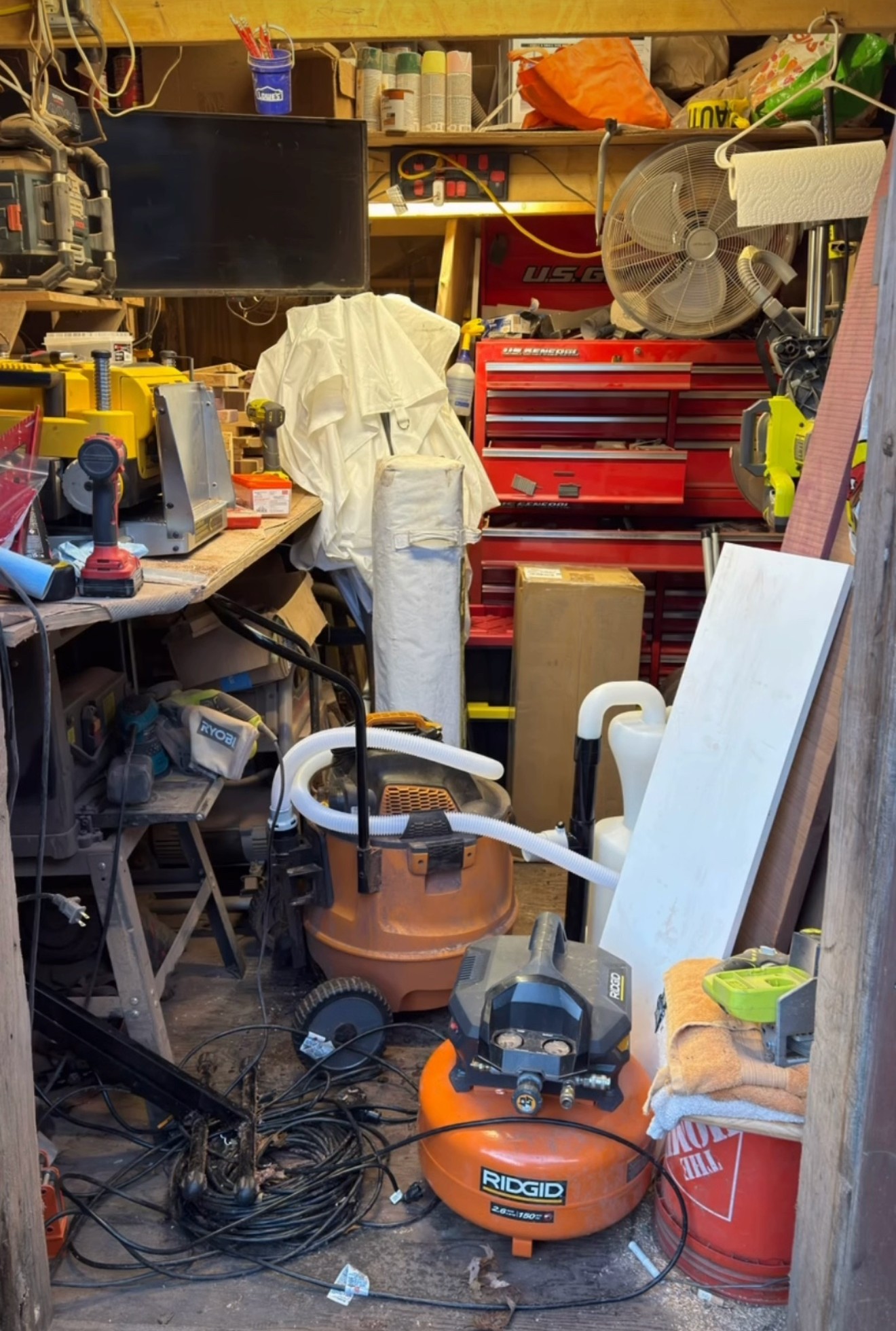
The old shop — a small cluttered shed workspace with a red tool chest, workbench, planer, shop vac and an orange Ridgid air compressor
The old shop.
Brendan Murphy standing behind his market booth table stacked with cutting boards, wearing a black Murph Cutting Boards hoodie, with his wooden oval Murph sign hanging above the table
Brendan at the booth.
After dark

The rolling billboard & the neon shop signs

The F-350 and the Road Glide 3 trike both wear the MCB crossed-knives mark — if you see them around the Cape, that's the shop on the move to a market, a lumber run, or a delivery. The neon versions of the sunrise and MCB logos are the shop signs turned up to eleven.


The Murph Cutting Boards sunrise logo as a rainbow neon sign
The sunrise logo, in neon
The MCB crossed-knives logo as a pink and yellow neon sign
MCB crossed knives, in neon
A white F-350 truck with the MCB logo on its fender and a trike motorcycle, both outlined in neon light under the Murph neon sunrise sign
The truck and trike under the neon sunrise — MCB on the fender
The workshop, disco lights going.
Cartoon of Brendan as Pack Master in front of his loaded truck.
Pack Master! It ain't easy loading, unloading, setting up, and breaking down each show.
At home

Kendra & the pack

Brendan married Kendra in 2020 — they've been together for over 13 years. Kendra bought Brendan his very first planer for his woodworking.

Kendra is the silent partner and glue that holds it all together.

Brendan and Kendra in a heart-shaped wooden frame at sunset.
Brendan and Kendra.

At home, there are three dogs:

Sandor “The Hound” Murphy Rescue

Rescue and an English and American Foxhound mix.

Jethro Cape Cod mutt

Cape Cod mutt. Mom got out one night and had some fun. Runt of the litter. Very big now. Super loving, but loves his own space.

American Staffordshire Terrier, Labrador Retriever, German Shepherd, and Golden Retriever mix.

Chuck Rescue

95% American Staffordshire Terrier and 5% Boxer mix. Little house hippo. Same color, weight, and size as a cinder block. Just a wee smarter. Very loving, friendly.
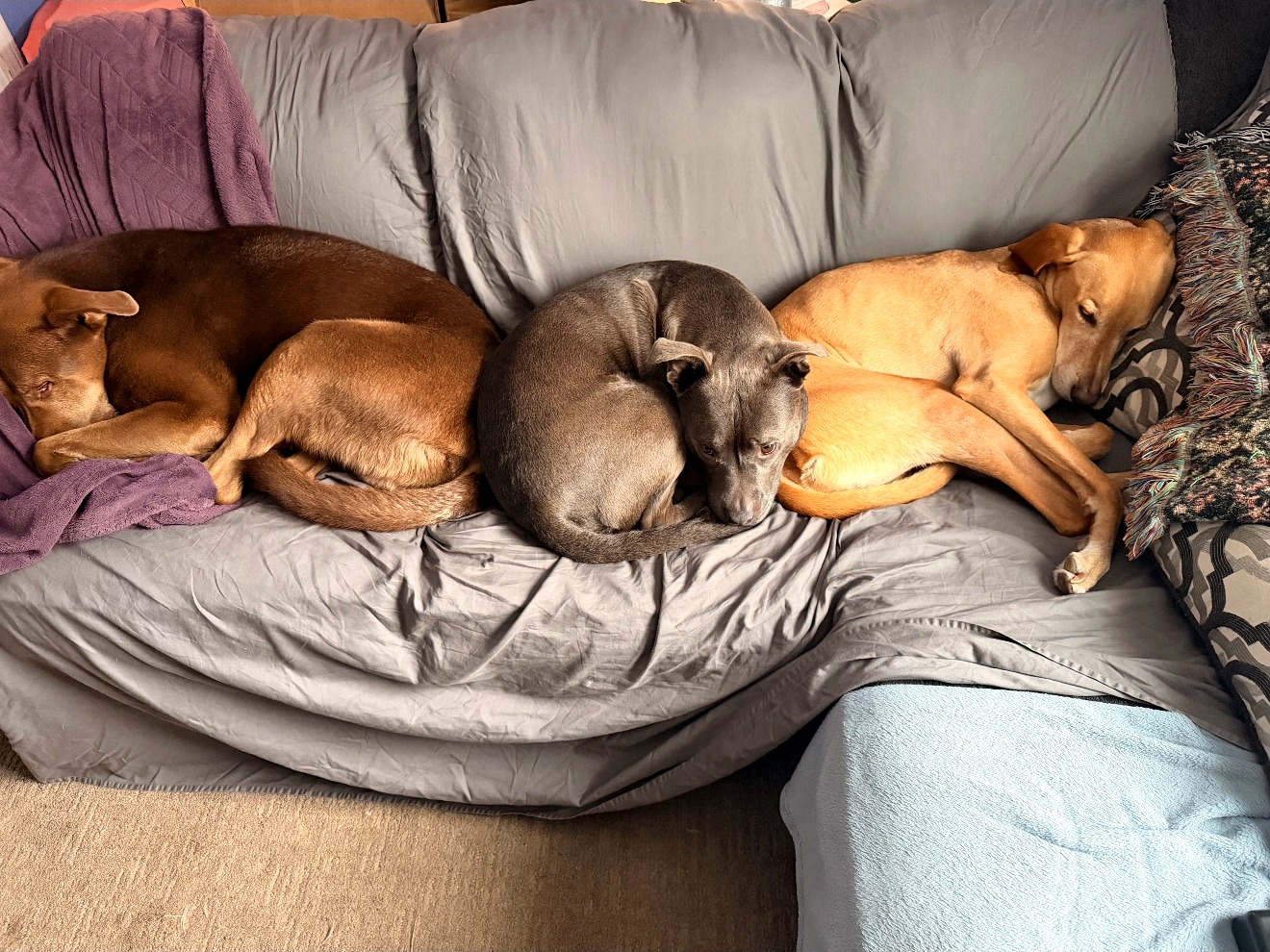

Jethro, Chuck, and Sandor asleep together on the couch, left to right.
Couch Potatoes — Left to right: Jethro, Chuck, and Sandor.
The three Murphy dogs looking out of the open rear window of a blue truck on a sunny day
The pack, out for a ride.
Fun facts

More fun facts

Fun Fact: The workshop is a 10′ × 20′ carport — metal roof, no sides, wrapped in old billboard vinyl.
Fun Fact: There’s a disco ball in the shop — and it’s intentionally included in photo and video shots.
Fun Fact: Brendan started woodworking at Christmas 2023 making arts-and-crafts Christmas presents, after years of candles, pressed flowers in shadow boxes, soaps and sugar scrubs, glass tumbling, mosaics, photography, paracord bracelets, and dog collars and leashes.
Fun Fact: A board made in 1999 came back after 27 years, was sanded and re-oiled, and is still solid.
Fun Fact: The truck and the bike both carry Murph Cutting Boards logos for business exposure.
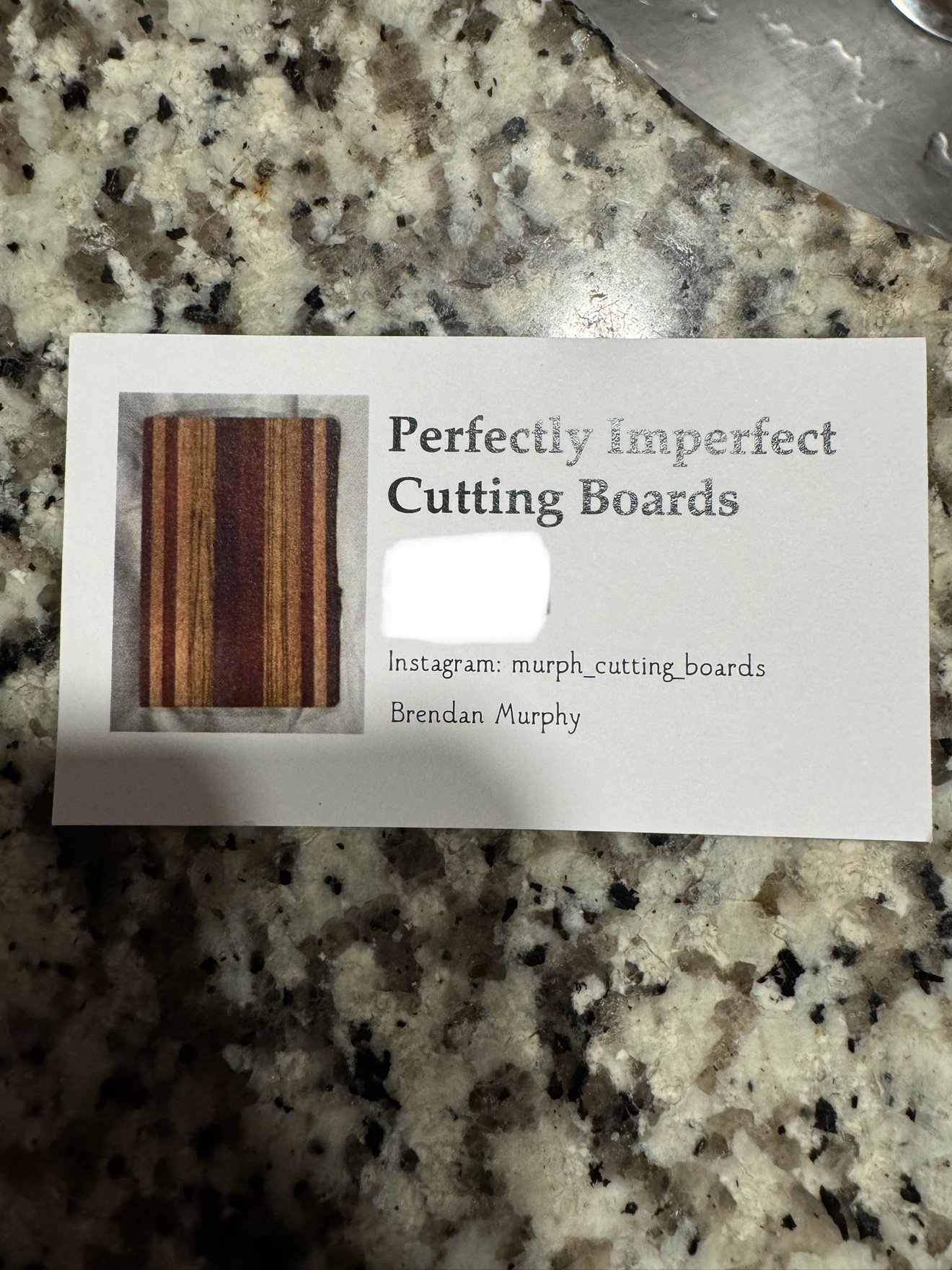
Fun Fact: Originally started as Perfectly Imperfect Cutting Boards and changed to a more personalized brand — Murph Cutting Boards.
The original Perfectly Imperfect Cutting Boards business card on a granite countertop, with a photo of a striped board, the Instagram handle murph_cutting_boards, and Brendan Murphy printed on it
The original Perfectly Imperfect Cutting Boards card.
Fun Fact: Brendan is a sci-fi nerd — Tron, Starfleet, Firefly, the lot, plus lots of foreign and B movies, like Captain Nova and The Beyond.
// This Just In

Freshly Finished

This Just In — newly completed work, as it lands

Neon Tron-style card on a glowing blue and orange grid: the words FRESHLY FINISHED in orange neon and STAND BY in cyan neon above the MCB crossed-knives logo in cyan and orange neon, with a loading bar and the words UPDATE IN PROGRESS below
$ LLSDLaserControl -ok 1

Newly completed work will land here as it comes off the bench. Check back soon — or DM on Instagram @murph_cutting_boards.
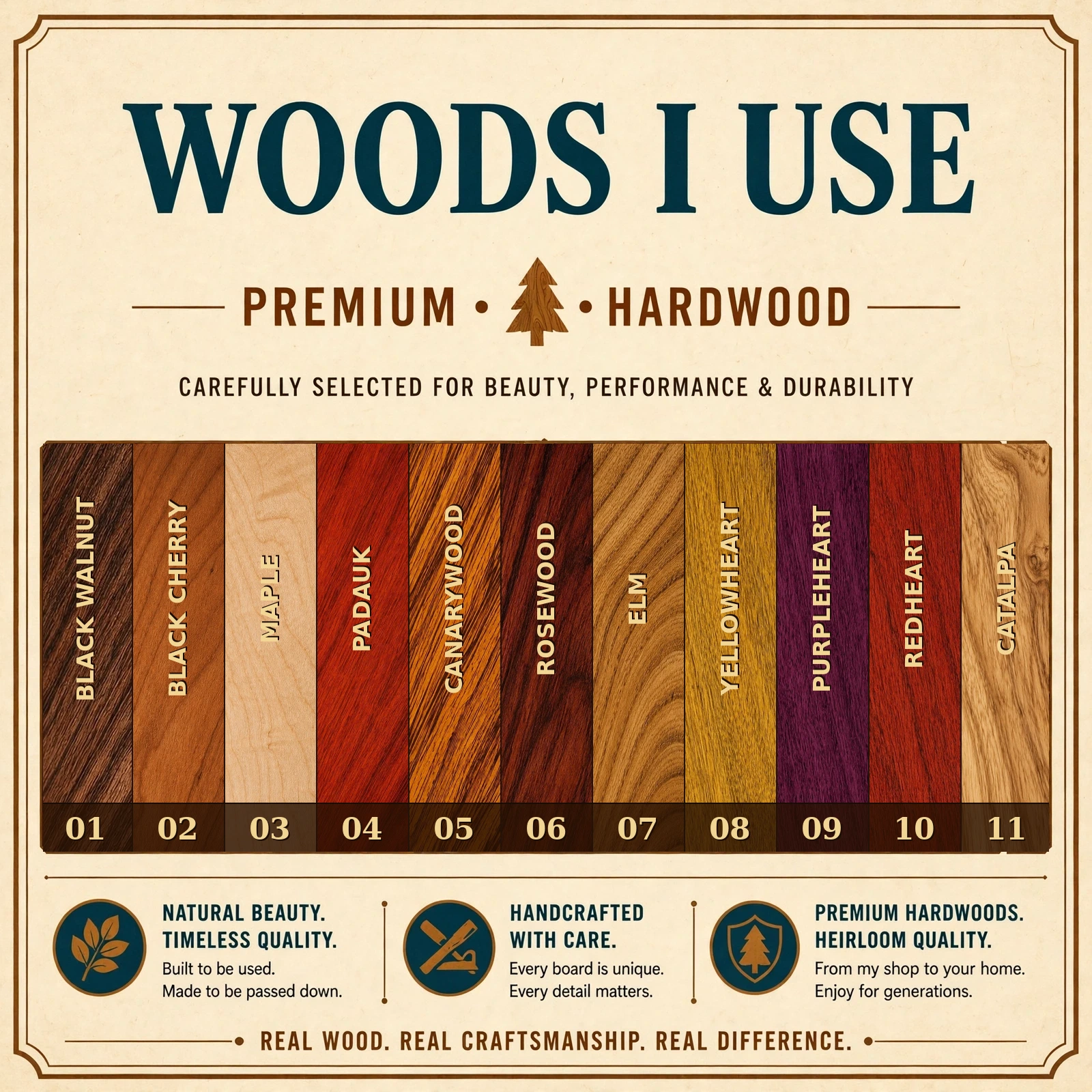
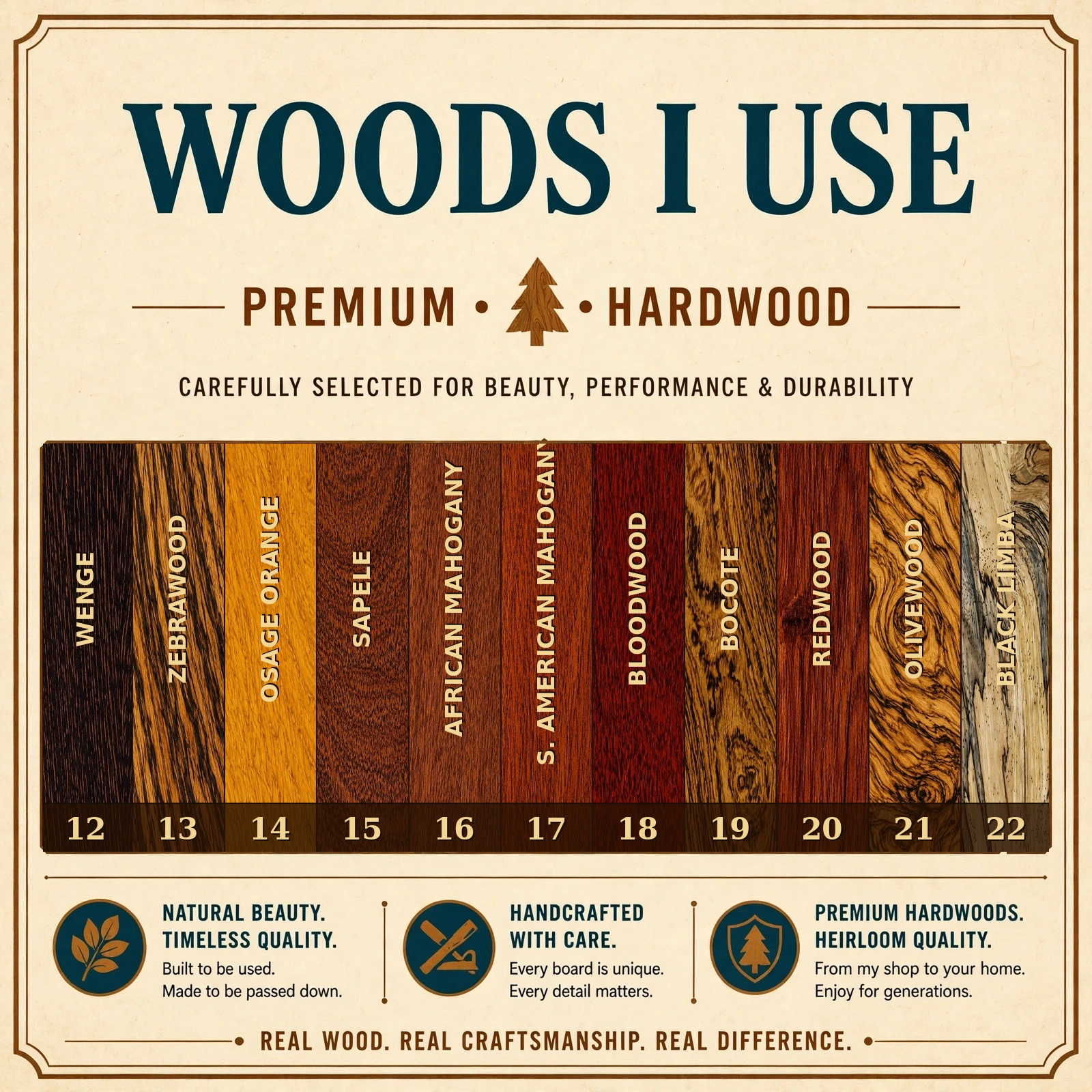
Woods I Use

Woods I Use — Premium Hardwood, carefully selected for beauty, performance and durability. Woods 01 to 11 of 22 shown as numbered vertical wood samples: Black Walnut, Black Cherry, Maple, Padauk, Canarywood, Rosewood, Elm, Yellowheart, Purpleheart, Redheart and Catalpa. Natural beauty, timeless quality — built to be used, made to be passed down. Handcrafted with care — every board is unique, every detail matters. Premium hardwoods, heirloom quality — from my shop to your home, enjoy for generations. Real wood. Real craftsmanship. Real difference.
Woods I Use — Premium Hardwood, carefully selected for beauty, performance and durability. Woods 12 to 22 of 22 shown as numbered vertical wood samples: Wenge, Zebrawood, Osage Orange, Sapele, African Mahogany, South American Mahogany, Bloodwood, Bocote, Redwood, Olivewood and Black Limba. Natural beauty, timeless quality — built to be used, made to be passed down. Handcrafted with care — every board is unique, every detail matters. Premium hardwoods, heirloom quality — from my shop to your home, enjoy for generations. Real wood. Real craftsmanship. Real difference.
Don't see the combo you're dreaming of? Most boards mix two to four species — .
Premium hardwood · Made for you, made to last

Board Care 101

Caring today for a lifetime tomorrow.

A hardwood board isn't fragile — it just has a few rules. Ten minutes of care buys decades of board, and your board will outlast the kitchen it sits in. These steps work Brendan's Instagram cards together with the site's guide — wash, dry, store on its edge, oil monthly, butter quarterly, and the lemon & salt freshen-up.
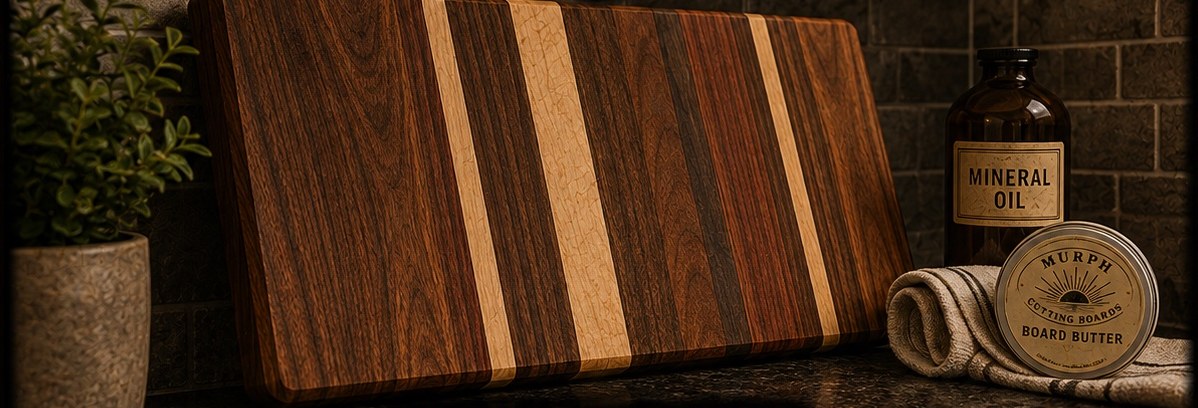
A striped hardwood cutting board leaning against a tiled backsplash, with a bottle of mineral oil, a tin of Murph Board Butter and a folded towel beside it
A striped board by the backsplash, with mineral oil and Murph Board Butter beside it — the whole care kit in one shot.
01

Wash with soap and water

Hand wash only — both sides, every time

Wash the board by hand with warm water and a little mild soap — both sides, even if you only cut on one. Washing both sides keeps the board from warping as it dries.
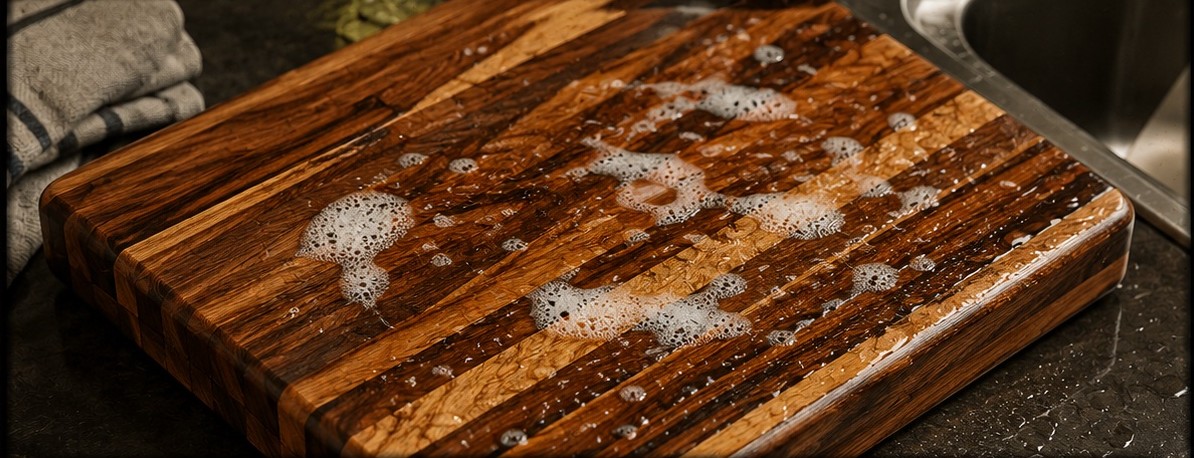
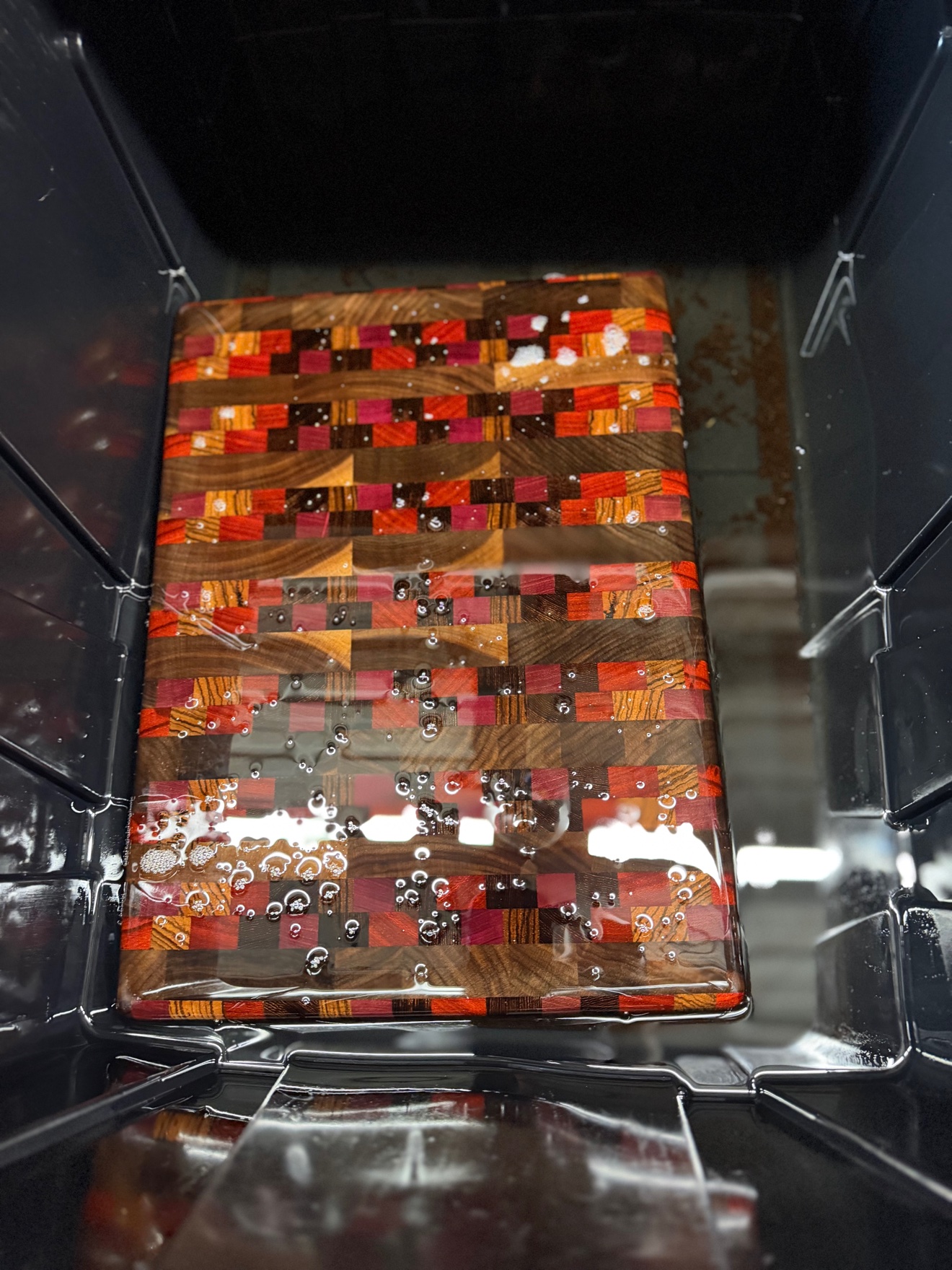
A striped hardwood board covered in soap suds and water on a dark counter next to a sink
Soap and water on the board, right by the sink — washed by hand, never left in it.

Do not soak in the sink

A quick hand wash is all it needs. Leaving a board soaking lets water into the glue joints and the grain.

Do not put it in the dishwasher

Heat, steam, and long soaks split glue joints and crack wood. No dishwasher — ever. It takes one cycle to ruin years of work.

Remember — warm water, mild soap, both sides, then straight to drying. Short and simple.
02

Dry with a paper towel or cotton dishcloth

Towel it off right after washing

Dry the board straight after washing with a paper towel or a cotton dishcloth. Then stand it on its edge so air reaches every face while it finishes drying.
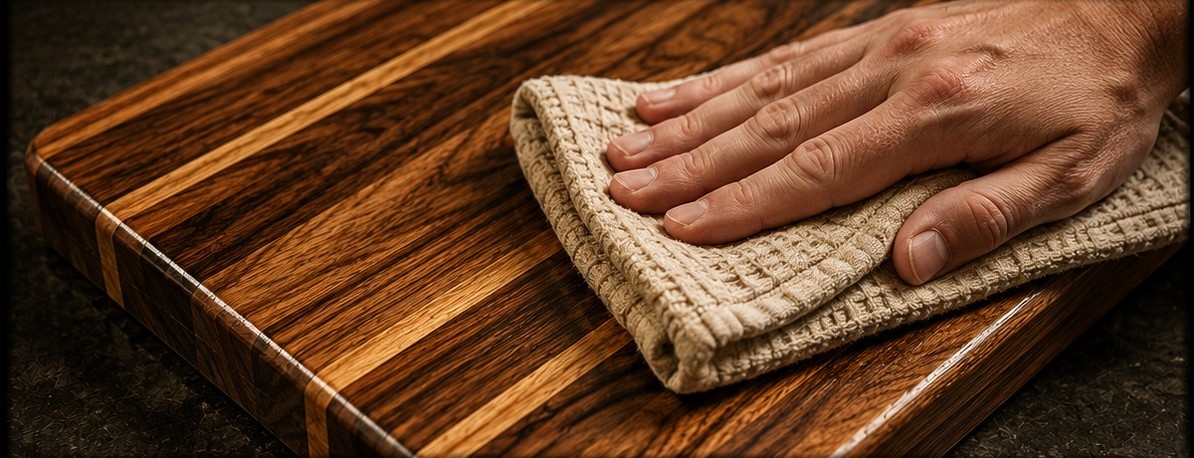
A hand drying a striped hardwood board with a folded cotton dishcloth
A cotton dishcloth does the job — a paper towel works just as well.

Towel first

Get the surface water off right away, both sides and the edges too.

Then let air finish it

Never leave a board lying flat in a puddle or leaning in the sink. Standing on edge lets every face dry evenly.

03

Store on its edge — unless it has feet

Airflow on both sides keeps it flat

Store it upright on its long edge, so air can move around both sides. That airflow is what keeps the board flat instead of warping. If your board has feet, flat is fine — the feet lift it off the counter, so it still gets airflow underneath. Either way, keep it in a cool, dry spot.
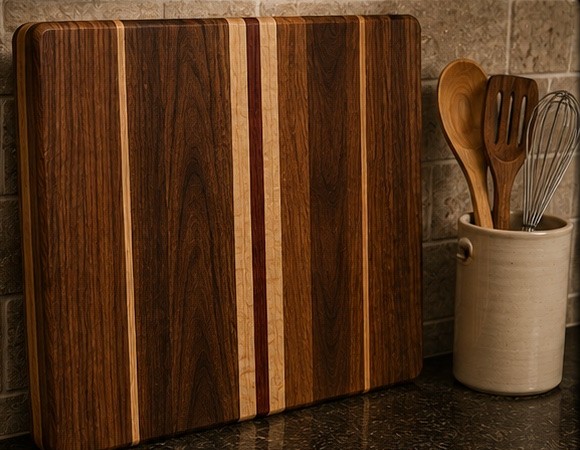
A striped walnut board standing upright on its long edge on a kitchen counter, next to a crock of wooden utensils
Upright on its long edge, next to the utensil crock — its regular home on the counter.
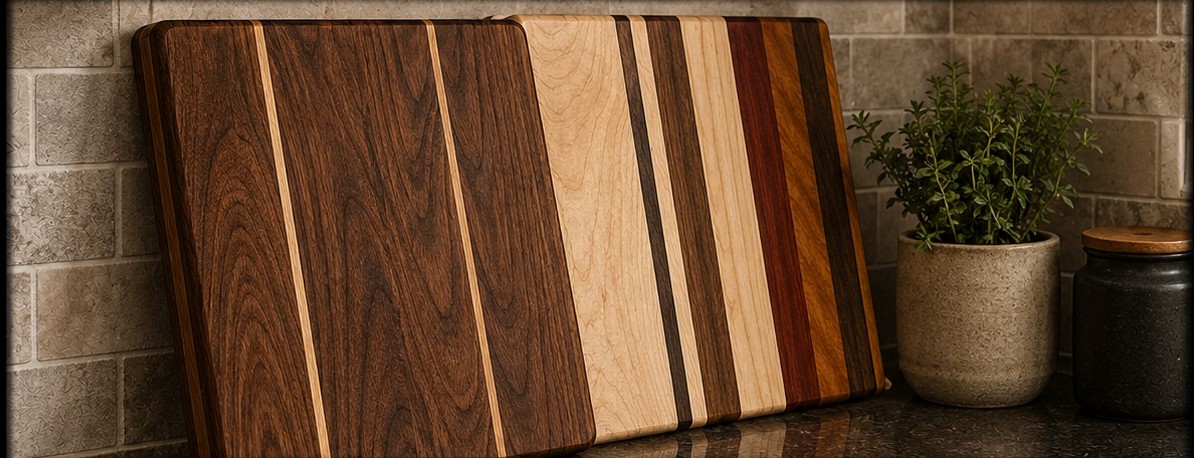
Two hardwood boards — one dark walnut, one striped in light and dark woods — leaning against a tiled kitchen backsplash
Leaning against the backsplash is for drying after a wash — once it's dry, put it away on its edge.

Lean it only while it dries

After washing, lean it against the backsplash until it's fully dry, then put it away on its edge. Leaning is for drying — not for long-term storage.

Has feet? Flat is fine

If your board has feet, store it flat. The feet lift it off the counter, so air still moves underneath and both sides can breathe.

Not over the dishwasher

Do not place the board on a countertop over the dishwasher. It is hot and humid down there, every cycle.

Not on the stove top

Do not place the board on the stove top after using a hot oven — and never put it in the oven or store it next to the stove's heat.

Heat and steam are the enemy — dishwasher, oven, stove top, and the counter above the dishwasher all do the same damage. On its edge, cool, and dry wins.
04

Oil once a month with mineral oil

Once a month — and whenever it looks dry

Once a month, apply food-grade mineral oil. With heavy daily use, every few weeks is better — and if the surface looks pale or feels rough in between, that's the board telling you it's due.
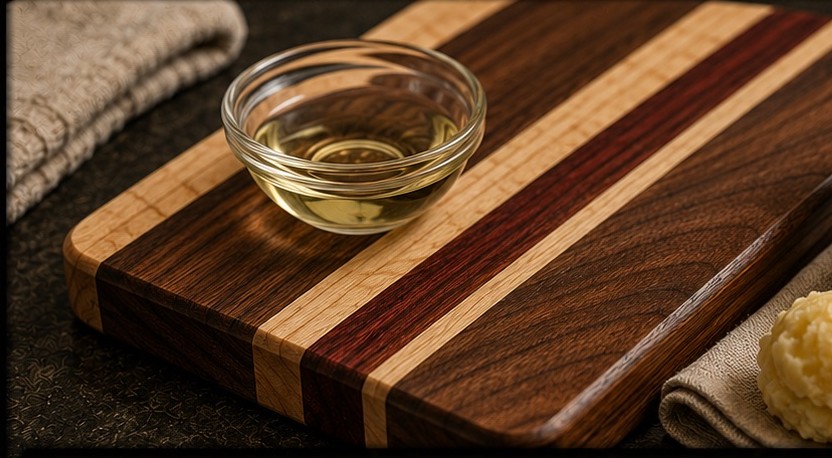
A small glass bowl of mineral oil sitting on a striped hardwood board, with a lump of board butter on a cloth at the edge
Mineral oil in a small glass bowl on a striped board, board butter alongside. Cropped in tight on the board and the oil — the Board Butter tin itself is just out of frame here; it's in the photo at the top of this page.

How to oil it

Rub in a light coat of food-grade mineral oil, let it soak in overnight, and wipe off the extra in the morning. Light coats, as needed.

Only food-grade mineral oil

Never use vegetable or olive oil on a board — they go rancid. Mineral oil doesn't.

The dry test — pale, rough, or thirsty-looking grain means oil now, whatever the calendar says.
05

Condition every three months with board butter

Every three months — Murph Cutting Boards Board Butter

Every three months, apply a board conditioner like Murph Cutting Boards Board Butter. Murph Board Butter is made in the shop by Brendan. A beeswax-and-oil board butter seals the surface after oiling and brings the grain back to life. It's the two-minute spa day.
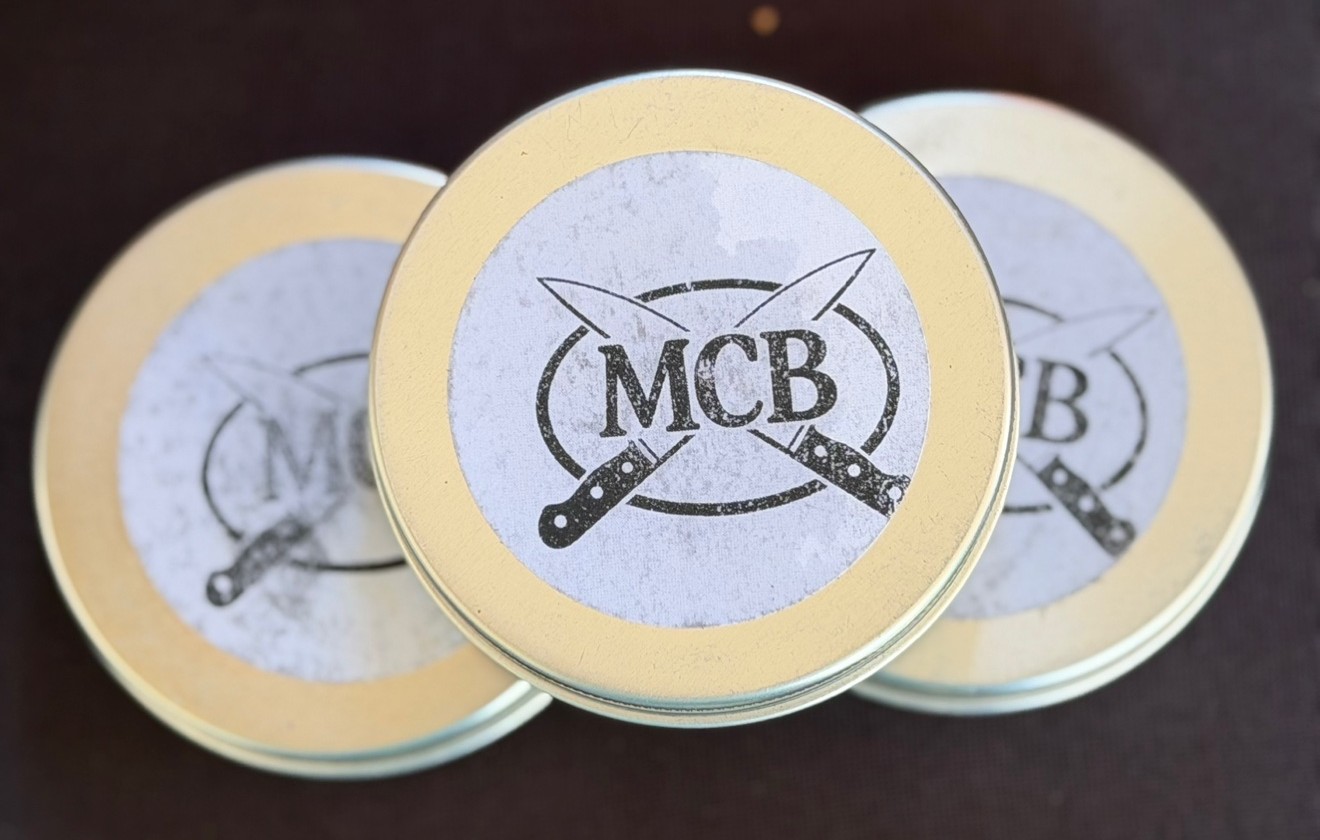
Three real Murph Board Butter tins with gold lids and the MCB crossed-knives logo on top, the centre tin in sharp focus
Real Murph Board Butter tins — Murph Board Butter is made in the shop, with the MCB crossed-knives logo on top.

What's in it

All natural — triple-filtered white beeswax and mineral oil. Nothing on the board that doesn't belong near food.

Oil first, butter second

Oil feeds the wood; butter seals it in. Rub a thin coat over the oiled board, let it sit, then buff off the extra.

The rhythm — oil monthly, butter quarterly. That pair of habits does most of the work of keeping a board for decades.
06

Freshen with lemon & salt

The smell-and-stain reset

Onion or garlic smell hanging around? Rub the board with coarse salt and half a lemon, rinse, dry on edge. Stains fade, smells go, board stays.
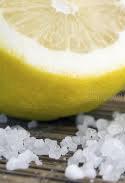
Half a lemon beside a pile of coarse salt on a wooden surface
Half a lemon and coarse salt — the freshen-up, ready to rub in.

When to reach for it

After strong-smelling prep — onion, garlic, fish — or when a stain is lingering after a normal wash.

Then back to the routine

Rinse, towel dry, and dry on edge like always. If the scrub leaves the surface feeling dry, a light coat of oil brings it back.

Do

  • Wash by hand with soap and water — both sides
  • Dry with a paper towel or cotton dishcloth, then on edge
  • Cut on both sides to wear it evenly
  • Store on its long edge for airflow — or flat only if it has feet; lean against the backsplash only while drying
  • Oil once a month, and condition with board butter every three months
  • Freshen with lemon & salt when smells hang around
  • Bring a tired board back for a Second Life refresh

Don't

  • Soak it or leave it wet
  • Put it in the dishwasher or oven
  • Place it on the counter over the dishwasher — hot and humid
  • Place it on the stove top after using a hot oven
  • Use vegetable or olive oil — they go rancid
  • Store it next to the stove's heat
Made for you — made to last. Natural. Durable. Premium woods, handcrafted with care — every board, every detail. Real wood. Real craftsmanship. Real difference.
Learning one board at a time

Woodworking 101

Twelve short lessons from the bench — why boards are built the way they are, what the wood is doing, and how to choose (and keep) a board that lasts.

01

What makes a great cutting board?

Function, beauty, and craftsmanship — together

A great cutting board is more than just a piece of wood. It's where function, beauty, and craftsmanship come together.

Checkered end grain cutting board in use on a granite counter with knives, an onion, garlic and potatoes
The checkered end grain board, at work in a real kitchen.

Durability

Built to handle daily use and last for generations.

Knife friendly

The right wood and grain orientation help protect your knives' edges.

Beauty

Natural wood is timeless. Every board is unique and tells its own story.

Food safe

Made with food-safe finishes and proper care, safe for you and your family.

Heirloom quality

Thoughtfully crafted to be used, loved, and passed down for years to come.

Pro tip — Invest in quality and take care of it. A well-made cutting board will perform better, look beautiful in your kitchen, and last a lifetime.
02

Understanding wood grain

Wood grain is the direction of the fibers in a tree. How the grain is oriented in your cutting board affects its look, feel, durability, and performance.
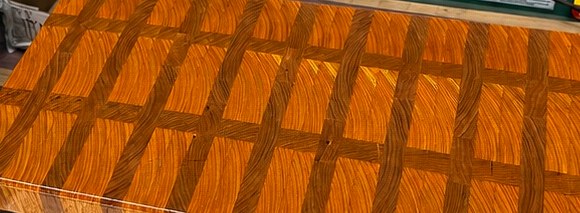
Close view of a plaid-pattern end grain board, its grain swirling through every square
End grain, up close — the fiber ends are the cutting surface.

Face grain

Shows the broad surface of the wood. Highlights natural figure and color.

Edge grain

Strong, stable, and the most common construction for premium cutting boards.

End grain

The ends of the wood fibers face upward. Durable, knife-friendly, and self-healing.

Pro tip — End grain boards are the most knife-friendly. The fibers open slightly when cut, then close back up — helping your board and your knives last longer.
03

Hardwood vs. softwood

Why hardwoods are preferred for cutting boards

Not all wood is created equal. Hardwoods are dense, durable, and built to handle daily use in the kitchen.
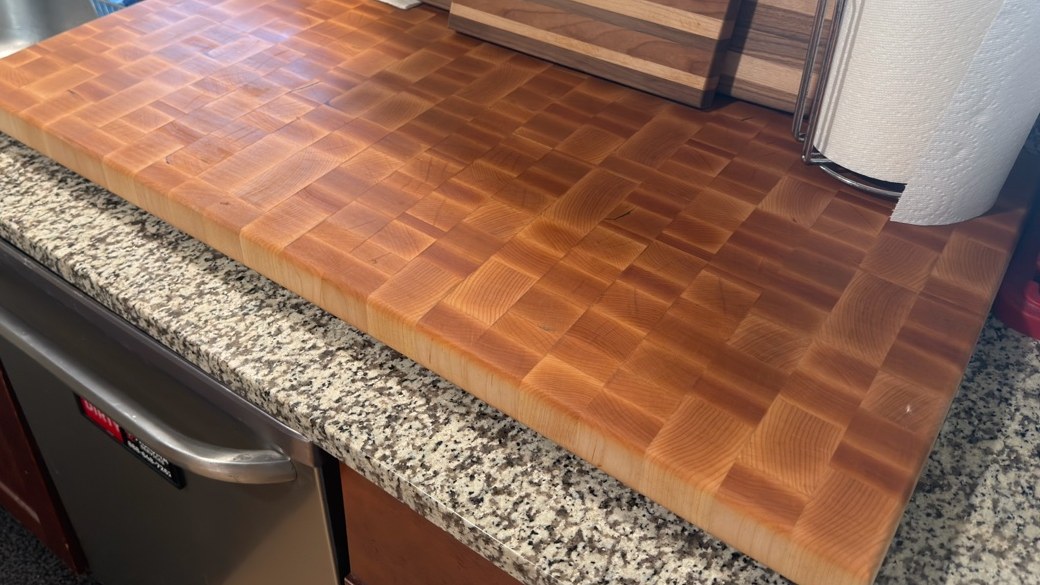
A big checkered end grain cutting board filling a granite kitchen counter, with striped edge grain boards leaning behind it
The big end grain board on the counter, striped edge grain boards leaning behind it.

Hardwoods — the better choice

  • Dense & durable
  • Resists knife marks
  • Longer lasting
  • Naturally beautiful
  • Food-safe when properly maintained

Softwoods — not ideal

  • Softer & less dense
  • Dents & scratches easily
  • Wears out quickly
  • More resin & sap
  • Not as food-safe
Pro tip — For cutting boards, choose hardwoods like maple, walnut, cherry, or purpleheart. They stand up to knives and stand the test of time.
04

Why wood moves

Wood expands and contracts. It's normal — and natural.

Wood is a living material. It absorbs and releases moisture from the air, causing it to expand in humid conditions and shrink in dry conditions. This movement can affect the shape, size, and appearance of your cutting board over time.

Two checkered end grain cutting boards in mixed hardwoods on the workshop bench
Two mixed-hardwood end grain boards on the bench.

What causes movement?

  • Moisture — wood absorbs moisture in humid air and releases it in dry air
  • Seasons — humidity changes from season to season cause wood to expand and contract
  • Grain direction — wood moves across the grain more than it does along the grain

How much does wood move?

On average, wood can change up to ¼″ across its width with seasonal humidity changes.

What you might notice

  • Small cracks between glue joints
  • Slight cupping or warping
  • Changes in length or width
  • Tiny checks on the surface

This is normal. It's not a defect. It's the nature of real wood.

Pro tip — Keep your board in a consistent environment. Avoid extreme humidity changes by not placing it near heat vents, dishwashers, or leaving it soaking wet.
05

The Janka hardness scale

Measuring strength. Building better boards.

The Janka scale measures the resistance of a wood species to denting and wear. The higher the number, the harder the wood. Harder woods are generally more resistant to knife marks and daily wear — making them ideal for cutting boards. Values below are pounds-force (lbf), as listed in the original lesson.

Highlighted: hard maple, black walnut, and cherry — board favorites that sit in the working range for cutting boards: hard enough to resist dents, not so hard they punish a knife edge.

What it means for you

Harder woods resist dents and knife marks better, last longer, and stay beautiful with proper care. That's why premium hardwoods are chosen for cutting boards.

Pro tip — A harder wood won't dull your knives any faster than a soft wood. Knife sharpness is more about your cutting technique and edge quality. Sharp knives + good technique = best results.
06

Why glue joints are so strong

Stronger than the wood. Built to last.

Modern woodworking adhesives create a bond that is often stronger than the wood fibers themselves. When boards are glued edge to edge, the entire surface area is joined — distributing stress and creating incredible strength and stability.
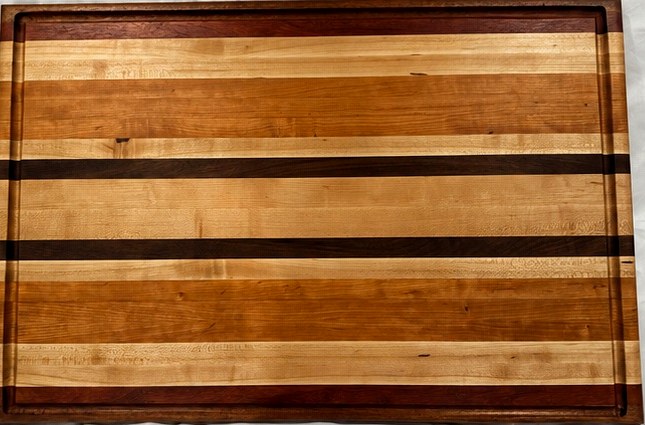
A striped edge grain cutting board with a juice groove — every stripe is a glue joint
Every stripe on this edge grain board is a glue joint.

The science of strength

Glue fills the microscopic pores in the wood and bonds at a molecular level. This creates a joint that resists pulling apart better than the wood can resist breaking.

More glue = stronger bond

A thin, even layer of glue across the entire surface is the key. When clamped, the glue cures into a rock-solid bond that becomes part of the board.

Edge grain glue-up, in 3 steps

  • 1. Prepare — surfaces are flattened for a perfect fit
  • 2. Apply glue — even layer across the entire surface
  • 3. Clamp & cure — pressure creates a superior bond as it cures
Pro tip — Good milling + quality glue + proper clamping = a board that will outlast generations. That's craftsmanship you can count on.
07

Air-dried vs. kiln-dried

Why it matters for cutting boards

The way wood is dried affects its stability, strength, and how it will perform in your kitchen. Kiln-dried wood is the gold standard for cutting boards.
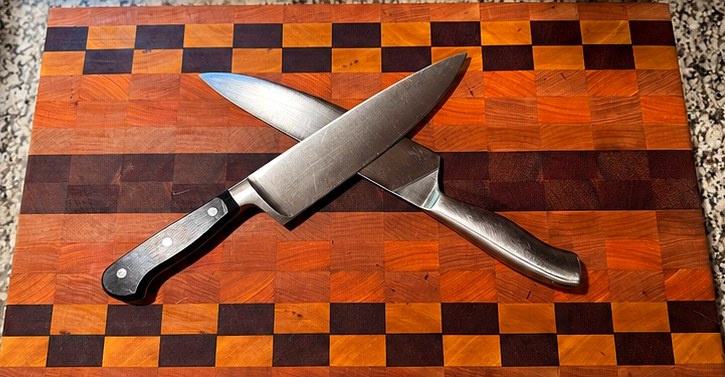
Checkered end grain board on a granite counter with two chef's knives crossed on it
Stable, kiln-dried stock is where a board like this starts.

Air-dried wood — the old-school way

  • Dried naturally over months or years
  • More affordable upfront
  • Higher moisture content
  • More likely to warp, crack, or split
  • Not as stable over time
  • Inconsistent moisture levels

Kiln-dried wood — the modern standard

  • Dried in a controlled environment
  • Lower moisture content (6–8%)
  • Stronger, more stable, reliable
  • Less likely to warp or crack
  • Perfect for cutting boards

When wood isn't properly dried

  • Warping — caused by uneven moisture shrinking across the board
  • Cracking — too much moisture loss too quickly creates splits
  • Weak joints — movement puts stress on glue joints and can cause them to fail

Start with stable wood. Build a board that lasts.

Pro tip — Always ask your wood supplier if the lumber is kiln-dried and surfaced on all sides. It costs a little more — but the results are worth it.
08

Why end grain costs more (and is worth it)

More time. More material. More skill. A better board.

End grain cutting boards are more expensive for a reason. They take more wood, more labor, and more precision — but the performance and beauty are unmatched.
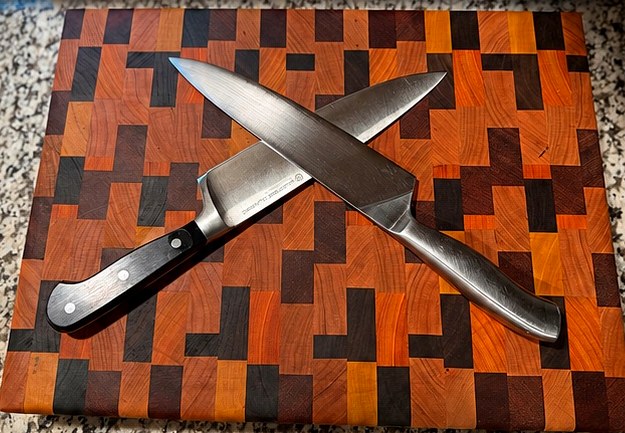
Patterned end grain board in orange, red and dark hardwoods with two knives crossed on it
Patterned end grain — dozens of pieces, cut, flipped, and glued twice.

What is end grain?

End grain is the exposed end of the wood fibers. Instead of cutting across the long fibers (edge grain), you're cutting across the fiber ends.

Why it costs more

  • Takes 2–3× more wood
  • Extra time to cut, flip, and glue each piece
  • More glue and clamps required
  • More sanding and finishing to get it just right
  • High scrap rate — mistakes are costly

What you get

  • Superior knife gentleness
  • Heals better from cuts
  • Extreme durability
  • Stunning, one-of-a-kind look
  • Built to last for generations

You're not just paying for a board — you're investing in quality that lasts a lifetime.

Pro tip — End grain boards require more care during the build — and a little extra care in the kitchen. But treat it right, and it will outlive cheap boards by decades.
09

Food-safe finishes

Protect what matters

The finish on your cutting board is just as important as the wood itself. A good, food-safe finish protects the wood, enhances its beauty, and helps your board last for generations — without harming your food or your family.
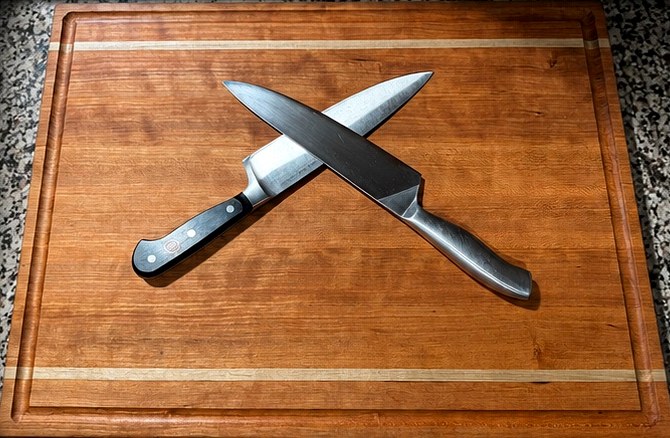
Warm-toned edge grain board with a juice groove and two knives crossed on it, finish glowing
A finished board, oiled and ready — the finish is the glow.

What makes a finish food-safe?

  • Made from non-toxic ingredients
  • Cures properly and completely
  • Does not chip, flake, or peel
  • Safe for contact with food

The finish should protect the wood — not end up in your food.

Best finishes for cutting boards

  • Mineral oil — penetrates wood, moisturizes, and is safe
  • Board butter (beeswax + mineral oil) — adds water resistance and a silky feel
  • Both are natural, food-safe, and easy to reapply

Simple. Natural. Effective. That's the Murph way.

Finishing tips

  • Apply to clean, dry wood
  • Use a generous amount
  • Let it soak in — overnight is best
  • Wipe off excess and buff
  • Reapply regularly

A well-finished board resists moisture, stains, and everyday wear.

Pro tip — Don't overthink it. Keep your board clean, oiled, and out of extreme heat or standing water. Do that, and it will serve you beautifully for a lifetime.
10

Choosing the right board

Form. Function. Personal.

Not every board is the same — and that's a good thing! The best cutting board for you depends on how you cook, what you like, and what fits your lifestyle. Choose the board that works for you, and enjoy it for years to come.
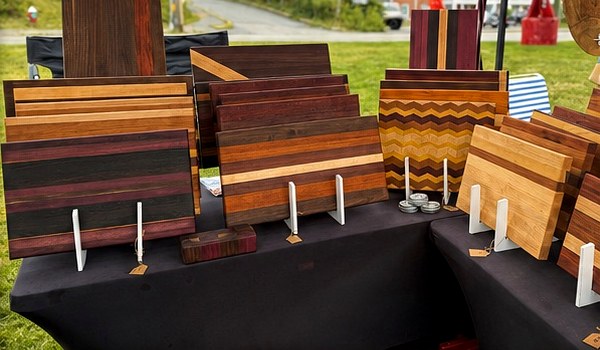
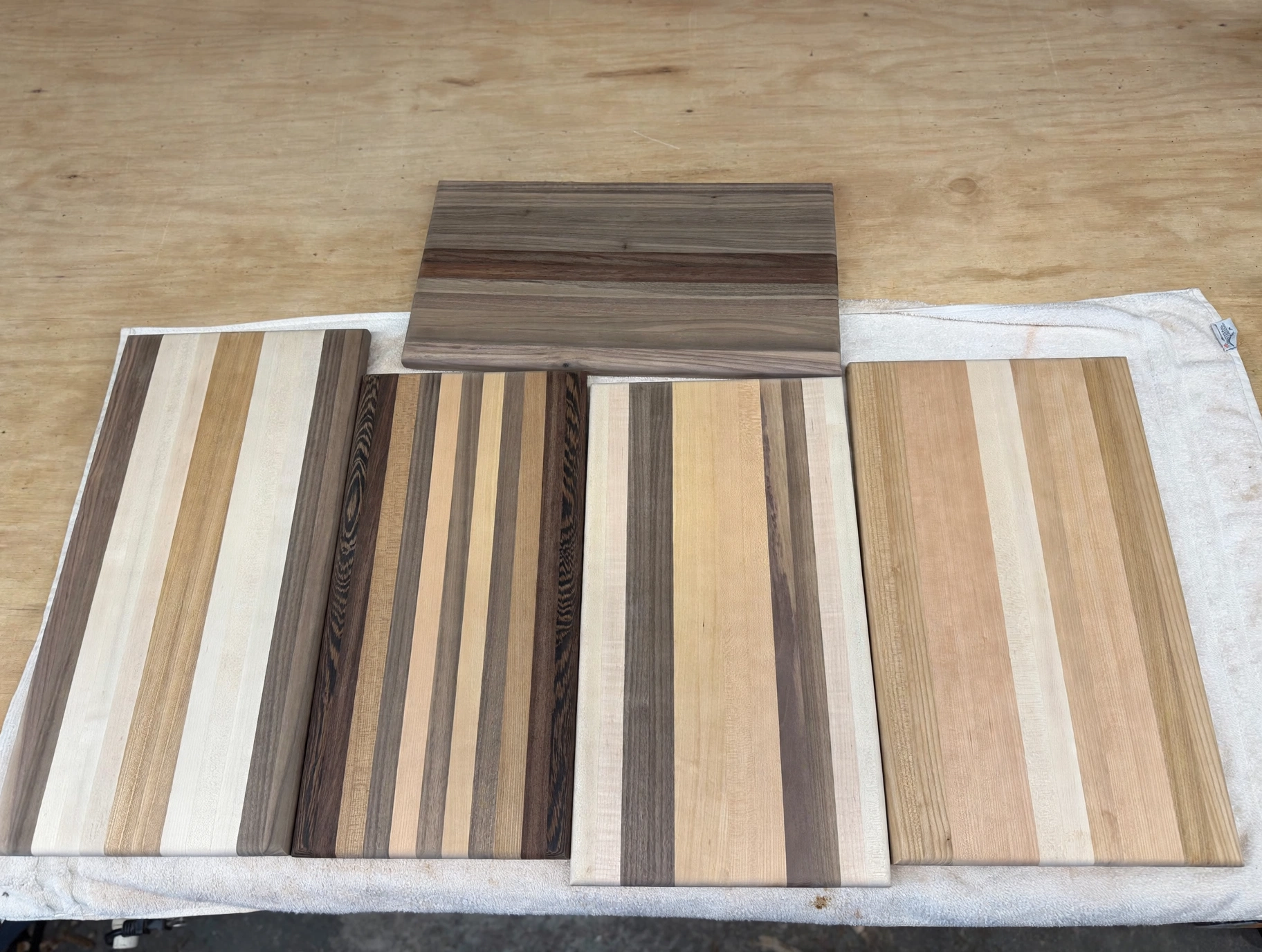
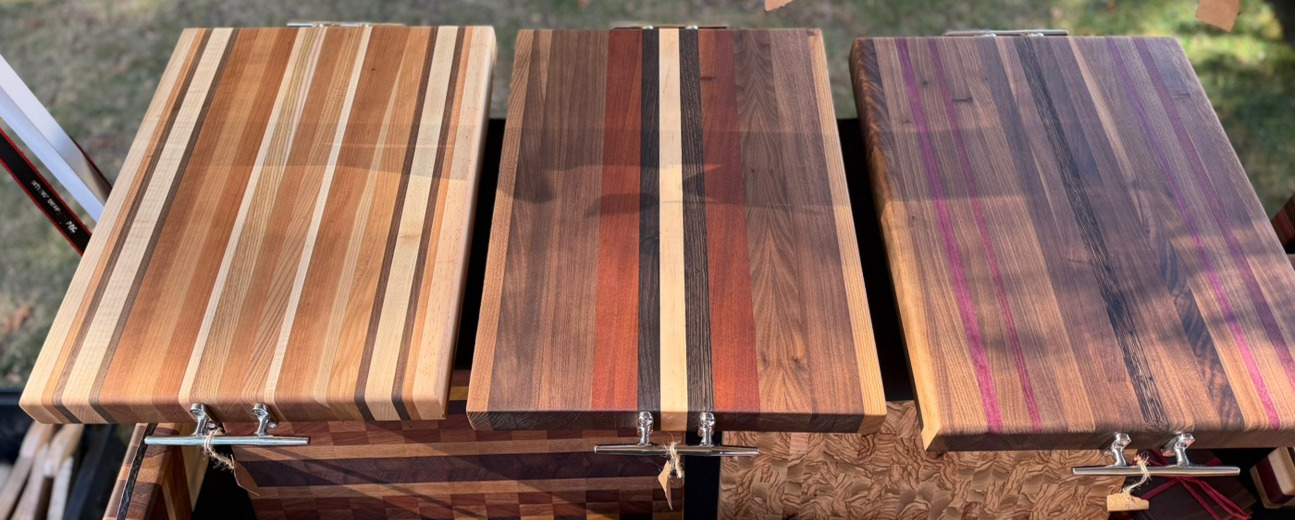
A market table full of striped cutting boards in different sizes, woods and patterns
The market table — size, wood, and pattern are all your call.

Think about how you cook

  • Heavy prep every day? Choose a larger, durable hardwood board
  • Light use or serving? A smaller board may be perfect
  • Use separate boards for meats, veggies, and more for food safety

Consider the wood

  • Hardwoods are gentle on knives and built to last
  • Different woods offer unique colors and grain patterns
  • Choose a board you love to look at and use every day

Size & shape matter

  • Larger boards give you more workspace
  • Handles or juice grooves add convenience
  • Thicker boards are more stable and long-lasting
  • End grain boards are premium for a reason

Make it personal

  • Pick colors and styles that speak to you
  • A custom board makes a great gift
  • A board you love is a board you'll use — and treasure
Pro tip — The right cutting board isn't just a tool — it's part of your kitchen, your cooking, and your story. Choose quality, choose what you love, and it will serve you for a lifetime.
11

Reading wood grain

Follow the grain. Work with the wood.

Wood grain is more than just a pattern — it's the story of the tree. Understanding grain helps you build stronger boards, choose the best orientation for your cut, and bring out the natural beauty in every piece.
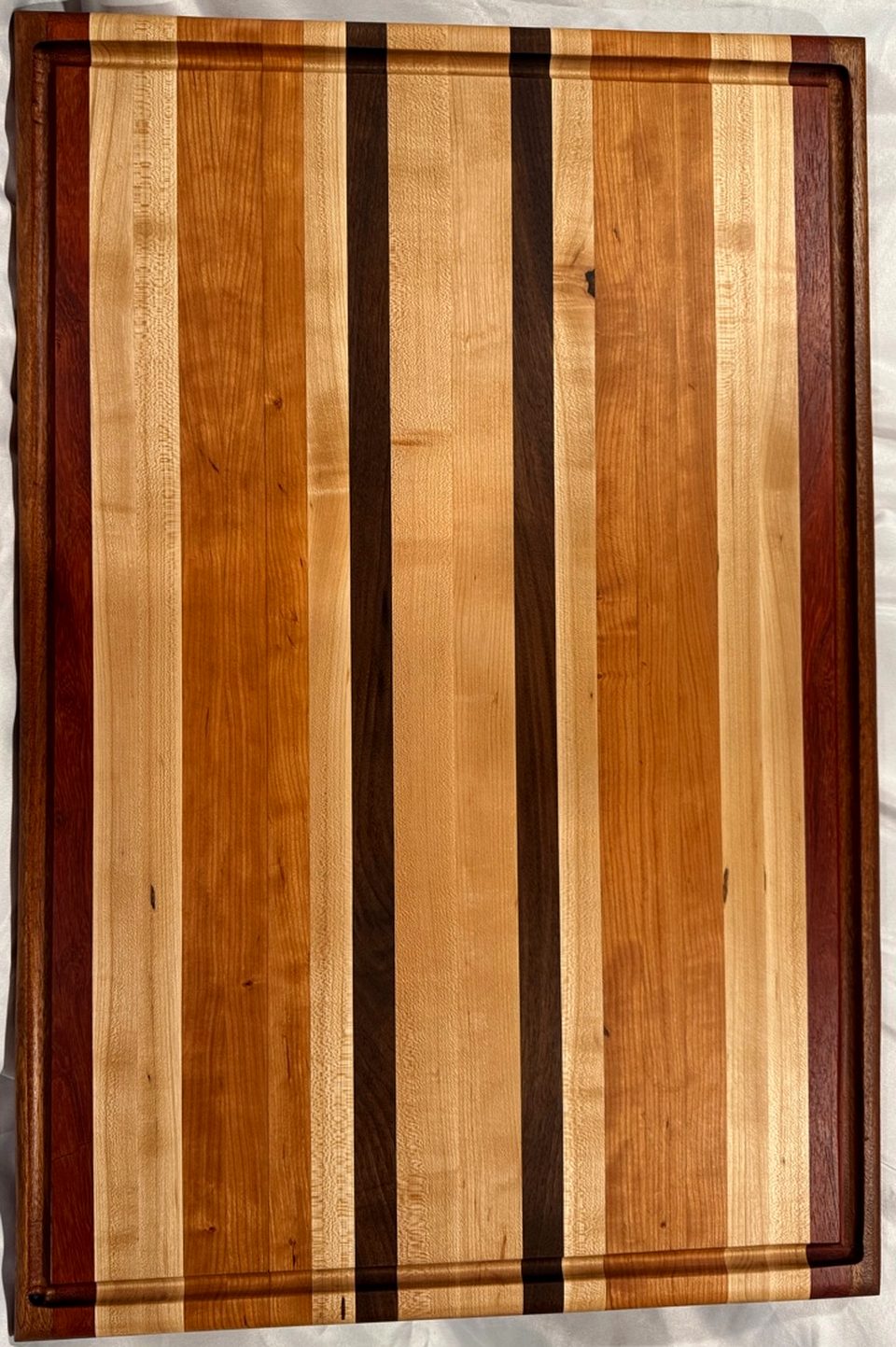
A striped edge grain cutting board standing vertically on a white cloth — long vertical strips of maple, cherry, walnut and reddish padauk edges, each strip's grain running its full length
The grain, strip by strip — maple, cherry, walnut, and reddish padauk along both edges, running the full length of the board.

Grain direction

  • Look for straight, even grain for strength and stability
  • Avoid wild, wavy, or interlocked grain for cutting surfaces
  • End grain shows the true character of the wood

Grain orientation

  • Run boards with long grain front-to-back for stability
  • Alternating grain direction in glue-ups minimizes movement
  • Quarter sawn boards are more stable than flat sawn

Grain & appearance

  • Grain patterns create unique beauty
  • Figured grain adds character but may move more
  • Choose the look that matches your style

Grain & strength

  • Straight grain = strong and durable
  • Wavy grain = beautiful, but can be weaker
  • Work with the grain, not against it
Pro tip — Before you cut, take a moment to study the grain. A few extra minutes of planning leads to a stronger board, fewer surprises, and a better end result.
12

Crafted with care, made to last

Quality you can see. Craftsmanship you can feel.

Every board is a result of time, skill, and attention to detail. From selecting the right wood to the final finish, pride goes into creating pieces that are beautiful, functional, and built to be part of your story for years to come.
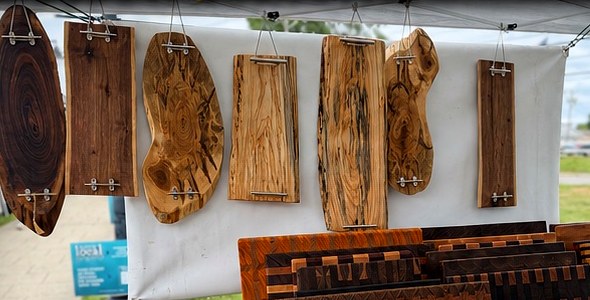
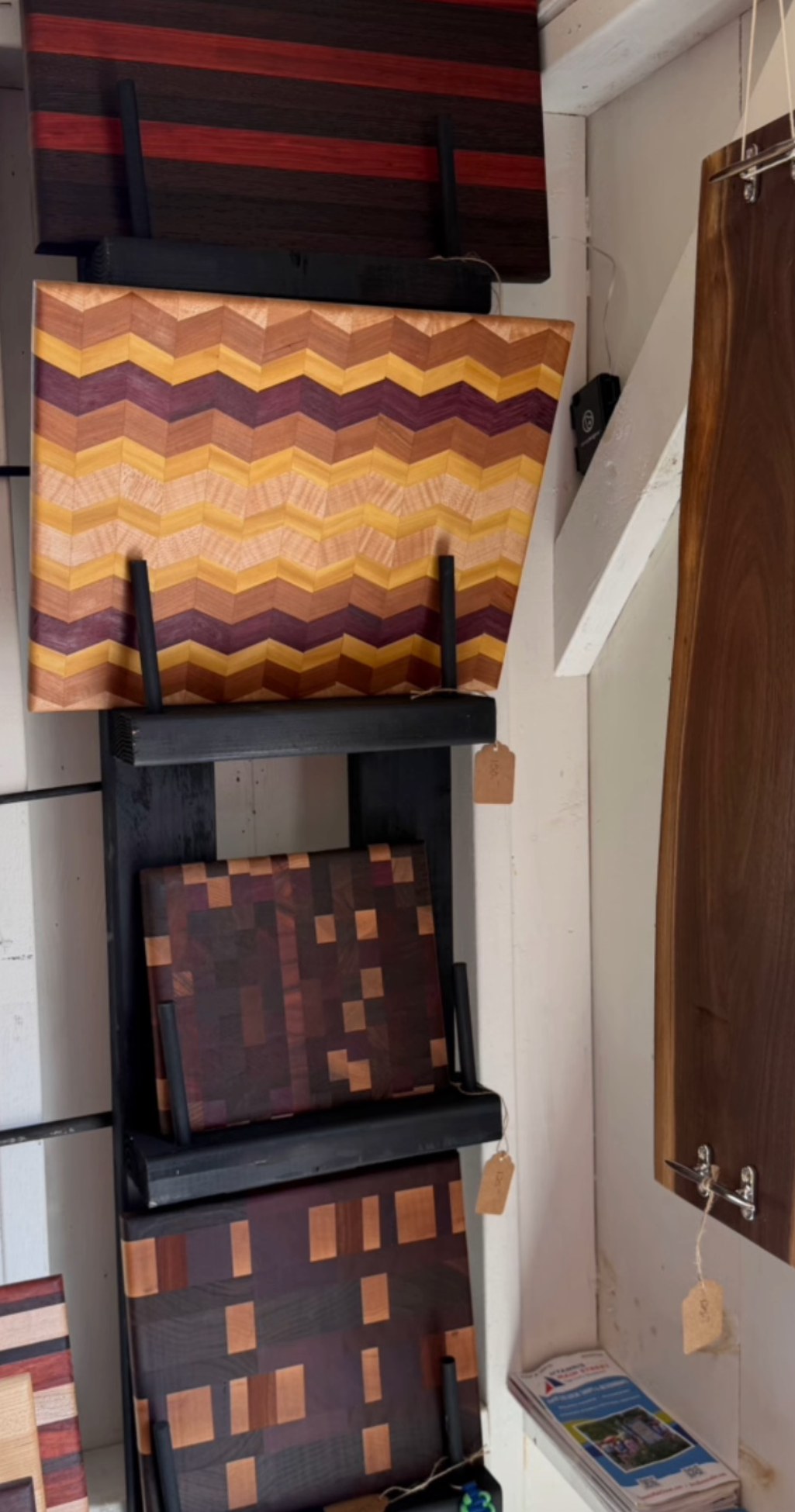
Live-edge and figured serving boards hanging in a row at the market booth
Live-edge and figured boards, hanging at the booth.

Support local craft

  • Every purchase supports a small business
  • You're investing in real craftsmanship and local jobs
  • Local makers care about quality — because our name is on every board

Thank you for supporting handcrafted.

Heirloom quality

  • Built with care and made to last
  • A well-made board can be passed down for generations
  • Quality never goes out of style

Good boards today. Family treasures tomorrow.

Made for everyday

  • Beautiful enough to display
  • Durable enough for daily use
  • From meal prep to entertaining — these boards do it all

Functional. Reliable. Made for real life.

Care makes it last

  • Clean, dry, and oil regularly
  • Avoid extreme heat and soaking
  • A little care goes a long way in keeping your board looking its best

Take care of your board. It will take care of you.

Pro tip — Treat your cutting board like a good knife — keep it clean, oiled, and out of extreme conditions. Do that, and it will be one of the most dependable tools in your kitchen for life.
The Why Wood series

Why Wood

The short case for leaving plastic on the shelf — the full ten-part series from Instagram, in order, starting with a board that was made in 1999 and is still cutting.

01

Why Wood

This board was made in 1999. Swipe to see why wood beats plastic — every time.
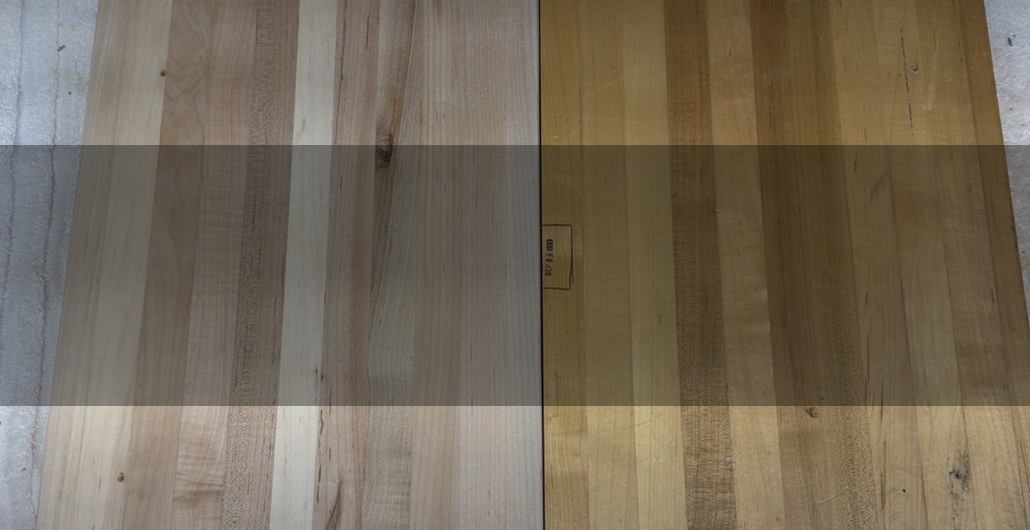
The 1999 board in two halves on a cloth — the left half sanded back to pale fresh wood, the right half still golden with decades of use, with the maker's stamp on the seam between them
The 1999 board in two halves — one side sanded back, the other still carrying its years, maker's stamp on the seam.
02

Sustainable

Trees regrow. Plastic is petroleum — and once it's here, it never leaves.

03

One of a Kind

No two grain patterns are alike. Functional art, not a factory clone.
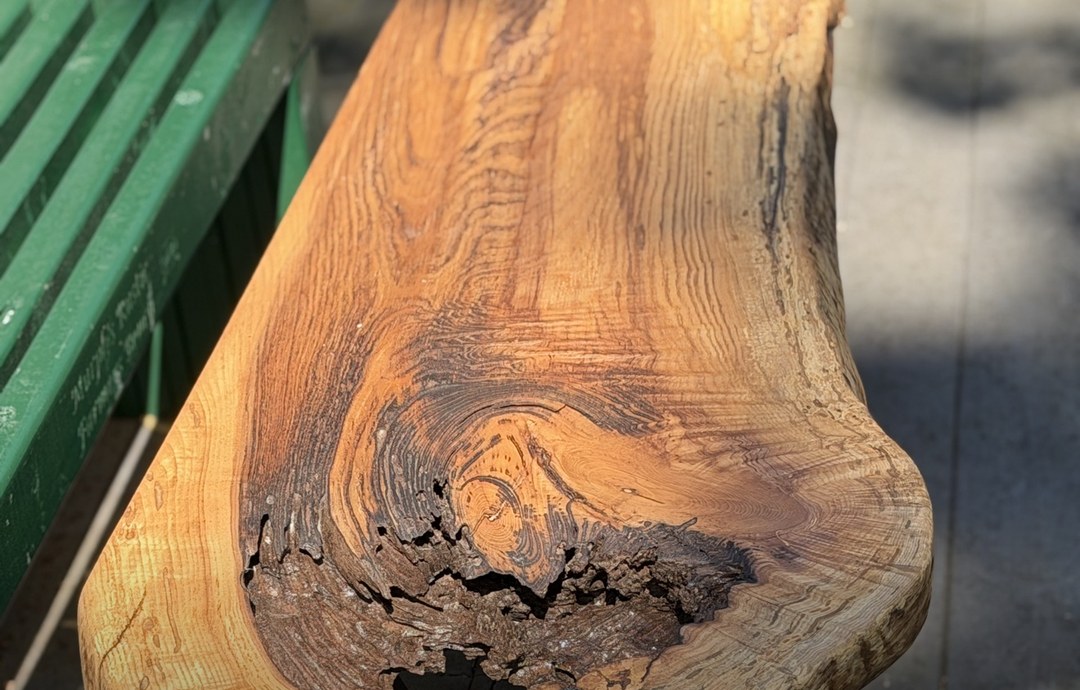
A live edge bench top in warm golden wood, its grain swirling around a dark knot, the natural edge curving along one side
A live edge bench top — grain swirling around the knot, and no second tree will ever match it.
04

Warm to the touch

Wood feels alive in your hands. Plastic feels like... plastic.

05

Kind to your knives

Wood fibers give under the blade, keeping your edges sharper, longer.
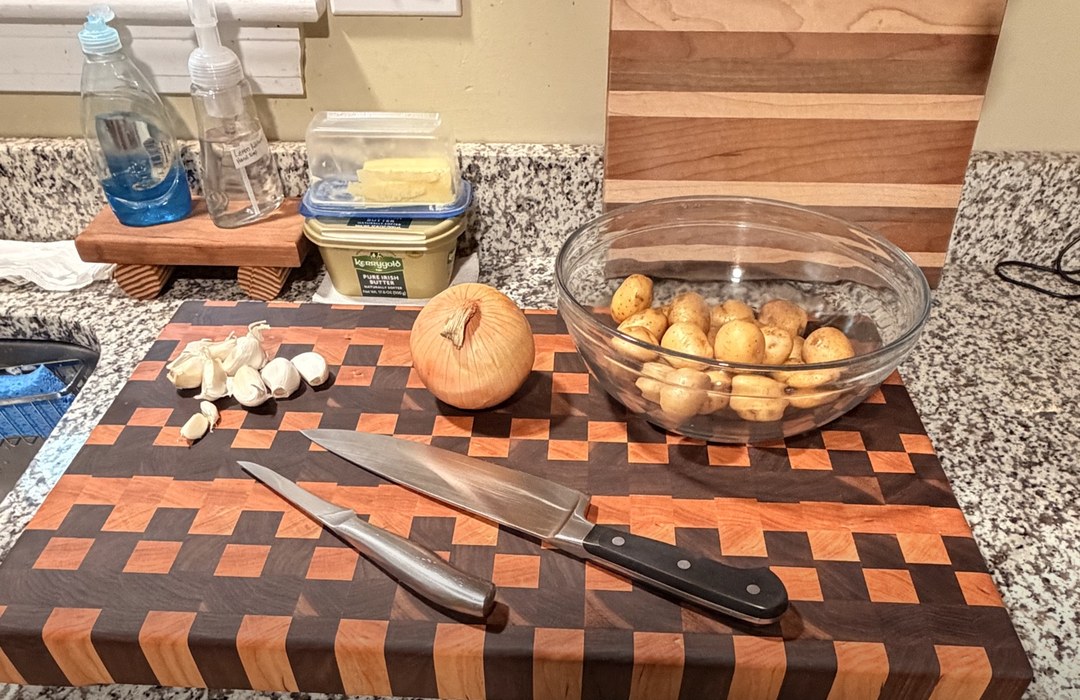
A checkered end grain cutting board on a granite kitchen counter with two knives, an onion, garlic, and a bowl of small potatoes on it
The checkered end grain board at work — knives, onion, garlic, and potatoes, right where it lives.
06

Naturally antibacterial

Wood draws bacteria in and kills it. On plastic, it survives on the surface.

07

No microplastics

Every cut on plastic sheds microplastics into your food. Wood sheds nothing.

08

Cut. Serve. Display.

One board does it all — from meal prep to the table to the centerpiece.
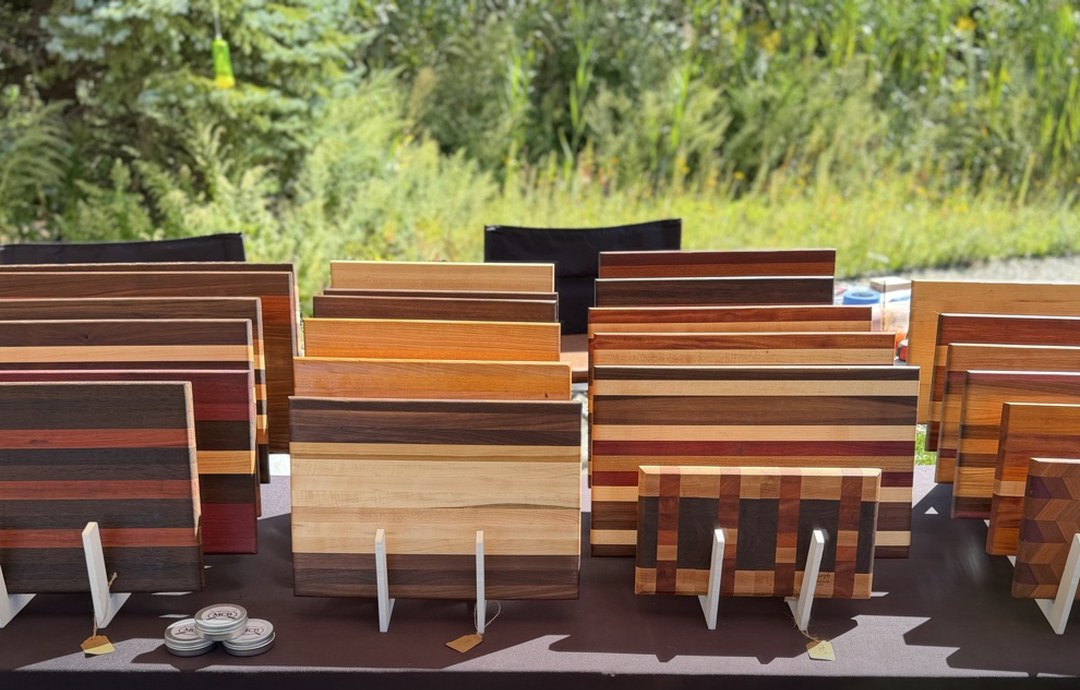
Rows of striped hardwood cutting boards standing on display stands on an outdoor market table, greenery behind them
Boards standing at the booth — every one of them ready to cut on, serve on, or leave out on display.
09

27 Years. Still Solid.

This board was stamped September 28, 1999. Look at the edge — solid wood all the way through. No rot, no deep staining. It just held up.
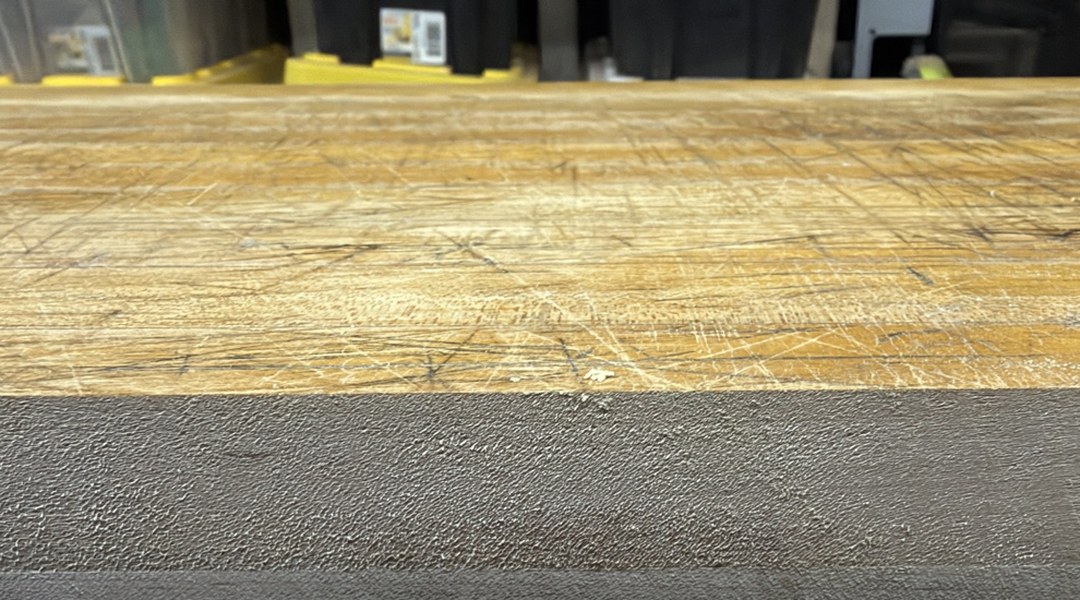
Close view along the edge of the 1999 board — a knife-scarred golden top surface above a thick, dark, solid wood edge
The edge of the 1999 board — knife-scarred on top, solid wood all the way through.
10

Handcrafted on Cape Cod

Holiday orders open — DM by Dec 1st.

The Murph Cutting Boards sunrise logo as a rainbow neon sign on a dark brick wall, glowing above a wooden counter
The sunrise sign in neon — handcrafted on Cape Cod, holiday orders open.
The Second Life series

Second Life

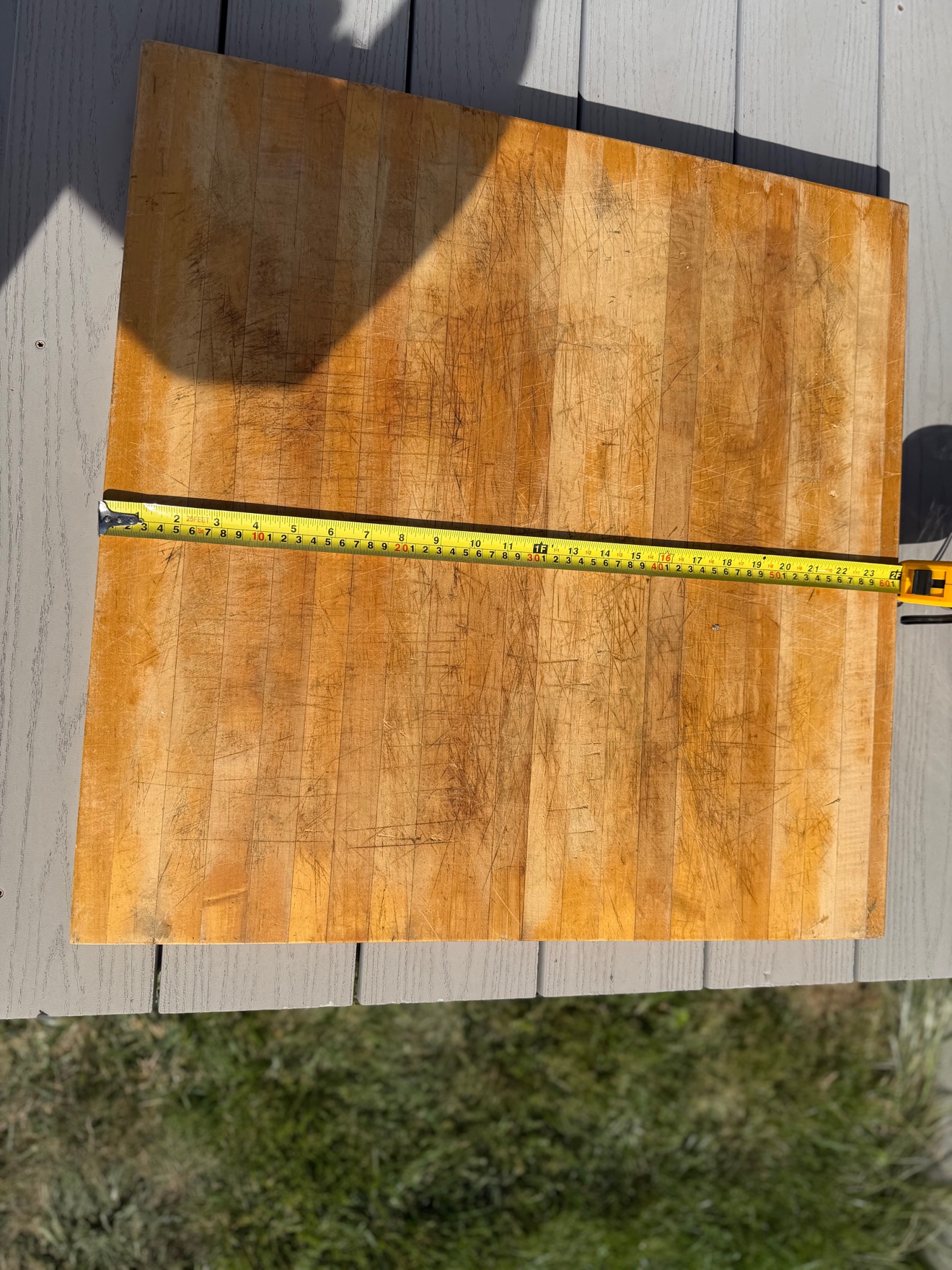
They don't make 'em like they used to. This 24x24 board belonged to a customer's grandmother — stamped September 28, 1999. At the customer's request, it was cut into two boards and refinished both. 27 years of family meals, and now it's ready for the next generation.

01

Second Life

Two boards, made in 1999. Watch them come back.
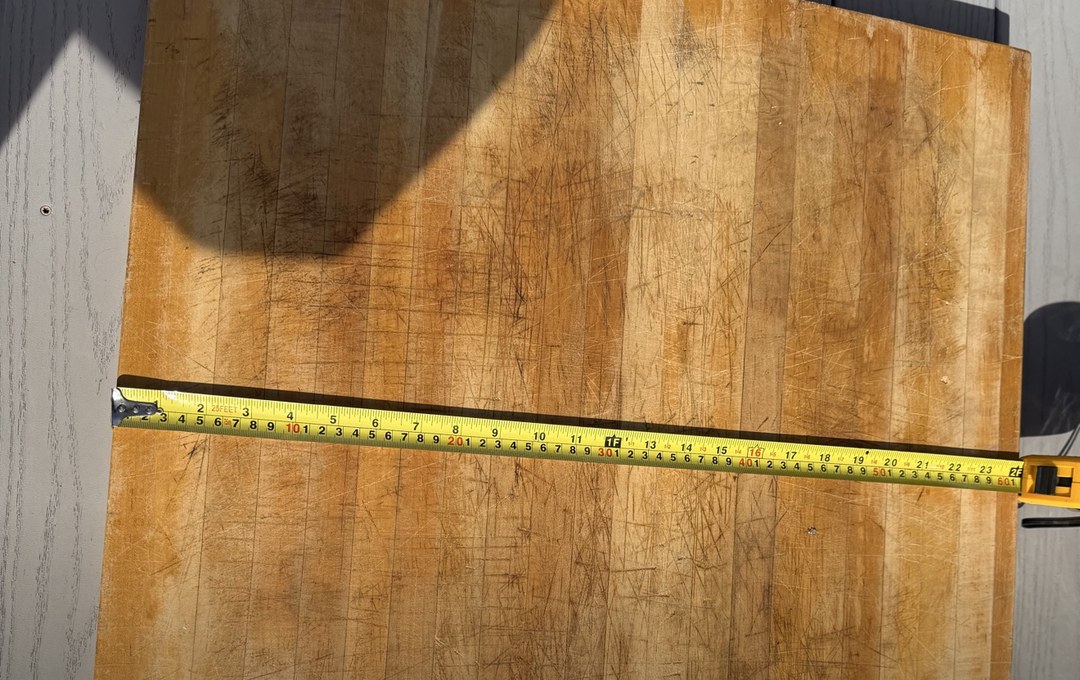
The big square 1999 board outdoors with a yellow tape measure stretched across it, its surface covered in knife scars and stains
As it arrived — tape measure across the 24x24, knife scars over every inch.
02

27 Years of Daily Use

Every scar earned. Nothing a sander can't fix.
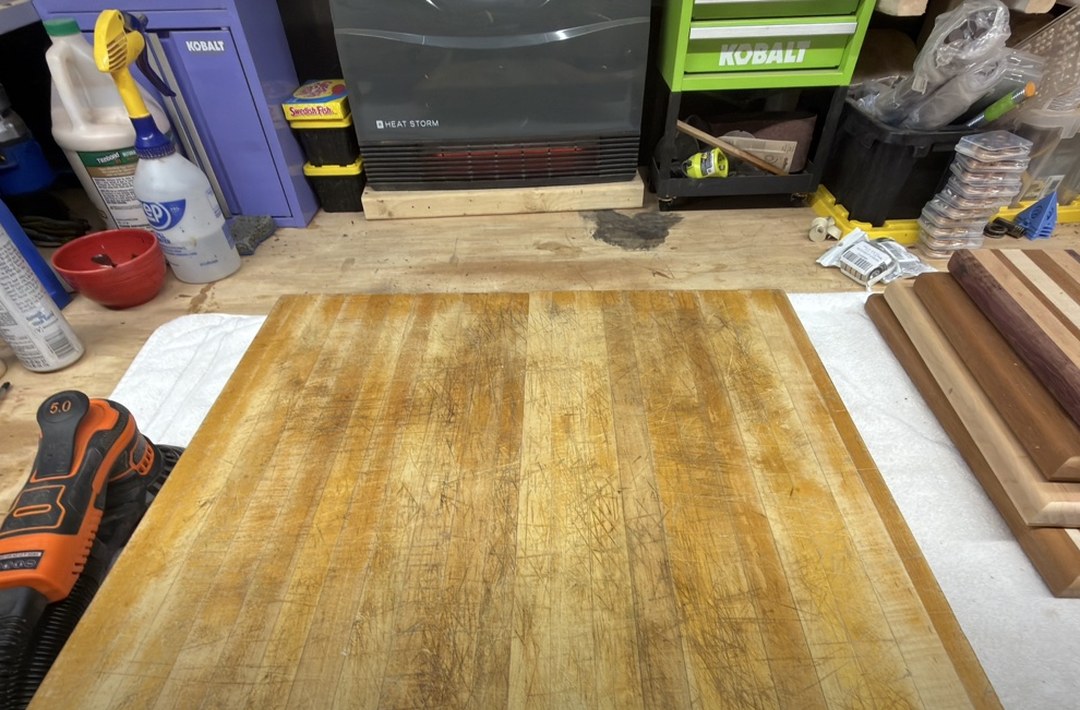
The scarred 1999 board on the workshop bench next to an orange orbital sander, shop cabinets and tools behind it
On the bench in the shop, sander alongside — 27 years of daily use, all of it earned.
03

September 28, 1999

Stamped right into the wood. They built things to last.
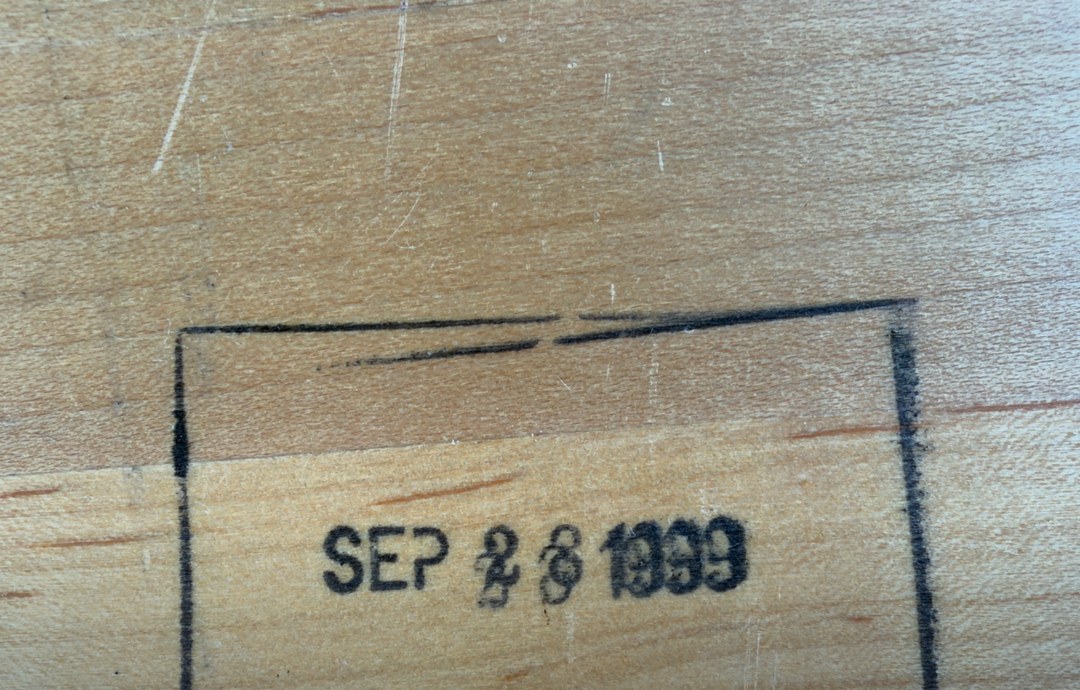
Close-up of the maker's stamp burned into the pale wood of the board, reading SEP 28 1999 inside a rectangular border
The stamp, right in the wood: SEP 28 1999.
04

Back to Bare Wood

Sanded down past the scars. Good bones underneath.
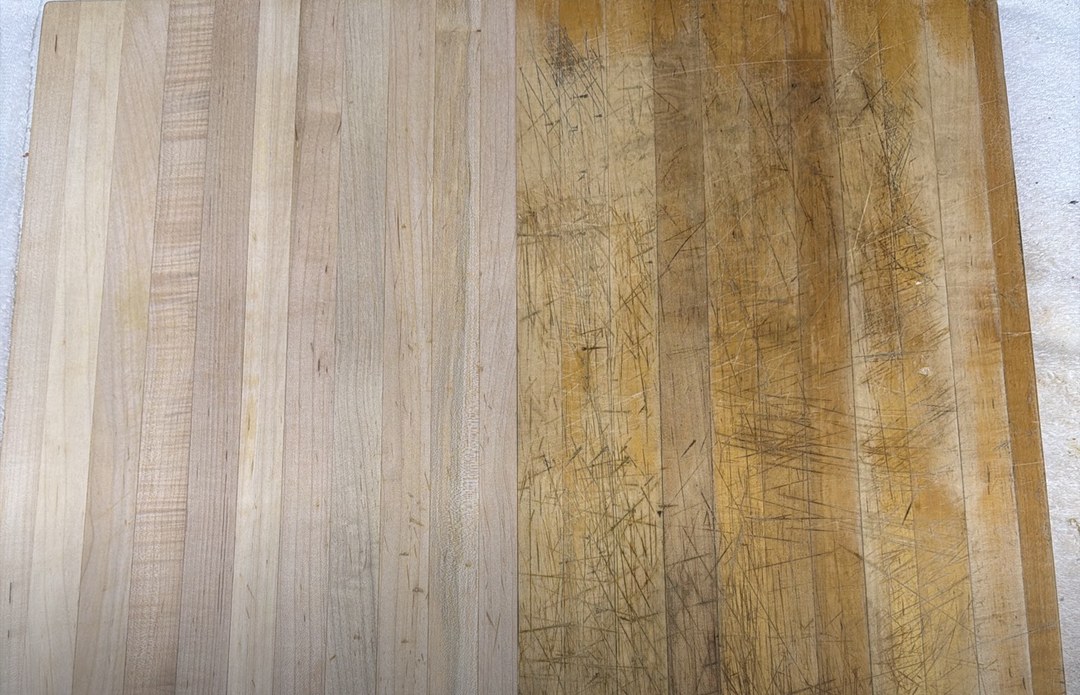
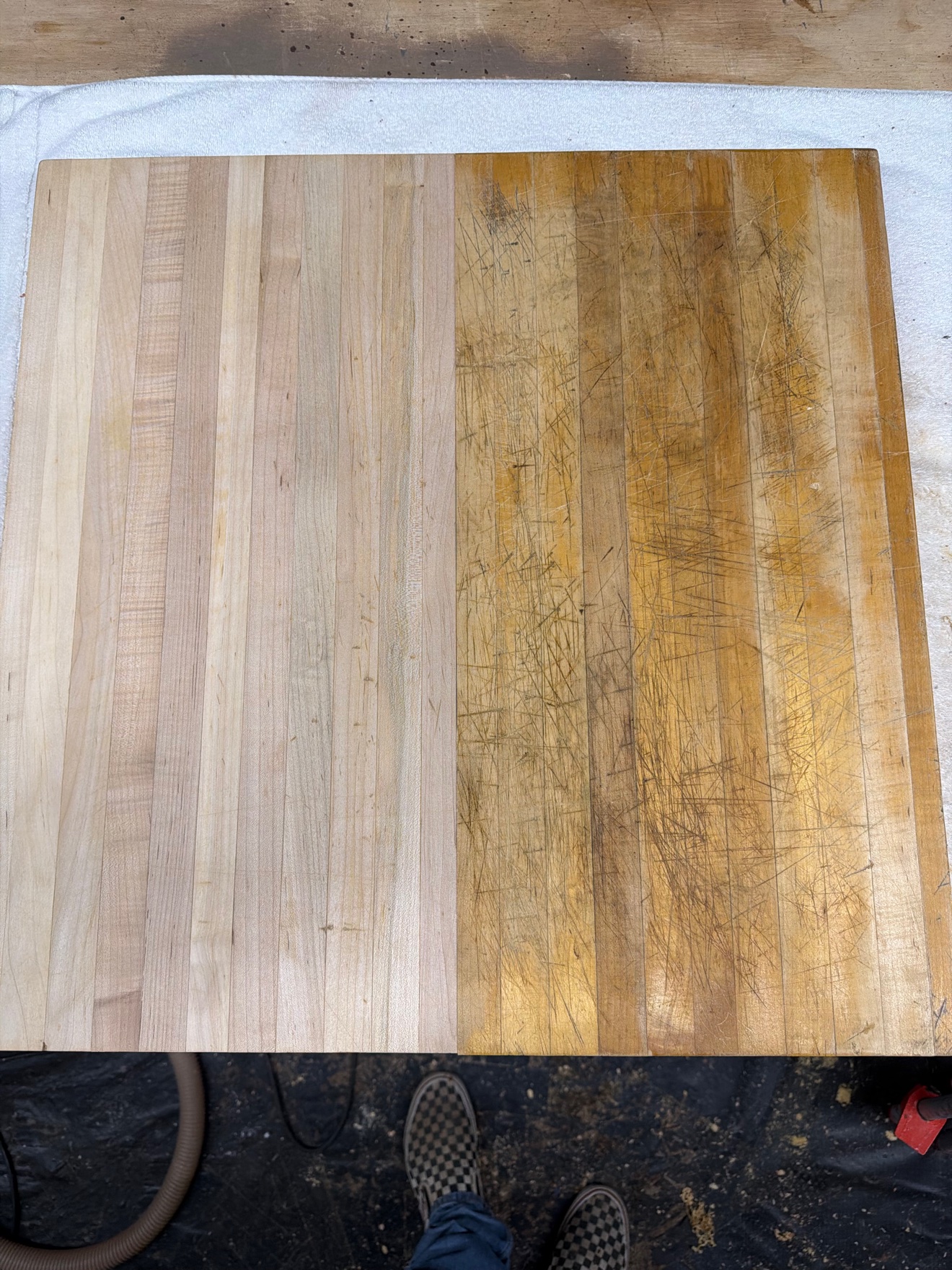
The board half sanded — the left side pale bare wood, the right side still golden and covered in knife scars
Half and half — left side back to bare wood, right side still carrying the scars.
05

Halfway There

One board stripped to fresh wood. The other waiting its turn.
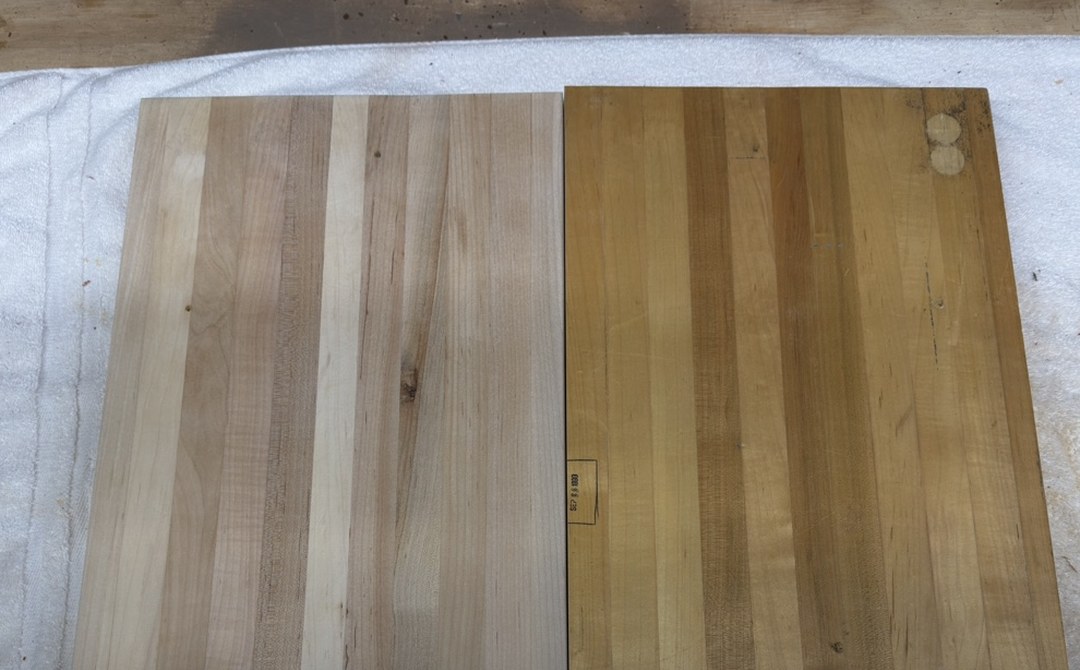
The board now cut into two boards side by side on a cloth — the left one stripped to pale fresh wood, the right one still golden and worn, with the maker's stamp on the seam
Cut in two — one stripped to fresh wood, the other waiting its turn.
06

Re-oiled & Reborn

Sanded, re-oiled, and ready for the next 27 years.
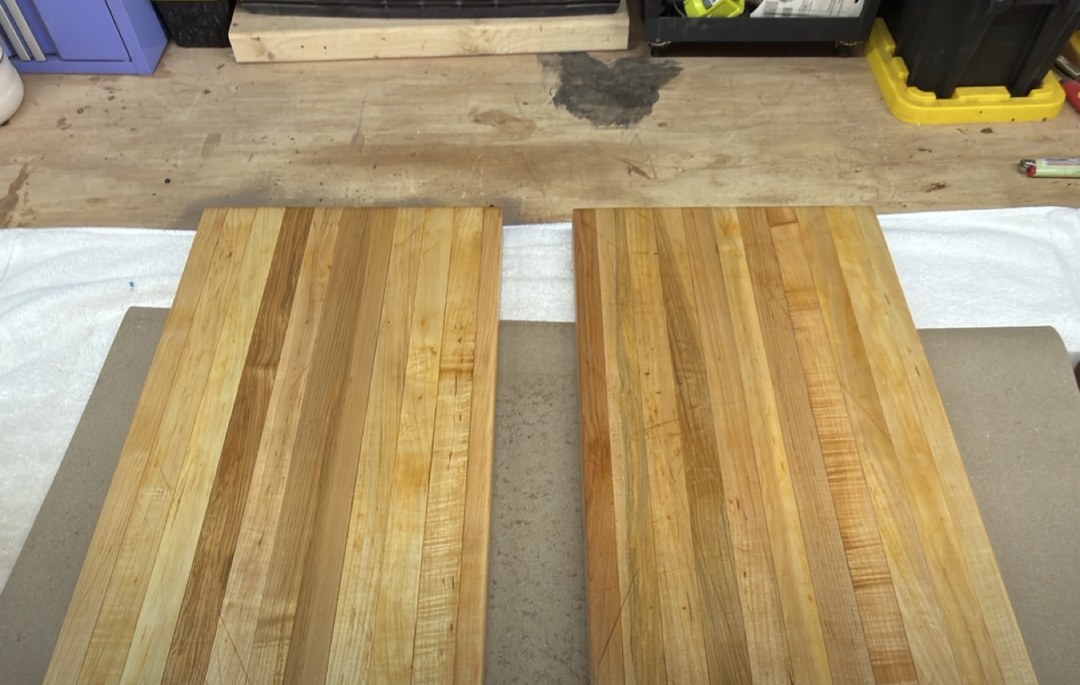
Both refinished boards side by side on the workbench, their striped grain glowing warm and golden after re-oiling
Both boards sanded and re-oiled — the grain is glowing again.
07

Ready for 30 More

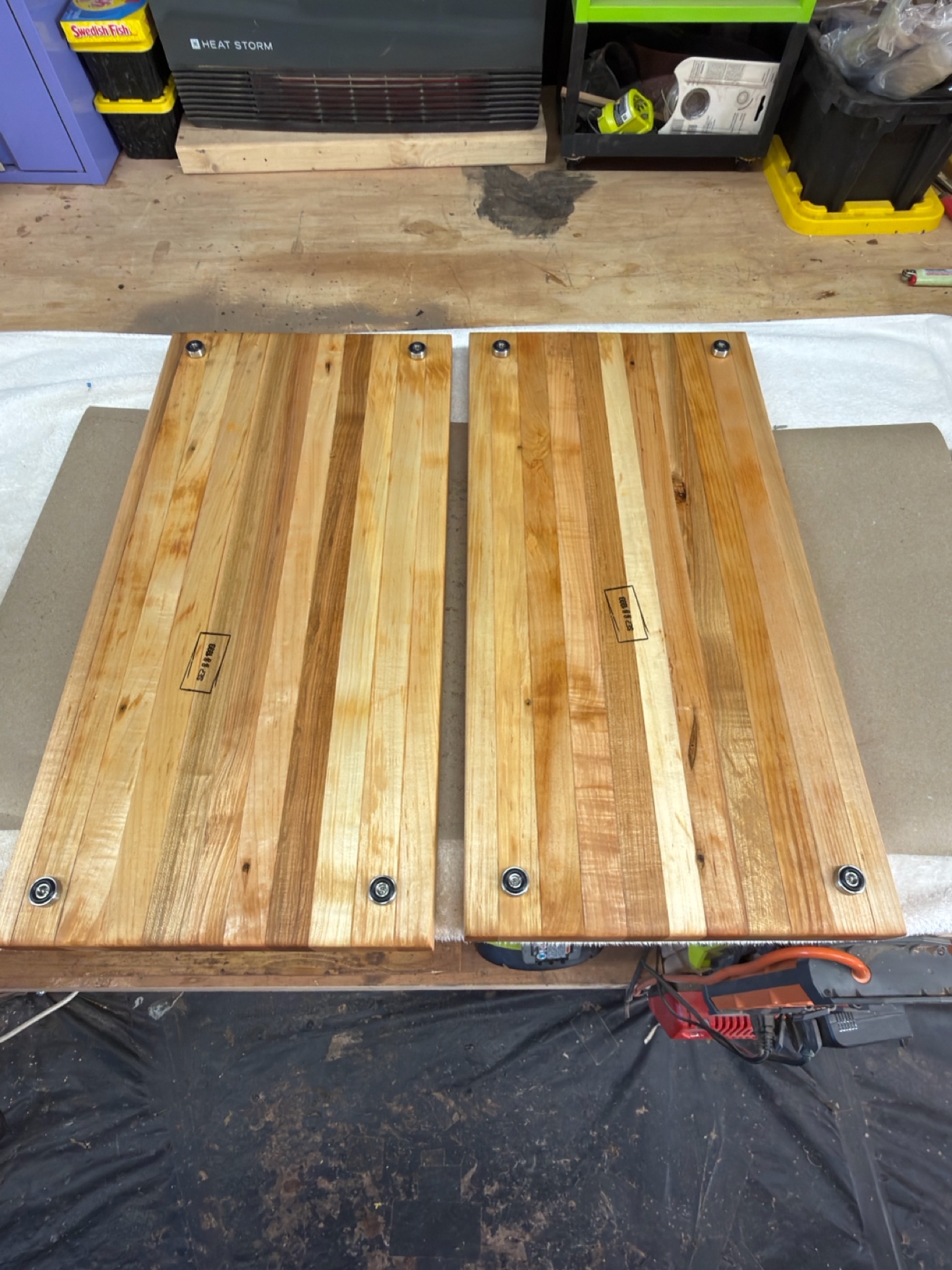
New feet, fresh oil, same 1999 stamp. Wood comes back — plastic just gets thrown away.
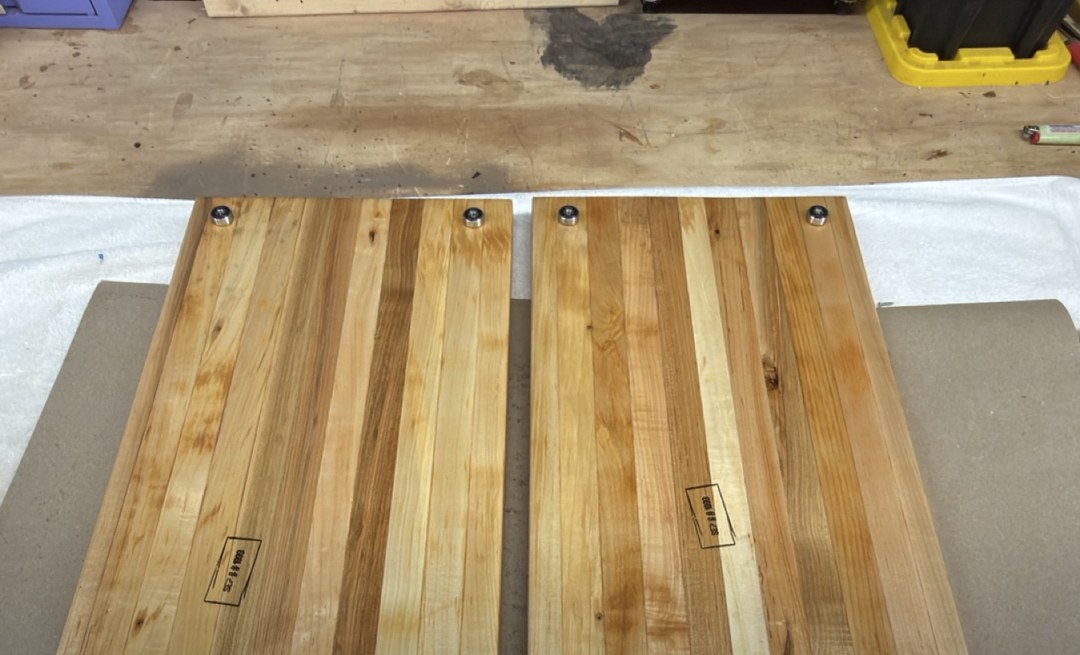
The undersides of both refinished boards on the bench, new round metal feet fitted at the corners and the 1999 maker's stamps still visible in the wood
The undersides — new feet fitted, fresh oil, and the 1999 stamps still in the wood.
Second Life

Old boards don't die. They get refinished.

The Second Life work: worn, scarred, dried-out boards sanded back, re-oiled, fitted with new feet — and put back to work instead of into the trash.
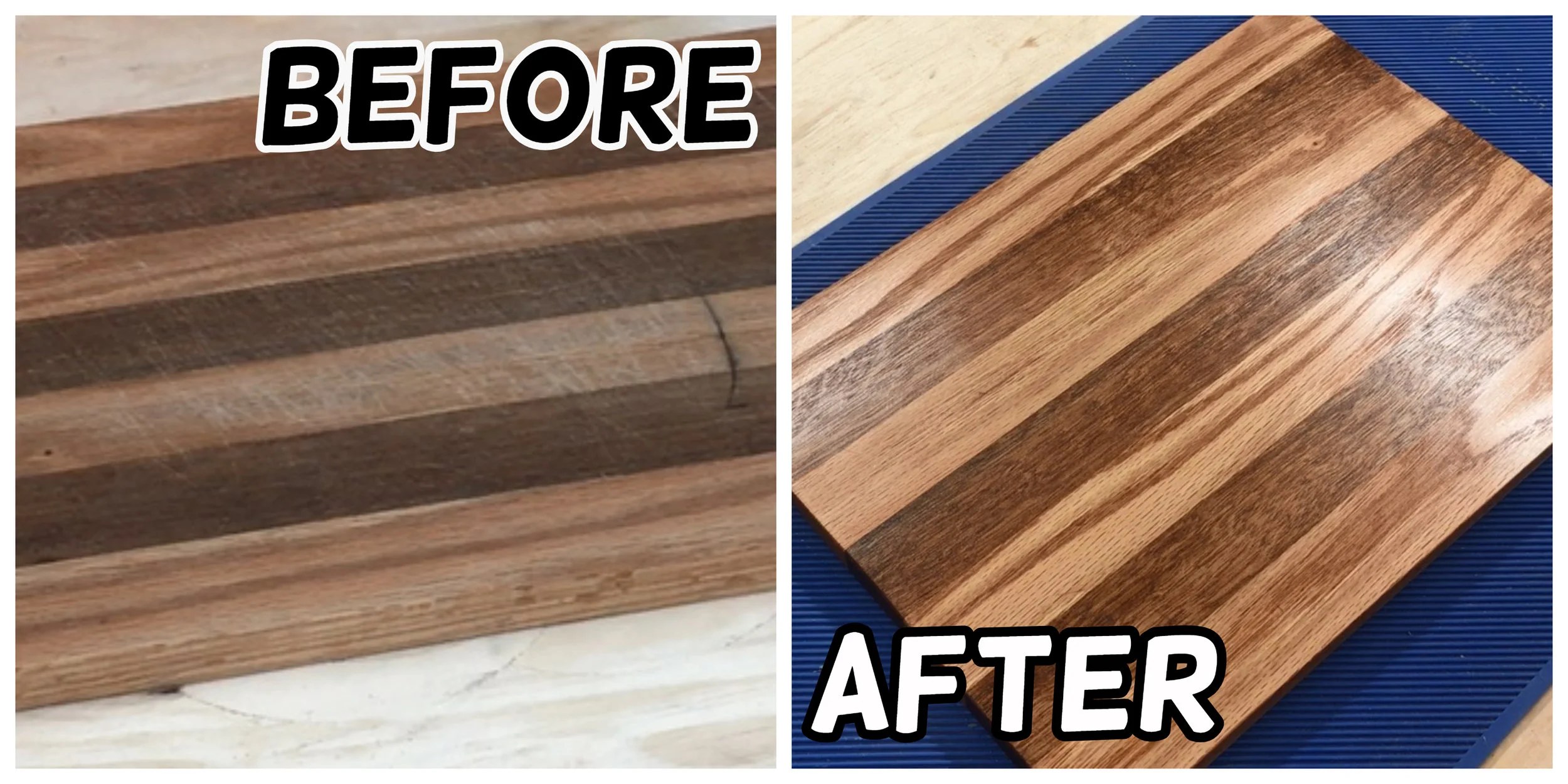
Before and after photos of a striped cutting board, dull and knife-scarred on the left and rich and re-oiled on the right

The 1999 family board

A family cutting board in service since 1999 — decades of knife marks and dry wood — stripped back, sanded smooth, and re-oiled until the grain showed again. Still in the family, still cutting.

The Eastern Butcher Block rescue

A heavy butcher block that looked ready for the dump got the full treatment: flatten, sand, oil, butter. Proof that “worn out” is usually just “never been maintained.”

Customer refurbs, feet included

Bring your own board back to life — recent refurb jobs went home sanded, re-oiled, and fitted with new rubber feet so they grip the counter like they should.

Got a board that needs saving?

If it's solid hardwood, there's a good chance it can be saved. with a photo and we'll talk it through.

Where I'll Be

Catch the booth in person

The full 2026 season — spring markets through the holiday run, around Cape Cod and beyond, grouped by month. The weekly Mashpee Farmers Market and Wellfleet Drive-In Flea Market sit at the top of each month they run in — unless otherwise noted. Come see the grain in person, talk wood, and watch a board get the hot-food demo treatment.

May 2026

5 stops
Sundays
May–Nov
2026

Mashpee Farmers Market

Sundays, May 24 – Nov 22, 2026 · 10:00 AM – 3:00 PM — unless otherwise noted

The regular weekly market stop — full board lineup, cribbage, and small goods. 4 Jobs Fishing Road, Mashpee (Mashpee Commons).

Mashpee, MA
Saturday
2
May 2026

Cape Cod Culinary Incubator Spring Market @ KAM Appliances

Saturday, May 2, 2026 · 10:00 AM – 2:00 PM

KAM Appliances, 6 Aggregate Way, Hyannis.

Hyannis, MA
Sunday
3
May 2026

Pelham House Resort Spring Market

Sunday, May 3, 2026 · 11:00 AM – 4:00 PM

14 Sea St., Dennisport.

Dennisport, MA
Fri–Mon
22–25
May 2026

Hyannis HyArts Artist Shanties

Friday, May 22 – Monday, May 25, 2026 (Memorial Day weekend) · 11:00 AM – 4:00 PM

Walkway-to-the-Sea, Downtown Hyannis Waterfront.

Hyannis, MA
Fri–Sun
29–31
May 2026

Hyannis HyArts Artist Shanties

Friday, May 29 – Sunday, May 31, 2026 · 11:00 AM – 4:00 PM

Walkway-to-the-Sea, Downtown Hyannis Waterfront.

Hyannis, MA

June 2026

4 stops
Sundays
May–Nov
2026

Mashpee Farmers Market

Sundays, May 24 – Nov 22, 2026 · 10:00 AM – 3:00 PM — unless otherwise noted

The regular weekly market stop — full board lineup, cribbage, and small goods. 4 Jobs Fishing Road, Mashpee (Mashpee Commons).

Mashpee, MA
Saturdays
Jun–Aug
2026

Wellfleet Drive-In Flea Market

Saturdays, Jun 20 – Aug 29, 2026 · 8:00 AM – 2:00 PM — unless otherwise noted

Saturdays through the summer at the Drive-In.

Wellfleet, MA
Fri–Sun
12–14
Jun 2026

Hyannis HyArts Artist Shanties

Friday, Jun 12 – Sunday, Jun 14, 2026 · 11:00 AM – 4:00 PM

Walkway-to-the-Sea, Downtown Hyannis Waterfront.

Hyannis, MA
Fri–Sun
19–21
Jun 2026

Hyannis HyArts Artist Shanties

Friday, Jun 19 – Sunday, Jun 21, 2026 · 11:00 AM – 4:00 PM

Walkway-to-the-Sea, Downtown Hyannis Waterfront.

Hyannis, MA

July 2026

4 stops
Sundays
May–Nov
2026

Mashpee Farmers Market

Sundays, May 24 – Nov 22, 2026 · 10:00 AM – 3:00 PM — unless otherwise noted

The regular weekly market stop — full board lineup, cribbage, and small goods. 4 Jobs Fishing Road, Mashpee (Mashpee Commons).

Mashpee, MA
Saturdays
Jun–Aug
2026

Wellfleet Drive-In Flea Market

Saturdays, Jun 20 – Aug 29, 2026 · 8:00 AM – 2:00 PM — unless otherwise noted

Saturdays through the summer at the Drive-In.

Wellfleet, MA
Sunday
12
Jul 2026

Christmas in July @ Cape Verdean Club of Falmouth

Sunday, Jul 12, 2026 · 10:00 AM – 3:00 PM

126 Sandwich Road, Teaticket.

Falmouth, MA
Sunday
26
Jul 2026

Love Live Local Fest

Sunday, Jul 26, 2026 · 11:00 AM – 5:00 PM

Aselton Park, Hyannis.

Hyannis, MA

August 2026

3 stops
Sundays
May–Nov
2026

Mashpee Farmers Market

Sundays, May 24 – Nov 22, 2026 · 10:00 AM – 3:00 PM — unless otherwise noted

The regular weekly market stop — full board lineup, cribbage, and small goods. 4 Jobs Fishing Road, Mashpee (Mashpee Commons).

Mashpee, MA
Saturdays
Jun–Aug
2026

Wellfleet Drive-In Flea Market

Saturdays, Jun 20 – Aug 29, 2026 · 8:00 AM – 2:00 PM — unless otherwise noted

Saturdays through the summer at the Drive-In.

Wellfleet, MA
Saturday
15
Aug 2026

Marshfield Community Day

Saturday, Aug 15, 2026 · Vendors, crafts & games 12:30 – 4:30 PM

Sponsored by the Original Brant Rock Village Association. 327 Ocean St., Marshfield, MA @ Union Chapel. Live music by the Joshua Tree U2 Tribute Band, 5:30 – 8:00 PM.

Marshfield, MA

September 2026

4 stops
Sundays
May–Nov
2026

Mashpee Farmers Market

Sundays, May 24 – Nov 22, 2026 · 10:00 AM – 3:00 PM — unless otherwise noted

The regular weekly market stop — full board lineup, cribbage, and small goods. 4 Jobs Fishing Road, Mashpee (Mashpee Commons).

Mashpee, MA
Saturday
12
Sep 2026

Love Farms Harvest Festival Series

Saturday, Sep 12, 2026 · 10:00 AM – 1:00 PM

607 Main St. (Rt. 28), West Dennis.

West Dennis, MA
Sat–Sun
19–20
Sep 2026

Harwich Cranberry and Music Festival

Saturday, Sep 19 & Sunday, Sep 20, 2026 · 9:00 AM – 3:00 PM

Harwich, MA
Sunday
27
Sep 2026

Love Live Local Fest

Sunday, Sep 27, 2026 · 11:00 AM – 5:00 PM

Aselton Park, Hyannis.

Hyannis, MA

October 2026

3 stops
Sundays
May–Nov
2026

Mashpee Farmers Market

Sundays, May 24 – Nov 22, 2026 · 10:00 AM – 3:00 PM — unless otherwise noted

The regular weekly market stop — full board lineup, cribbage, and small goods. 4 Jobs Fishing Road, Mashpee (Mashpee Commons).

Mashpee, MA
Saturday
3
Oct 2026

Love Farms Harvest Festival Series

Saturday, Oct 3, 2026 · 10:00 AM – 1:00 PM

607 Main St. (Rt. 28), West Dennis.

West Dennis, MA
Saturday
24
Oct 2026

Love Farms Harvest Festival Series

Saturday, Oct 24, 2026 · 10:00 AM – 1:00 PM

607 Main St. (Rt. 28), West Dennis.

West Dennis, MA

November 2026

3 stops
Sundays
May–Nov
2026

Mashpee Farmers Market

Sundays, May 24 – Nov 22, 2026 · 10:00 AM – 3:00 PM — unless otherwise noted

The regular weekly market stop — full board lineup, cribbage, and small goods. 4 Jobs Fishing Road, Mashpee (Mashpee Commons).

Mashpee, MA
Saturday
14
Nov 2026

4th Annual Holiday Craft Fair @ Monomoy Regional High School

Saturday, Nov 14, 2026 · 10:00 AM – 4:00 PM

Monomoy Regional High School, 75 Oak St., Harwich.

Harwich, MA
Fri–Sun
27–29
Nov 2026

Mashpee Farmers Market Christmas Market @ Mashpee Commons

4 Jobs Fishing Road, Mashpee. All three days, 11:00 AM – 2:00 PM:

  • Fri, Nov 27 (Black Friday)
  • Sat, Nov 28
  • Sun, Nov 29
Mashpee, MA

December 2026

4 stops
Saturday
5
Dec 2026

Love Live Local Holiday Fest

Holiday shopping with Cape Cod makers — a 10′ × 10′ booth of boards, benches, and gifts.

Cape Cod, MA
Sunday
6
Dec 2026

Chatham Bars Inn Christmas Market

Confirmed spot with an 8-foot table at one of the Cape's favorite holiday markets.

Chatham, MA
Sunday
13
Dec 2026

Pelham House Resort Winter Market

Sunday, Dec 13, 2026 · 11:00 AM – 4:00 PM

14 Sea St., Dennisport.

Dennisport, MA
Monday
21
Dec 2026

Country Gardens Holiday Shopping Event

Last big holiday stop of the season — grab the gifts before the Dec 1 custom-order deadline pieces are gone.

Hyannis, MA
Ordering ahead for pickup at a market is easy — and your piece will be waiting at the booth.
Contact

Start your order

There's no online store and no cart — every piece is a custom order, made for the person who asked for it. The fastest way in is a DM or an email.

Murph Cutting Boards sunrise logo

Reach Brendan directly

ShopSouth Dennis, Massachusetts
How ordering works: 1) Message with what you'd like. 2) Pick your wood and size together. 3) It's built by hand in South Dennis. 4) Pick it up locally or at a market. Holiday custom orders close December 1. Please note: custom engraving isn't offered.

Send an order inquiry

Fill this in and it opens as a ready-to-send email — nothing is stored or sent anywhere else.